






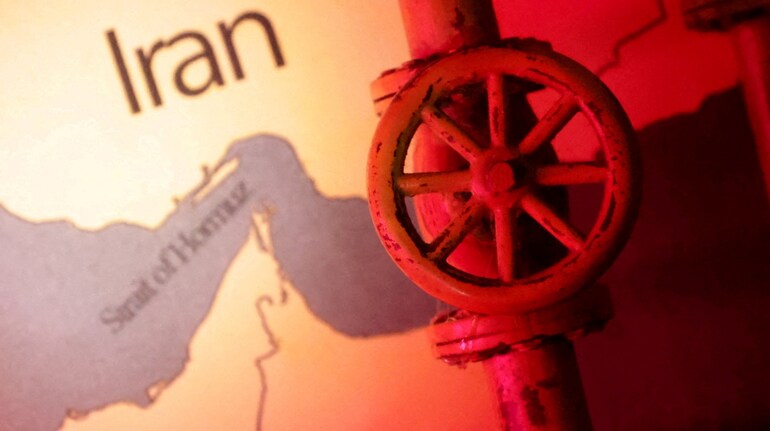

China continues to receive Iranian crude shipments through the Strait of Hormuz even as the ongoing conflict involving the United States, Israel and Iran disrupts wider oil flows through the critical waterway, a CNBC report said on Wednesday.
Satellite tracking data indicates that Tehran has quietly maintained exports to Beijing despite mounting risks to shipping in the region.
Energy tracking firm TankerTrackers told CNBC that at least 11.7 million barrels of Iranian crude have transited the Strait of Hormuz since the war began on February 28, with all shipments believed to be bound for China.
The company monitors tanker movements using satellite imagery, which helps identify vessels even when their automatic tracking systems are switched off. CNBC noted that many tankers have recently "gone dark" after Tehran warned it could target ships attempting to cross the waterway.
Shipping analytics provider Kpler has estimated that roughly 12 million barrels of crude oil have passed through the strait since the conflict began.
Kpler crude analyst Nhway Khin Soe told CNBC that China has been the main buyer of Iranian crude in recent years, meaning a large portion of these shipments likely end up there. However, confirming final destinations has become more difficult as tanker tracking data grows less transparent during the conflict.
The Strait of Hormuz - a narrow maritime corridor responsible for transporting about one-fifth of global oil and gas supplies - has seen shipping activity slow dramatically since hostilities intensified. CNBC reported that many tankers are now avoiding the passage after multiple vessels were targeted early in the war. Data cited by the International Maritime Organization showed that ten vessels were attacked within the first two weeks of fighting, leaving at least seven seafarers dead.
Despite the risks, Iran is also attempting to diversify its export routes. CNBC reported that Tehran has resumed loading crude tankers at the Jask oil terminal on the Gulf of Oman, which allows shipments to bypass the Strait of Hormuz entirely.
Satellite imagery reviewed by TankerTrackers showed one tanker loading roughly 2 million barrels at the facility, a rare occurrence given that the port has seen only a handful of such operations in the past five years.
Still, analysts cited by CNBC say Jask is unlikely to replace Iran's primary export hub at Kharg Island, which historically handles about 90% of the country's oil exports. Loading large supertankers at Jask can take up to ten days, far slower than the one-to-two-day turnaround typical at Kharg.
China's demand has remained central to Iran's export strategy. CNBC reported that Iran shipped roughly 1.22 million barrels per day during the conflict - lower than February's 2.16 million barrels per day, which had marked the highest level since 2018 as Beijing accelerated efforts to build strategic oil reserves.
With tensions around the Strait of Hormuz still high and energy markets volatile, the war continues to raise fears of a broader global oil supply shock, CNBC reported.
Discover the latest Business News, Sensex, and Nifty updates. Obtain Personal Finance insights, tax queries, and expert opinions on Moneycontrol or download the Moneycontrol App to stay updated!
Find the best of Al News in one place, specially curated for you every weekend.
Stay on top of the latest tech trends and biggest startup news.










