






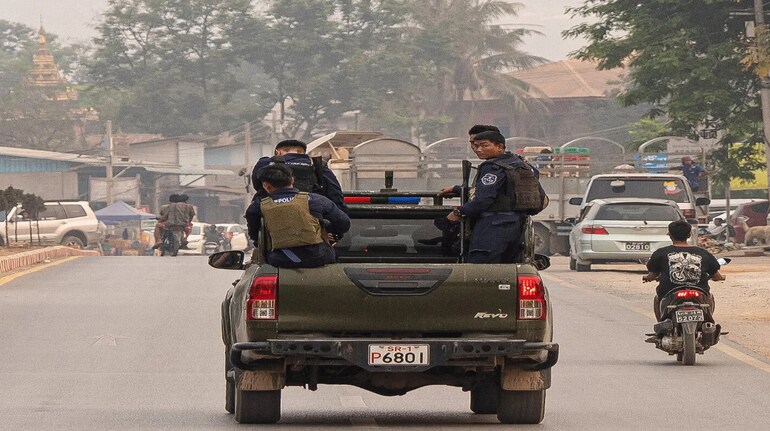
In one of Myanmar's most symbolic victories from its four-year civil war, thousands of rebels captured the northern city of Lashio in August 2024 following intense street battles in which more than 500 were killed. But eight months later, the rebels quietly withdrew—handed the junta's military convoy the city without a shot fired.
Why? China's pressure.
Beijing, however, in the view of rebel leaders and analysts, stepped in directly to save its massive financial investments in Myanmar such as crucial oil and gas pipelines and Belt and Road infrastructure. Chinese authorities allegedly cut off electricity, blocked trade, and even arrested a senior rebel commander in order to compel the retreat, the New York Times reported.
Strategic Lashio and China's hidden hand
75 miles from China, the town of Lashio is the seat of Myanmar's northeastern command and a central node on China's extensive regional investment network. It is situated close to Chinese-funded pipelines carrying oil and gas from the Bay of Bengal to Yunnan.
Once the rebel alliance led by Kokang overran Lashio in August, China became more restive. Rebels claim Beijing insisted they leave, threatening greater junta air raids against civilians as well as border disruptions. The coup de grace was the arrest by Chinese authorities of Peng Daxun, the commander of the Kokang army, after he had crossed the border into China in November.
"Plainly, they inserted themselves and took charge directly," added Ni Ni Kyaw of the People's Liberation Army, a member of one of the pro-democracy insurgent movements. "China's motive for dealing with Myanmar issues is entirely self-interest."
Junta returns—with Chinese 'peace monitors'
In late April, a fleet of 200 junta military trucks bore the national flag and drove into Lashio. Others were emblazoned with Chinese characters, designating "peace monitors," witnesses said. The quick fall of the city was in stark contrast to the months of rebel resistance that had taken hundreds of lives.
China's foreign ministry kept its "noninterference" line, but also parroted the junta's language about protecting Myanmar's "territorial integrity," implying covert backing for military dictatorship.
Beijing's double game: Arming both sides
Analysts have long commented on China's paradoxical position in Myanmar—selling weapons to both the army and their rivals on the border. "China isn't interested in peace. It is only interested in itself," commented analyst David Mathieson. Beijing's objective, most think, is to avoid any interference in its regional energy corridors and economic initiatives.
The Ta'ang National Liberation Army, which also expanded territory around Lashio, confirmed that it too is under pressure from China to pull back from towns it overran under the same offensive.
Lives lost, dreams shattered
While in brief control of Lashio, rebel forces tried to govern, even recruiting doctors to rebuild public healthcare. Their dreams were shattered with the covert pullback.
When I saw the military convoy, some of them with Chinese characters, I felt overwhelmed by sadness," said Dr. Min, a doctor who worked under rebel rule. "So many soldiers were killed to achieve that triumph. And it was returned—because of China."
Discover the latest Business News, Sensex, and Nifty updates. Obtain Personal Finance insights, tax queries, and expert opinions on Moneycontrol or download the Moneycontrol App to stay updated!
Find the best of Al News in one place, specially curated for you every weekend.
Stay on top of the latest tech trends and biggest startup news.









