
The Strait of Hormuz has become one of the most critical flashpoints in the ongoing conflict involving the United States, Israel and Iran. With tensions escalating and shipping through the narrow waterway increasingly restricted, global energy markets have been forced to look for alternative export routes.
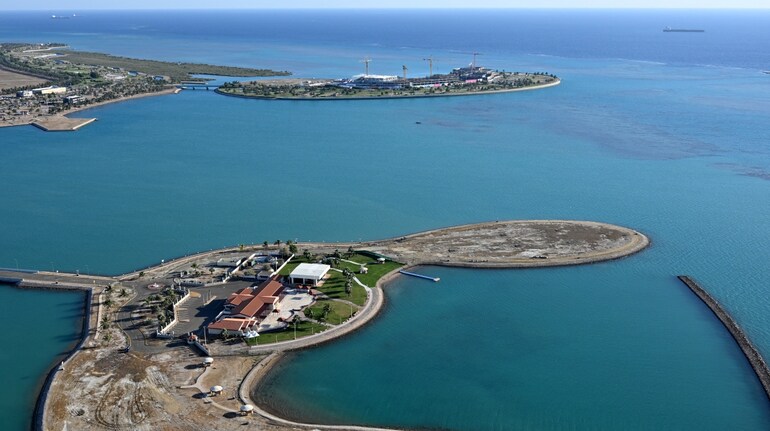
One of the most prominent alternatives is Saudi Arabia’s Red Sea port of Yanbu. As shipments through the Strait of Hormuz face disruptions, several oil tankers have reportedly been redirected toward Yanbu to maintain global supply.
However, analysts say the Red Sea route can only serve as a temporary workaround and cannot replace the Strait of Hormuz as the world’s main oil corridor.
Two different gateways for Saudi oil
In global oil trade, the Strait of Hormuz and Yanbu are often described as Saudi Arabia’s “front door” and “back door.”
The Strait of Hormuz is a narrow maritime chokepoint located between Iran and Oman. It connects the Persian Gulf to the Arabian Sea and handles about 20 percent of the world’s petroleum liquids supply, roughly 20 million barrels a day.
Because it is the only maritime exit from the Persian Gulf, it is used by most of the major oil exporters in the region including Saudi Arabia, Kuwait, the United Arab Emirates, Iraq and Qatar.
Yanbu, in contrast, is an industrial port city on Saudi Arabia’s Red Sea coast. Its strategic importance comes from the East-West Petroline, a massive pipeline that carries crude oil across the Saudi desert from the Gulf to the Red Sea, allowing exports to bypass the Strait of Hormuz entirely.
As disruptions in the Strait of Hormuz intensify, shipments of Saudi “Arab Light” crude are increasingly being routed through Yanbu.
But despite its strategic value, experts say the Red Sea route cannot replace Hormuz for several key reasons.
1. Yanbu cannot match Hormuz’s export capacity
The most important limitation is capacity.
The Strait of Hormuz typically handles between 18 and 21 million barrels of oil per day. That includes exports not only from Saudi Arabia but also from several other Gulf producers.
By contrast, the Petroline pipeline that feeds Yanbu has a theoretical capacity of about 7 million barrels per day.
In practice, the port’s export loading capacity is closer to 3 million barrels per day. Even if operating at maximum capacity, Yanbu would still be able to handle only a fraction of the oil that normally passes through Hormuz.
2. Higher logistics and shipping costs
Routing exports through Yanbu has also increased transportation costs.
Shipping companies say tanker charter rates at Yanbu have surged significantly as Saudi Arabia attempts to maintain supply flows through the Red Sea.
According to industry estimates, daily charter rates for supertankers operating from Yanbu have climbed to around $460,000.
Saudi Aramco is reportedly managing much of the shipping logistics directly to ensure that deliveries reach buyers despite the disruption in Gulf shipping routes.
3. The Red Sea route carries its own security risks
Although the Red Sea route bypasses Iranian territory, it is not free from geopolitical risks.
Tankers leaving Yanbu must pass through the Bab el-Mandeb Strait at the southern end of the Red Sea before entering the Gulf of Aden.
This chokepoint has become a security concern due to attacks by Yemen’s Houthi forces in recent years. Drone and missile strikes targeting shipping lanes in the region have already disrupted maritime traffic.
As a result, the Red Sea route simply shifts the risk from one vulnerable chokepoint to another.
4. Longer shipping routes to Asian markets
For many of Saudi Arabia’s largest oil buyers in Asia, exporting through Yanbu also means a much longer journey.
Crude shipped from the Persian Gulf through the Strait of Hormuz can move directly toward Asian markets.
In contrast, shipments from Yanbu must travel around the entire Arabian Peninsula before heading toward Asia. This increases travel time, fuel consumption and shipping costs.
The longer route also reduces the efficiency of tanker fleets that are designed around the shorter Gulf shipping corridor.
5. Domestic demand limits pipeline capacity
Another constraint is domestic energy demand within Saudi Arabia itself.
A significant portion of the Petroline’s capacity is already used to supply refineries located along the Red Sea coast.
Approximately 2 million barrels per day of the pipeline’s throughput is used to feed these domestic facilities.
This means the pipeline cannot simultaneously meet domestic refining needs and fully replace the export volumes that normally pass through the Strait of Hormuz.
A useful backup, but not a replacement
While the Red Sea route provides Saudi Arabia with an important alternative export channel during periods of crisis, analysts say it cannot replace the Strait of Hormuz as the world’s primary oil artery.
The scale of global energy flows, combined with infrastructure limitations and geopolitical risks, means the narrow strait will remain the central corridor for Gulf oil exports for the foreseeable future.
Discover the latest Business News, Sensex, and Nifty updates. Obtain Personal Finance insights, tax queries, and expert opinions on Moneycontrol or download the Moneycontrol App to stay updated!
Find the best of Al News in one place, specially curated for you every weekend.
Stay on top of the latest tech trends and biggest startup news.