Bangladesh’s interim government has approved a draft ordinance prescribing the death penalty for perpetrators of enforced disappearance, even as the high-profile trial of ousted Prime Minister Sheikh Hasina and 15 serving military officers continues before the International Crimes Tribunal.
The decision, announced Thursday, is being seen as both a legal milestone and a politically charged move amid questions over the credibility of the ongoing prosecutions.
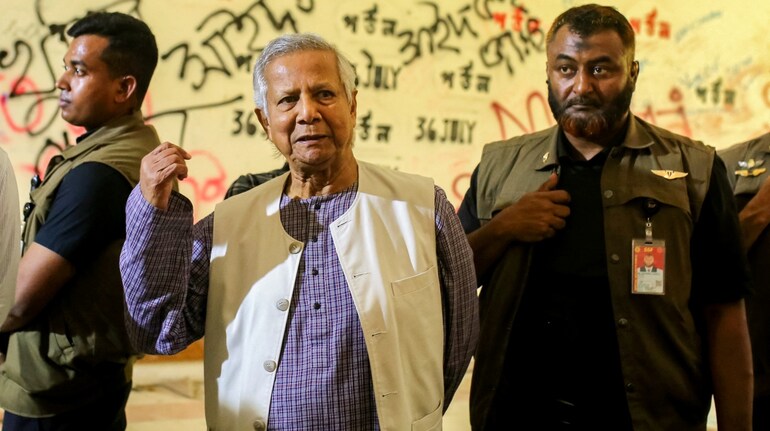
“This is a landmark law. It will ensure that enforced disappearances never occur again in the country,” said Shafiqul Alam, press secretary to Chief Adviser Muhammad Yunus. He briefed reporters after the advisory council, which functions as the interim cabinet, gave its approval to the draft ordinance.
Alam said the new law criminalises the establishment of secret detention centres, such as the alleged “Aynaghar,” and mandates that courts complete trials within 120 days of the filing of charges. Once President Mohammad Shahabuddin gives his assent, the law is expected to take immediate effect and could apply to cases already under trial, including those involving the 15 military officers and Hasina.
Hasina faces death penalty demand
The ordinance comes against the backdrop of the tribunal’s chief prosecutor demanding the death sentence for Sheikh Hasina, accusing her of being the “mastermind and principal architect” of crimes against humanity during the mass student-led protests last year.
Hasina, 78, was ousted in August 2024 after weeks of violent unrest. The United Nations human rights office estimates that at least 1,400 people were killed between July 15 and August 15, 2024, as security forces cracked down on demonstrators.
Hasina is now being tried in absentia along with several of her former ministers. The 15 army officers, however, are being tried in person at the tribunal, which has jurisdiction under the amended International Crimes Tribunal (ICT-BD) Act.
Controversy over trying serving officers
The inclusion of serving army officers in a civil tribunal has sparked legal and institutional tension. Critics argue that under existing military law, such cases should fall under the jurisdiction of a military court, not the ICT-BD.
The tribunal’s prosecutor had earlier warned that the 15 officers could be declared fugitives if they failed to appear in court. The officers were eventually brought before the tribunal on October 22 and later confined to a temporary detention facility inside Dhaka Cantonment rather than a regular jail.
The Bangladesh Army has since confirmed that it is awaiting formal direction from the interim government regarding the employment status of the officers.
“There is no problem of legality, but rather a question of interpretation, as it can be understood in various ways,” Brigadier General Mustafizur Rahman told reporters at a press conference in Dhaka Cantonment on Wednesday.
Old law, new political context
The ICT-BD law was originally enacted to prosecute collaborators of Pakistani forces during Bangladesh’s 1971 Liberation War. It has been amended three times since, the latest version stipulating that anyone charged under the law would be automatically disqualified from public service or holding government office.
However, the serving officers facing trial have not been suspended or dismissed, creating confusion about their official status. Analysts say this ambiguity underscores a growing rift between the interim government and the military establishment, which has played a central role in the country’s political transition.
The 15 officers were initially held under military custody after arrest warrants were issued on October 8. Despite the tribunal’s direction to produce them within 24 hours, they were presented only on the hearing date, fueling speculation of resistance within the ranks.
For now, the interim administration’s move to introduce the death penalty for enforced disappearance adds another layer of complexity to Bangladesh’s already volatile political climate. While officials call it a step toward justice, critics see it as a tool of political control amid an ongoing purge of the old order.
Discover the latest Business News, Sensex, and Nifty updates. Obtain Personal Finance insights, tax queries, and expert opinions on Moneycontrol or download the Moneycontrol App to stay updated!
Find the best of Al News in one place, specially curated for you every weekend.
Stay on top of the latest tech trends and biggest startup news.