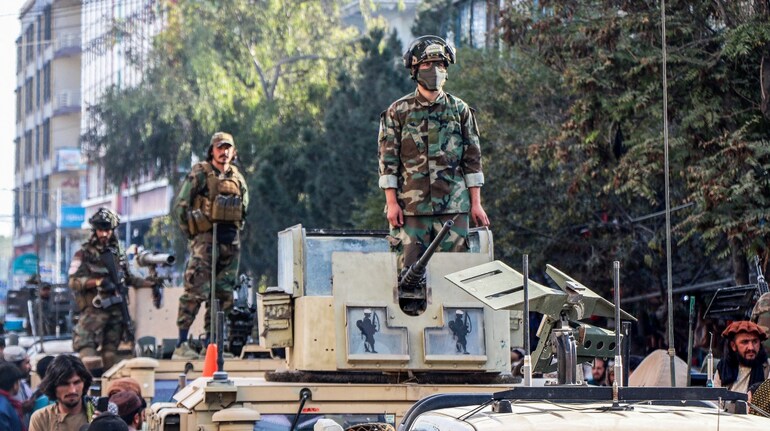
Pakistan’s powerful military establishment appears to be facing one of its most embarrassing setbacks in recent years. According to a CNN-News18 exclusive citing top intelligence sources, Field Marshal Asim Munir, the Chief of Army Staff, was forced to call an emergency high-level meeting at the General Headquarters (GHQ) in Rawalpindi after Afghan Taliban fighters launched a series of devastating, coordinated attacks on Pakistani military posts along the Durand Line.
The rare late-night meeting, described by insiders as “tense and uncompromising,” brought together the army’s top brass, including Corps Commander Peshawar Lt Gen Omer Ahmed Bokhari, Commander Southern Command Lt Gen Rahat Naseem Ahmed Khan, Chief of General Staff Lt Gen Muhammad Avais, DG ISI Asim Malik, DG Military Intelligence Maj Gen Wajid Aziz, and DG Military Operations Maj Gen Kashif Abdullah, among others from the analysis wing.
According to intelligence sources, as quoted by CNN-News18, Munir lashed out at his senior commanders for what he bluntly termed a “massive intelligence failure” and a “loss of strategic control” along Pakistan’s western frontier. The army chief is said to have demanded precise explanations as to why there was no prior warning of the Taliban’s large-scale offensive and why no immediate reinforcements were available for a counterattack.
“Where was the advance intel? Why were we unprepared for such a multi-front assault?” Munir reportedly asked, his tone described as angry and disillusioned. The source added that the field marshal was especially critical of the ISI and Military Intelligence for failing to anticipate the Taliban’s build-up across the border.
The CNN-News18 report says Munir has ordered all senior commanders to submit a detailed assessment within a week to the office of the Chief of General Staff, outlining the lapses, reasons for the intelligence breakdown, and corrective measures. He also directed increased surveillance, stricter coordination between commands, and heightened readiness along the Durand Line.
According to intelligence insiders, Munir reminded his generals that Pakistan is “at war both within and without,” urging them to shed what he described as the military’s “soft state” mindset. “How long will we remain a soft state while losing our men and civilians?” he reportedly said, calling for Pakistan to transform itself into a “hard state” capable of enforcing order and deterrence.
The scale of the Taliban’s assault, CNN-News18 reports, caught the Pakistani military completely off guard. Heavy artillery and coordinated ground attacks were launched from multiple fronts -- Angoor Adda, Bajaur, Kurram, Dir, Chitral, and Waziristan in Khyber Pakhtunkhwa, as well as Bahram Chah and Chaman in Balochistan. These were not sporadic skirmishes but organized strikes that revealed glaring weaknesses in Pakistan’s border intelligence network.
Insiders told CNN-News18 that the attacks were “unprovoked yet meticulously planned,” exposing how deeply Pakistan’s once-close relationship with the Afghan Taliban has deteriorated. The irony was not lost on many within the security establishment -- the very group once nurtured as a “strategic asset” has now turned its guns on the Pakistani Army.
By the end of the meeting, Field Marshal Munir reportedly left his commanders with a grim warning: the army must “regain control and restore strategic depth before it’s too late.” The message was clear -- Pakistan’s long-held doctrine of using proxies for regional leverage has backfired, and its western border is now paying the price for decades of flawed policy.
Discover the latest Business News, Sensex, and Nifty updates. Obtain Personal Finance insights, tax queries, and expert opinions on Moneycontrol or download the Moneycontrol App to stay updated!
Find the best of Al News in one place, specially curated for you every weekend.
Stay on top of the latest tech trends and biggest startup news.