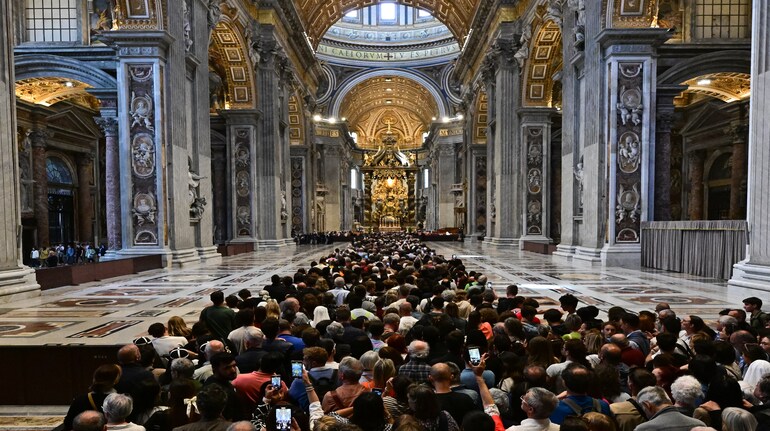
The bells of St. Peter’s Square tolled solemnly as the mortal remains of Pope Francis were transferred to St. Peter’s Basilica on Wednesday, following his passing on April 21 after a prolonged health battle. His body was moved from the Vatican’s Casa Santa Marta, where he lived, by 14 white-gloved pallbearers dressed in black suits.
The 88-year-old pope will lie in state in the basilica until Friday evening, allowing mourners to pay their final respects.
With Pope Francis’s death, the Vatican has initiated its centuries-old rituals of papal succession. The College of Cardinals will now prepare for the conclave — a highly secretive process conducted within the Sistine Chapel — where they will elect the next pope.
Cardinals are strictly prohibited from communicating with the outside world during the proceedings, preserving the sanctity and confidentiality of the decision-making process.
Stability, diplomacy, and global vision may shape next Pope’s selection
Following Pope Francis’ eventful 12-year leadership, many cardinals are now expressing a desire for a new pope who can bring stability to the Church and ease the growing divide between its progressive and conservative wings.
Key issues such as divorce, same-sex unions, and priestly celibacy have fueled tensions in recent years, and there’s hope that the next pontiff will be a unifying figure capable of navigating these sensitive topics with balance and compassion.
“Many cardinals are tired of the roller coaster that has been this pontificate. Many of them will look for some stability,” said Massimo Faggioli, a church historian at Villanova University said to the Wall Street Journal.
Out of 135 voting cardinals, 108 were appointed by Pope Francis, making a sharp reversal of his vision unlikely. His picks reflect a push to make the Church more inclusive and focused on everyday believers, especially the poor and marginalized.
A small group of traditionalist cardinals is pushing for a pope who upholds strict orthodoxy on issues like sexual morality and gender.
A moderate cardinal with diplomatic skill and a focus on pastoral care could be well placed as Pope to unite the Church and carry forward Francis’ legacy.
Many cardinals may lean toward choosing a charismatic pope who can extend Francis' global outreach, strengthen interfaith ties, and remain a vocal presence on key issues like war, migration, and climate change.
Age is another consideration while choosing the next Pope. Cardinals traditionally avoid choosing candidates significantly younger than 70, mindful that a lengthy papacy could pose risks if church dynamics shift dramatically over time.
Here are a few of the leading contenders for the papacy — though insiders say the field could be twice as large, and a surprise wildcard candidate is always a possibility in the conclave’s secretive deliberations.
Discover the latest Business News, Sensex, and Nifty updates. Obtain Personal Finance insights, tax queries, and expert opinions on Moneycontrol or download the Moneycontrol App to stay updated!
Find the best of Al News in one place, specially curated for you every weekend.
Stay on top of the latest tech trends and biggest startup news.