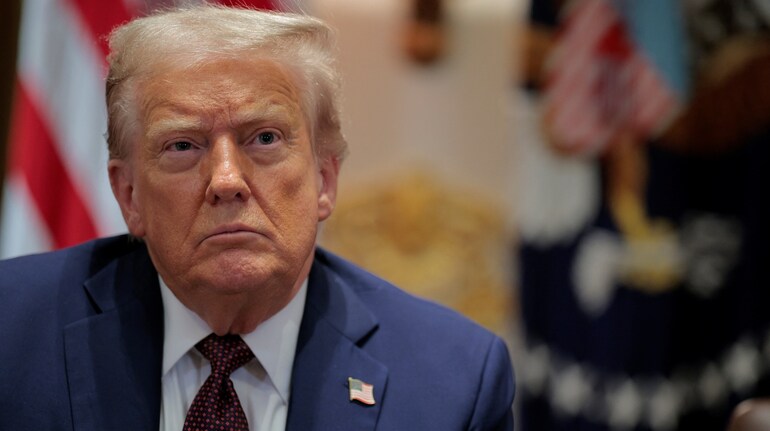
Confronted with Donald Trump’s 50 per cent tariffs, India finds itself at once humiliated, vindicated, and facing a defining test, The Economist argues. The humiliation, according to the British magazine, comes directly from President Donald Trump, who has “undone 25 years of diplomacy” by siding with Pakistan after its conflict with India in May, and by slapping India with higher tariffs than even China. The Economist notes that Trump “cannot have thought through how the world’s most populous country and fifth-largest economy would react.”
The magazine points out that Prime Minister Narendra Modi has been preparing India for a stronger, more self-reliant path. He is about to meet Xi Jinping after a bitter four-year standoff with China in the Himalayas. In this moment, The Economist says, America’s move to alienate India is “a grave mistake.”
Two humiliations from Washington
According to The Economist, Trump’s humiliation of India is two-fold. The first is the new 25% tariff surcharge, added on top of an already existing 25% import tariff. Trump imposed this after condemning India for buying Russian oil, even though New Delhi has been doing so through the West’s own price-cap scheme. The magazine observes that India refines that crude and sells petroleum products to Europe, and points out that “much of the world, including China, also buys Russian oil.” By targeting India alone, Trump has made it look like India has been “singled out for special punishment.”
The second humiliation, The Economist says, is Trump’s “love-in with Pakistan.” After the May skirmish between India and Pakistan involving over 100 warplanes, Trump is now striking deals with Islamabad. The magazine reports that he dined at the White House with Pakistan’s army chief Asim Munir, who even proposed Trump for a Nobel peace prize. Worse, America has offered to mediate over Kashmir, breaking its own policy and India’s long-standing taboo. For The Economist, America’s failure to back India on a core security issue while punishing it on trade has “shattered trust among Indians.”
India’s Vindication
Yet, alongside humiliation, The Economist op-ed sees vindication for India. Since 1947, India has stuck to a policy of avoiding military alliances, first calling it “non-alignment” and now “multi-alignment.” It has balanced between Russia for arms, the West for technology and markets, and China for manufacturing inputs.
In recent years, some in Washington hoped India might tilt towards America, especially after the 2020 border clashes with China. Joint military drills with the US, Japan and Australia even led to a 2024 defence deal. But now, The Economist notes, many in India feel vindicated. The events of the past months prove that dependence on America is risky. Modi’s planned visit to China, it says, signals to the world that “India has options.”
A defining test for India
The magazine stresses that India must now show resilience. Modi’s 11 years in power have had mixed results. On one hand, his industrialisation push has produced too few jobs and the education system remains poor. On the other hand, The Economist credits him with new roads, airports, digital payments, a stronger financial system and deeper capital markets. It predicts that growth will stay above 6%, making India the most dynamic big economy, and the IMF says India will be the world’s third-largest economy by 2028.
At the same time, the article also warns India of a danger, saying America’s aggression could revive New Delhi’s old instinct for autarky and anti-Westernism. In his Independence Day speech on August 15, PM Modi already emphasised “more self-reliance.” If India turns too far inward, it could damage its services industry, which relies heavily on American customers. Indian tech firms make at least half their sales in the US, and the country is even OpenAI’s second-biggest market by users. To industrialise faster, India also needs machinery imports from China.
The way forward
The Economist advises India to “limit the damage.” It suggests that India make rational concessions such as reducing tariffs and buying less Russian oil while increasing American natural gas imports. The magazine admits that America and India still have “enduring bonds,” including a huge diaspora, but also says Modi is right to engage China for manufacturing and to pursue new trade deals with partners like Britain and the UAE.
Finally, the magazine says India must also reform at home. Its future lies in being strong, independent and dynamic. Modi has spoken of “Next Gen Reform” with promises to simplify GST and deregulate the economy. But, the op-ed concludes that after 11 years in power, Modi must “go further and faster” because in a hostile world, internal reforms are also India’s best defence.
Discover the latest Business News, Sensex, and Nifty updates. Obtain Personal Finance insights, tax queries, and expert opinions on Moneycontrol or download the Moneycontrol App to stay updated!
Find the best of Al News in one place, specially curated for you every weekend.
Stay on top of the latest tech trends and biggest startup news.