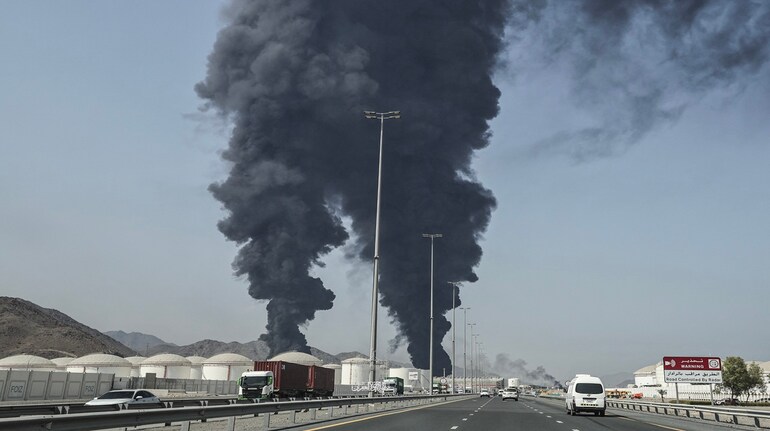
In the first weeks of the war involving Iran, social media has been overwhelmed by videos and images that appear to show dramatic scenes from the conflict. Many of them are not real.
Artificial intelligence tools are being used to create convincing fake footage of missile strikes, burning ships and devastated streets. Some clips show explosions tearing through cities that were never attacked. Others depict civilians mourning casualties or soldiers protesting a war that has not happened in those places.
An investigation by The New York Times found more than 110 fake images and videos about the war circulating online in just two weeks. Many of these clips racked up millions of views on platforms such as X, TikTok and Facebook. Others travelled quietly through private messaging apps that are widely used across the Middle East and beyond.
What the fake footage shows
The fabricated videos cover almost every angle of the war.
Some claim to show Israeli cities under heavy missile attack. Others show Iranians mourning large numbers of casualties or American naval ships supposedly being hit by missiles.
Researchers were able to identify many of these clips because small details did not add up. In some videos the buildings did not exist. In others, background text appeared garbled or objects moved in ways that looked unnatural. Investigators also ran the clips through AI-detection tools and looked for hidden digital markers left behind by some video-generation software.
Experts say the technology behind these fakes has become much easier to use. A person can type a short description into an AI program and the software will generate a scene that looks like real war footage.
Much more fake content than earlier wars
Manipulated images have circulated during other conflicts, including the war between Russia and Ukraine. But researchers say the scale is much larger now.
Marc Owen Jones, a media researcher at Northwestern University in Qatar, said the amount of AI-generated material appearing during the Iran conflict is unlike anything seen before.
Part of the reason is that the war involves several fronts at once. With fighting taking place in different places, there are more opportunities for misleading images and videos to spread.
Why the fake videos look so dramatic
The AI clips also look very different from real footage. Genuine videos of missile strikes are usually filmed from far away. Many are recorded at night, showing little more than flashes of light in the sky or smoke rising after an impact.
The AI versions are far more dramatic. Buildings explode in huge fireballs, missiles streak across the sky and entire city blocks appear to collapse. Some creators even take real footage and enhance it with AI tools to make explosions look bigger than they actually were.
Used to push particular narratives
Researchers studying the posts say many of the fake videos promote pro-Iran messages.
Some claim American or Israeli forces have suffered major losses. Others show Gulf cities burning, creating the impression that the war has caused widespread destruction across the region.
One widely shared video appeared to show missiles hitting Tel Aviv while an Israeli flag stood in the foreground. It spread quickly online before analysts pointed out clues suggesting it had been generated by AI.
Fake clips tied to real events
Some of the fake videos appeared after genuine news developments. For example, after Iranian officials suggested they had attacked the US aircraft carrier USS Abraham Lincoln, social media filled with AI clips showing a carrier burning at sea. Supporters online shared the footage as evidence that the attack had succeeded.
Later, the United States said the ship had not been damaged.
Platforms struggling to respond
Social media companies have struggled to keep up with the wave of AI war content. Many AI tools place digital watermarks on videos to show they were generated artificially. But those markers can often be removed or hidden before the clips are posted online.
As a result, many of the videos continue to spread widely before they are identified as fake.
X recently said it would suspend accounts from earning revenue for 90 days if they post AI-generated footage of armed conflict without clearly labelling it. But researchers say many of the accounts spreading such content appear motivated by political messaging rather than profit.
Analysts say the surge in fabricated videos highlights how modern conflicts are now fought not only on the battlefield but also online, where manipulated images and videos can shape how people understand events unfolding far away.
Discover the latest Business News, Sensex, and Nifty updates. Obtain Personal Finance insights, tax queries, and expert opinions on Moneycontrol or download the Moneycontrol App to stay updated!
Find the best of Al News in one place, specially curated for you every weekend.
Stay on top of the latest tech trends and biggest startup news.