
Pakistan’s escalating military campaign in Afghanistan has triggered serious allegations of widespread civilian harm, with Kabul accusing Islamabad of carrying out indiscriminate strikes that have pushed an already fragile situation into a full-blown humanitarian crisis.
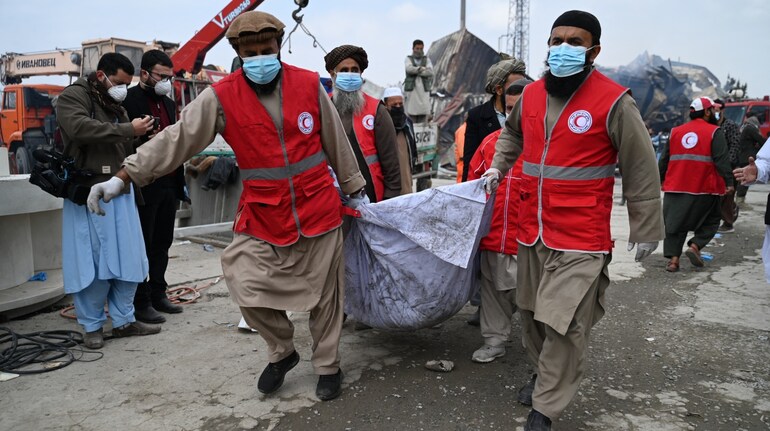
The latest flashpoint came on Monday, when Pakistani airstrikes reportedly hit a major drug rehabilitation hospital in Kabul. Afghan authorities said the strike killed around 400 people and injured another 250, calling it one of the deadliest incidents in the current phase of the conflict. Officials described the facility as a civilian medical centre packed with patients and healthcare workers when it was struck.
Pakistan has denied targeting a hospital, maintaining that its operations were aimed at militant infrastructure. However, Kabul’s account paints a starkly different picture, one that raises serious questions about the nature and precision of Pakistan’s campaign.
Civilian toll mounts across Afghanistan
According to senior Afghan officials and local administrations, the Kabul strike is only part of a much broader pattern of violence.
Since February 26, at least 835 civilians have been killed in Pakistani airstrikes and shelling, Afghan sources said. The dead include 87 women and 22 children, underlining the scale of the human cost.
More than 1,300 civilians have been injured, while at least 540 homes have been destroyed or damaged. The attacks have been concentrated along the disputed Durand Line as well as in densely populated areas, amplifying the impact on ordinary residents.
The humanitarian fallout has been severe. Afghan authorities estimate that over 8,000 families have been displaced due to continued air raids and cross-border shelling. Many have been forced to flee their homes with little access to shelter, food, or medical assistance.
Religious and healthcare infrastructure hit
Kabul has also accused Pakistan of targeting key civilian and community infrastructure, including religious and medical sites.
Afghan officials claim that eight madrasahs and 26 mosques have been bombarded in both rural and urban areas since the escalation began. These allegations have raised concerns about the apparent disregard for protected civilian spaces.
The healthcare system has also come under strain. At least five hospitals across Kabul, Kandahar, and Nangarhar are reported to have been hit or damaged in the strikes. With casualties mounting, the loss of medical facilities has further weakened Afghanistan’s already limited capacity to respond.
The reported hospital strike in Kabul has become a symbol of this crisis, intensifying anger and fear among civilians.
Conflict spreads across multiple provinces
The scope of Pakistan’s military operations has expanded rapidly, affecting a wide swath of Afghan territory.
Afghan sources say strikes have been reported in Kabul, Kandahar, Nangarhar, Khost, Paktika, Paktia, Kunar, and Laghman. Large parts of eastern and southern Afghanistan are now effectively active conflict zones.
This geographic spread suggests a campaign that is not limited to border regions but extends deep into populated areas, increasing the likelihood of civilian casualties.
Rising tensions and growing risk of escalation
The current escalation marks one of the most intense phases in Pakistan-Afghanistan tensions in recent years.
The conflict is rooted in longstanding disputes over the Durand Line, militant safe havens, and repeated cross-border accusations. Pakistan has long claimed that armed groups use Afghan territory to launch attacks, while Afghanistan has accused Pakistan of violating its sovereignty.
However, the scale and nature of the latest strikes have significantly raised the stakes.
With both sides trading accusations and continuing military responses, fears are growing that the situation could spiral further. For civilians caught in the middle, the consequences are already devastating.
A campaign under scrutiny
Pakistan continues to frame its actions as counterterrorism operations. But the mounting allegations from Kabul, particularly the scale of civilian casualties and the reported targeting of hospitals and mosques, are placing Islamabad’s campaign under increasing scrutiny.
The reported figures point to a pattern that goes beyond isolated incidents. They suggest a widening offensive with severe humanitarian consequences.
As the conflict intensifies, the central question remains unresolved. Whether Pakistan’s campaign is truly focused on militant threats or whether it is inflicting disproportionate harm on civilians.
For now, the evidence presented by Afghan authorities tells a grim story of a conflict where civilians are paying the highest price.
Discover the latest Business News, Sensex, and Nifty updates. Obtain Personal Finance insights, tax queries, and expert opinions on Moneycontrol or download the Moneycontrol App to stay updated!
Find the best of Al News in one place, specially curated for you every weekend.
Stay on top of the latest tech trends and biggest startup news.