- My Alerts
- Go Ad-Free
-
My Account















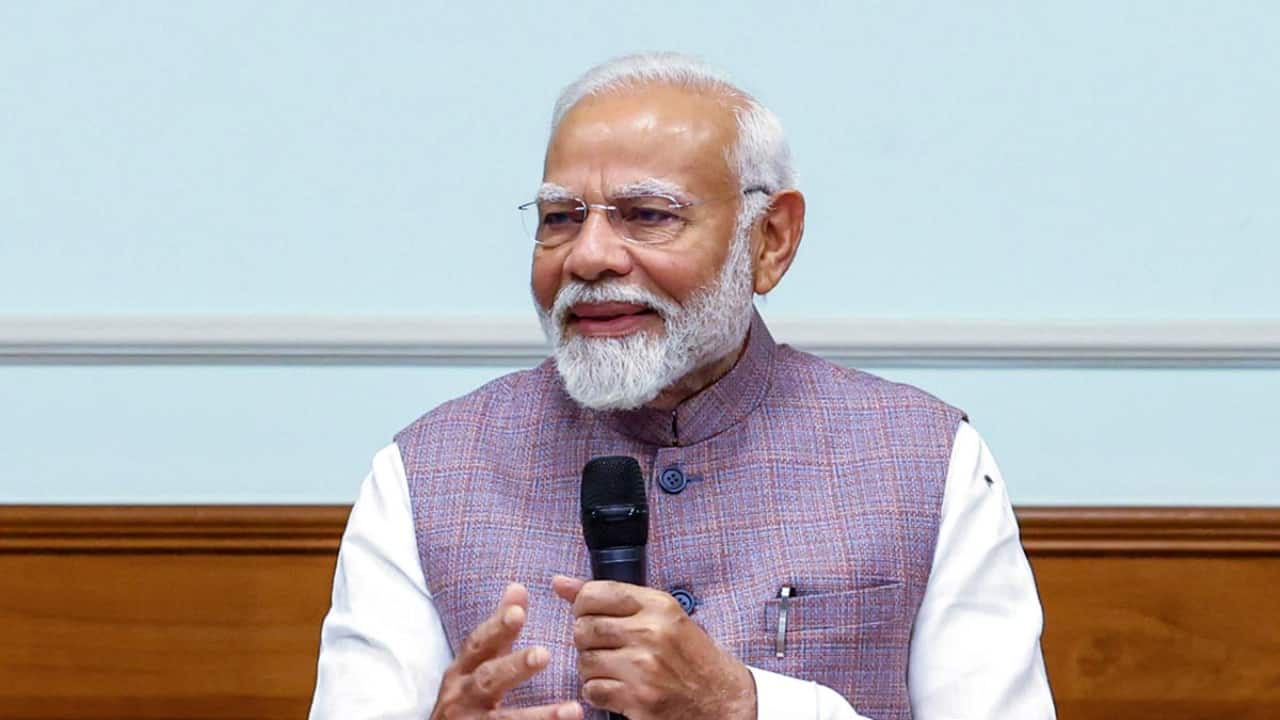
Narendra Modi
Prime Minister of India
Narendra Modi is the 14th and current Prime Minister of India and one of the most influential political leaders in the country. He was sworn in as the Prime Minister of India for the third time on
...Read more- Govt issues order to accelerate gas pipeline infrastructure amid Hormuz disruption
The order aims to facilitate the expansion of piped natural gas (PNG) networks, improve last-mile connectivity, and promote a shift towards cleaner fuels for cooking, transport and industrial purposes, thereby strengthening energy security and supporting India’s transition to a gas-based economy, the government said.
- ‘Lockdown in India’ trends on Google over Covid anniversary, war concerns
The surge closely aligns with March 24, the date on which Prime Minister Narendra Modi announced a 21-day nationwide lockdown in 2020 to curb the spread of Covid-19, a decision that brought economic activity to a halt.
- Crude surges past $104: Why India is better placed than its neighbours to handle the oil shock | Explained
PM Modi, addressing the Parliament on Monday and Tuesday, laid out India’s preparedness and response, while also underlining the long-term challenges posed by the conflict.
- Pakistan PM Sharif offers to host talks 'to end Middle East war' as PM Modi, US Prez Trump stress Hormuz security
n Tuesday, Pakistan Prime Minister Shehbaz Sharif said Islamabad was open to hosting negotiations aimed at ending the ongoing conflict involving the US, Israel and Iran.
- Iran-Israel war: US welcomes PM Modi's role as mediator in Middle East crisis, says envoy Gor
The US has backed Prime Minister Narendra Modi as a key mediator in the Middle East crisis, with envoy Sergio Gor highlighting his role after talks with President Donald Trump.
- ‘India supports de-escalation’: PM Modi calls for peace in Middle East, stresses open Hormuz in Trump talks
The conversation with PM Modi comes a day after Trump announced a five-day pause on planned US military strikes at Iran's energy grids and power plants, citing “very good and productive conversations."
- PM Modi seeks reopening of Strait of Hormuz, calls for de-escalation
Movement of ships through Strait of Hormuz has become very challenging. Despite the challenging situation, our govenment has made efforts to make ways through dialogue and diplomacy, says PM in Rajya Sabha.
- India concerned over energy shock and shipping disruption amid West Asia conflict, says PM Modi
Warning of long-term consequences,PM Modi said, “If the war continues, its repercussions will be severe,” adding that the crisis has already “shaken the world” and recovery could take time.
- 'If PM is compromised, foreign policy is compromised': Rahul Gandhi targets Modi amid West Asia crisis
The Leader of Opposition also took exception to Modi’s reference to the COVID-19 pandemic while addressing Parliament in the context of the ongoing West Asia tensions. "Yesterday he made an irrelevant speech. He is the prime minister of India, he must appear to be as the PM of India, he has no position," Gandhi said.
- Hormuz disruption threatens India’s export pivot to Gulf as US trade shrinks
Shipments redirected to Gulf markets after US tariff hit now face fresh risks as Strait of Hormuz tensions disrupt trade routes
- PM Modi says govt trying to buy gas and crude oil from all possible sources
Modi said the war in West Asia is a cause of concern, and India wants peace in the region through dialogue and diplomacy
- States must ensure that reform momentum is firmly on track: PM Modi on India's response amid West Asia crisis
The PM also asserted that the fundamentals of the Indian economy remain strong despite global uncertainties.
- PM Modi says Rs 70,000 crore allocated for shipbuilding under Make in India amid West Asia crisis, supply disruptions
The Prime Minister pointed to the wider economic consequences of the conflict, noting that global supply chains -- particularly in energy -- have been significantly affected.
- PM Modi says India in touch with Iran, US and Israel, briefs Rajya Sabha on West Asia war
Around one crore Indians live and work in the Gulf countries, and ensuring the safety of their lives and livelihoods is also a major concern for India, says PM Modi.
- Delhi Assembly receives bomb threat on mail, PM Modi, Amit Shah, Rekha Gupta among those named
Authorities and security agencies were pressed into service to thoroughly inspect the premises of the Delhi Assembly and the Vidhan Sabha Metro station
- Why PM Modi highlighted E20 ethanol blending as key to cutting oil imports amid West Asia crisis
India relies heavily on crude imports, particularly from Gulf nations, and the ongoing conflict has intensified concerns over supply and pricing.
- Strait of Hormuz disruption ‘unacceptable’, says PM Modi in Lok Sabha address on West Asia war
Highlighting the significance of the Strait of Hormuz, the prime minister pointed out that a large share of India’s crude oil, gas and fertiliser imports passes through the corridor.
- 'Those who seek to exploit will spread lies… security on high alert': PM Modi says amid West Asia crisis
Stressing the broader stakes, PM Modi said the crisis carries “economic, national security and humanitarian aspects” for India.
- 'Farmers won't bear West Asia crisis burden': PM Modi cites Covid-19 playbook in Lok Sabha
Drawing a direct comparison with the Covid-19 pandemic, PM Modi said India has previously navigated similar global disruptions without letting farmers bear the brunt.
- PM Modi: West Asia war may have lasting impact, we should be ready like we were during Covid
The Prime Minister said that war between US-Israel and Iran has affected countries around the world, adding that India is making continuous efforts to minimise the impact of the conflict.



