
You know what they say about the middle child? Too big for babying, too small for authority, permanently auditioning for attention. Sounds familiar, right? More so when you put it in the context of your personal devices.
As the tablet market claws its way back from that awkward middle-child phase between smartphones and laptops, Xiaomi is making a fairly bold claim: the tablet is no longer a sidekick. It is ready to be the main machine.
To be fair, Xiaomi isn’t the first one to do so. Apple has been doing it — or at least making a serious push — for many years now. But that’s Apple and the prices are high. Xiaomi is the first one to do so at the ‘right’ prices.
Ahead of the Xiaomi Pad 8 launch, Xiaomi India’s Sandeep Sarma and Gautam Batra were unusually direct about it. This is not about building a better “second screen”. It is about changing how people think about personal computing.
For years, tablets were sold as convenience devices. Great for Netflix. Fine for email. Useful on flights. But rarely the device you relied on to get real work done. That framing, Xiaomi argues, is outdated.
“Earlier, you could get away with lighter machines and push everything to the cloud,” Sarma said. “Today, between containers, large codebases and local AI testing, memory becomes the real bottleneck.”
In other words, the conversation has shifted. Workloads are heavier. AI is creeping into everyday tasks. And performance constraints are no longer abstract. They are felt.
Tablets as primary machines, not companions
Sarma says he has spent the past year deliberately replacing his laptop with a tablet for daily work. Not occasionally. Completely. Something which I tell him, I have tried to do as well. But specific work-related tasks ensure that I am back picking my Mac more often than not. Yet, Sarma is confident about a tablet — especially a Xiaomi one — being a competent and capable laptop replacement.
“The short answer is that it can be done,” he said. “For most things people do daily — content consumption, productivity, entertainment and even some creativity — a tablet is enough. The niche cases still exist, but they are niche.”
That is the crux of Xiaomi’s thesis. Not that tablets can do everything. But that most people do not need everything.
With a keyboard and stylus attached, a tablet becomes a credible productivity tool. Detach them, and it shifts back into a lean consumption device. On a train or flight, it becomes a portable cinema. At a café, it looks lighter, cleaner, more intentional than a bulky laptop.
“It becomes exactly what you want it to be,” Batra said.
There is a subtle aspirational layer here too. Sarma pointed out that senior executives increasingly walk into meetings carrying tablets, not laptops. It signals mobility. A certain ease. Whether that symbolism translates into real-world buying behaviour is another matter, but perception does shape markets.
The real barrier is mindset
Xiaomi does not think hardware is the limiting factor anymore. “Capability-wise, we’ve already reached there,” Sarma said. “What’s holding tablets back is mindset.”
That is an interesting admission. It suggests the challenge is not silicon or battery life, but habit. Laptops have decades of muscle memory behind them. People default to them because they always have.
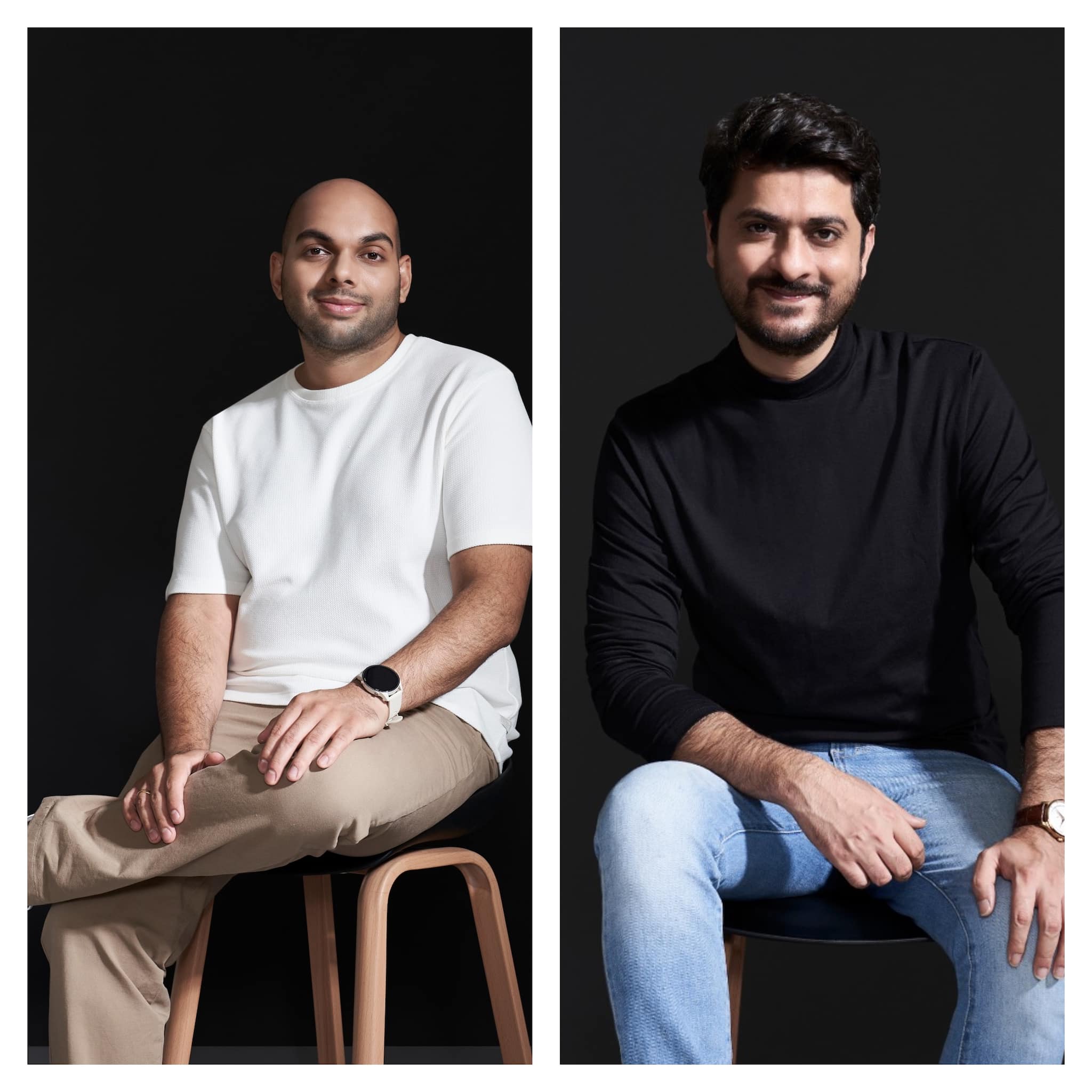 (left)Sandeep Sarma, Associate Director, Marketing & PR; Gautam Batra, Associate Director, Product Marketing, Xiaomi India
The shift, if it comes, will be gradual. Word of mouth will matter more than marketing slogans. If enough people quietly replace their laptops and do not feel constrained, the category narrative changes.
Globally, Apple’s move to Apple Silicon iPads helped legitimise tablets as serious machines. Xiaomi believes Android tablets have now matured enough to compete on capability, especially in the price-sensitive middle ground.
“We’re not trying to enter the premium laptop space,” Batra said. “If someone is spending that kind of money for coding or heavy graphic design, they’ll still choose a laptop. Our focus is on the large middle ground.”
That clarity is refreshing. Tablets will not replace high-end workstations. They do not need to.
Why the market is stirring again
After the pandemic spike and the inevitable slump, tablets are showing renewed life. The global tablet market grew 9.8% year on year in 2025, with shipments reaching 162 million units, according to Omdia. As per Omdia, Xiaomi shipped 2.8 million units in Q4, marking 10.1% year-on-year growth. For the full year, Xiaomi’s tablet shipments rose 25% compared to 2024.
In India, Xiaomi attributes this less to a surge in units and more to value per device. “People are holding on to their devices longer,” Sarma said. “But they’re also willing to invest more if the device genuinely improves productivity or convenience.”
We have seen the same behaviour in smartphones and televisions. Fewer impulse upgrades. More deliberate purchases. If a device earns its place, consumers are prepared to spend.
Tablets sit neatly in that logic. They are not urgent buys. They are considered ones.
What the Xiaomi Pad 8 is trying to do
With the Pad 8, Xiaomi is not chasing reinvention. The focus is on being thinner, lighter, faster and more battery-efficient. In other words, removing friction.
Accessories are central to the pitch. Xiaomi says attachment rates for keyboards and styluses are far higher than in the smartphone world. In earlier launches, nearly every buyer picked up at least one accessory in the first week.
“That tells us people don’t see the tablet as complete without those tools,” Batra said.
To simplify things, Xiaomi has experimented with bundles tailored to productivity, creativity or entertainment. The idea is to reduce decision fatigue and position the tablet as a ready-to-work kit, not a half-finished device.
Interestingly, Xiaomi is resisting the temptation to flood every price band. “We don’t want to confuse consumers,” Sarma said. “Each tablet in our lineup has a defined purpose — productivity at the top, entertainment-focused devices below that.” That discipline matters. A fragmented lineup dilutes the story. A defined one reinforces it.
Will tablets replace laptops entirely? No. Not soon. Not for everyone. But the shift does not have to be dramatic to be meaningful. If even a slice of professionals quietly move to tablets as their primary machines, the category stops being secondary.
And perhaps that is Xiaomi’s real bet. Not that tablets will conquer laptops overnight. But that, for a growing number of users, they already have.


Discover the latest Business News, Sensex, and Nifty updates. Obtain Personal Finance insights, tax queries, and expert opinions on Moneycontrol or download the Moneycontrol App to stay updated!
Find the best of Al News in one place, specially curated for you every weekend.
Stay on top of the latest tech trends and biggest startup news.