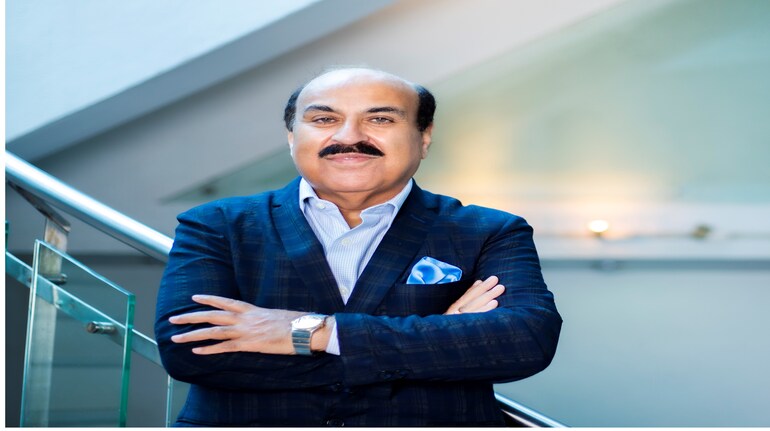

Acer India managing director and president Harish Kohli has warned that selling identical products across Amazon, Flipkart and offline stores can severely damage brands even as he urged the government to push India’s electronics manufacturing beyond assembly-led incentives.
In an interview to Moneycontrol, Kohli said aggressive price competition on e-commerce platforms often forces brands into discounting even when consumers are not demanding it.
"Any company will die if it sells the same product on Amazon and Flipkart. Leave offline aside — even selling the same product on both platforms is enough to finish you," he said.
Kohli said platforms use sophisticated tools that trigger price cuts the moment a consumer shows purchase intent.
“You put a product in the basket and your life is in trouble. Amazon reduces the price by five rupees, Flipkart cuts 10. The consumer didn’t ask for it but you still gave the discount, and it is the brand that suffers," he said.
According to Kohli, when identical SKUs (stock keeping unit) are listed across channels, price becomes the only differentiator.
"Between an Acer and another brand on a listing, there is no difference. Naturally, the customer says ‘here it is cheaper by five rupees'," he said.
Acer has now learnt to manage its go-to-market strategy. "We are on the other side of the curve now. Products are differentiated by channel, and we understand what kind of customer comes to Amazon or Flipkart," Kohli said.
Offline retail finds its footing again
Kohli also pushed back against the assumption that e-commerce will continue to eat into physical retail. He said online sales peaked during the pandemic but the share has since moderated.
"During Covid, e-commerce went up to nearly 40 percent. Everyone thought it would keep going to 42 percent but that never happened," he said.
Post-pandemic, he added, consumer behaviour shifted. "The buyer has woken up. He wants to go to a brand store, see, touch and feel the product and then decide," he said.
Acer operates around 347 exclusive stores in India. "Offline business has really improved over the last two years," he said.
Manufacturing limits
On manufacturing, Kohli pointed out that Acer’s India presence long predates current policy incentives. "Acer India was born in 1999. By December that year, our first product came out of the Pondicherry factory," he said.
Today, Acer, Kohli said, manufactures all its desktops locally.
"One hundred percent of desktops are made in India. We don’t import even one," he said. Notebooks, however, remain a mixed picture.
"About 10 to 15 percent is made here, largely entry-level models. High-end gaming laptops like Predator are still made at headquarters. You don’t want to take risks there," he said.
Acer is a Taiwanese technology company that is counted among the world's top manufacturers of computer hardware and electronics. Its headquarters are in New Taipei City.
Why PLI needs a rethink?
Kohli was blunt about the limitations of India’s localisation strategy. He said the expectation that brands can pull component manufacturing into India is flawed.
"The thinking was that brands will push component manufacturers into India. That is wrong," he said.
At India’s current market size, Kohli said volumes are insufficient to justify component investments. "In a 14–15 million market, you are neither here nor there. I cannot force someone to make memory or displays locally," he said.
If India wants value addition to rise from the current 20 percent to 50–70 percent, policy must change direction. "PLI 2.0 has to move beyond assembly. Components have to come here. Without that, localisation will hit a ceiling," Kohli said.
Price realism applies to AI PCs too
Kohli said the discipline brands apply to distribution channels and manufacturing must also be extended to emerging categories such as AI PCs.
"If you take a non-AI PC and price an AI PC 30 percent higher, it won’t work," he said. "The right premium is closer to 12–15 percent."
Consumers are informed and selective. "People have money and are willing to spend, but they want to know why they are spending it," Kohli said.
The company's India MD also said AI PC adoption has been increasing. "Early in the quarter, AI PCs were around 3 to 3.5 percent for us. It has already moved to double digits," he said.


Discover the latest Business News, Sensex, and Nifty updates. Obtain Personal Finance insights, tax queries, and expert opinions on Moneycontrol or download the Moneycontrol App to stay updated!
Find the best of Al News in one place, specially curated for you every weekend.
Stay on top of the latest tech trends and biggest startup news.