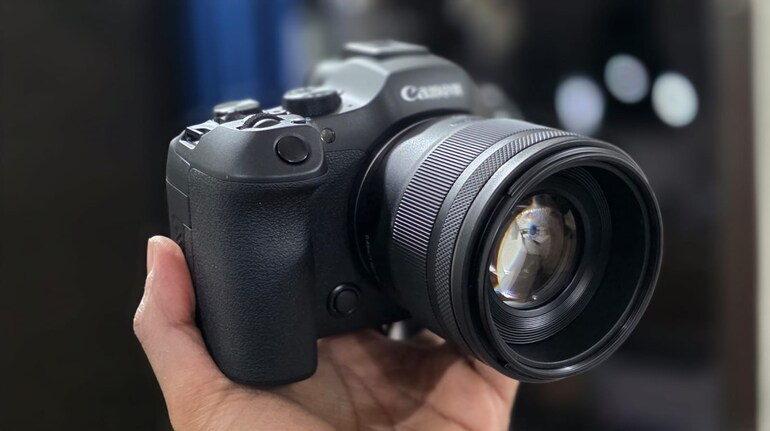

Canon’s EOS R6 series has long occupied a practical middle ground in the company’s full-frame mirrorless lineup. Instead of focusing only on resolution or only on speed, the R6 line has typically balanced both, making it suitable for photographers who shoot sports, wildlife, events and video content.
The Canon EOS R6 Mark III continues that philosophy but introduces several technical improvements compared with the EOS R6 Mark II. At the centre of the update is a 33MP full-frame CMOS sensor, replacing the 24MP sensor used in the previous model. The higher resolution gives photographers more flexibility for cropping while retaining the fast burst shooting that defines the R6 series.
 Canon EOS R6 Mark III
Canon has also expanded the camera’s video capabilities and updated its autofocus algorithms, bringing some technologies previously seen in higher-end cameras into the R6 lineup.
But before talking more about the camera, it is important to know the upgrades that it brings over its predecessor:
Upgrades over the EOS R6 Mark II
The EOS R6 Mark III introduces several improvements compared with the EOS R6 Mark II.
The most visible upgrade is the 33MP full-frame sensor, which increases resolution from the 24MP sensor used in the previous model. This provides more detail and greater flexibility for cropping images.
Video recording capabilities have also expanded significantly. The new model supports internal 7K Raw recording, open-gate video, and 4K recording at up to 120fps, all of which were not available on the EOS R6 Mark II.
 Canon EOS R6 Mark III
Canon has also updated the autofocus system with improved tracking algorithms and Register People Priority, enabling photographers to prioritise specific subjects.
Other hardware improvements include the addition of a CFexpress Type B card slot and a full-size HDMI port, both of which improve the camera’s workflow for video production.
Design and handling
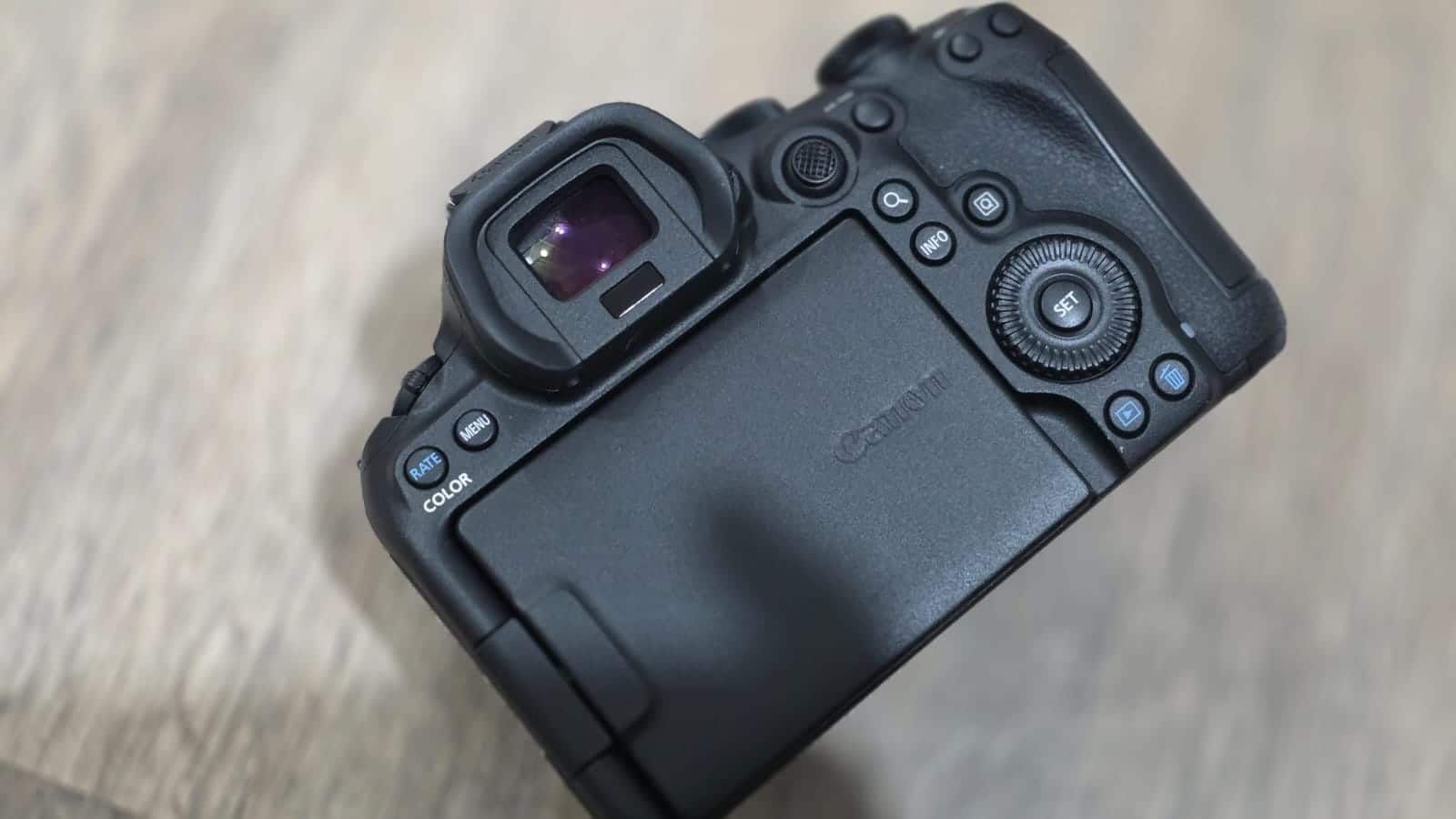
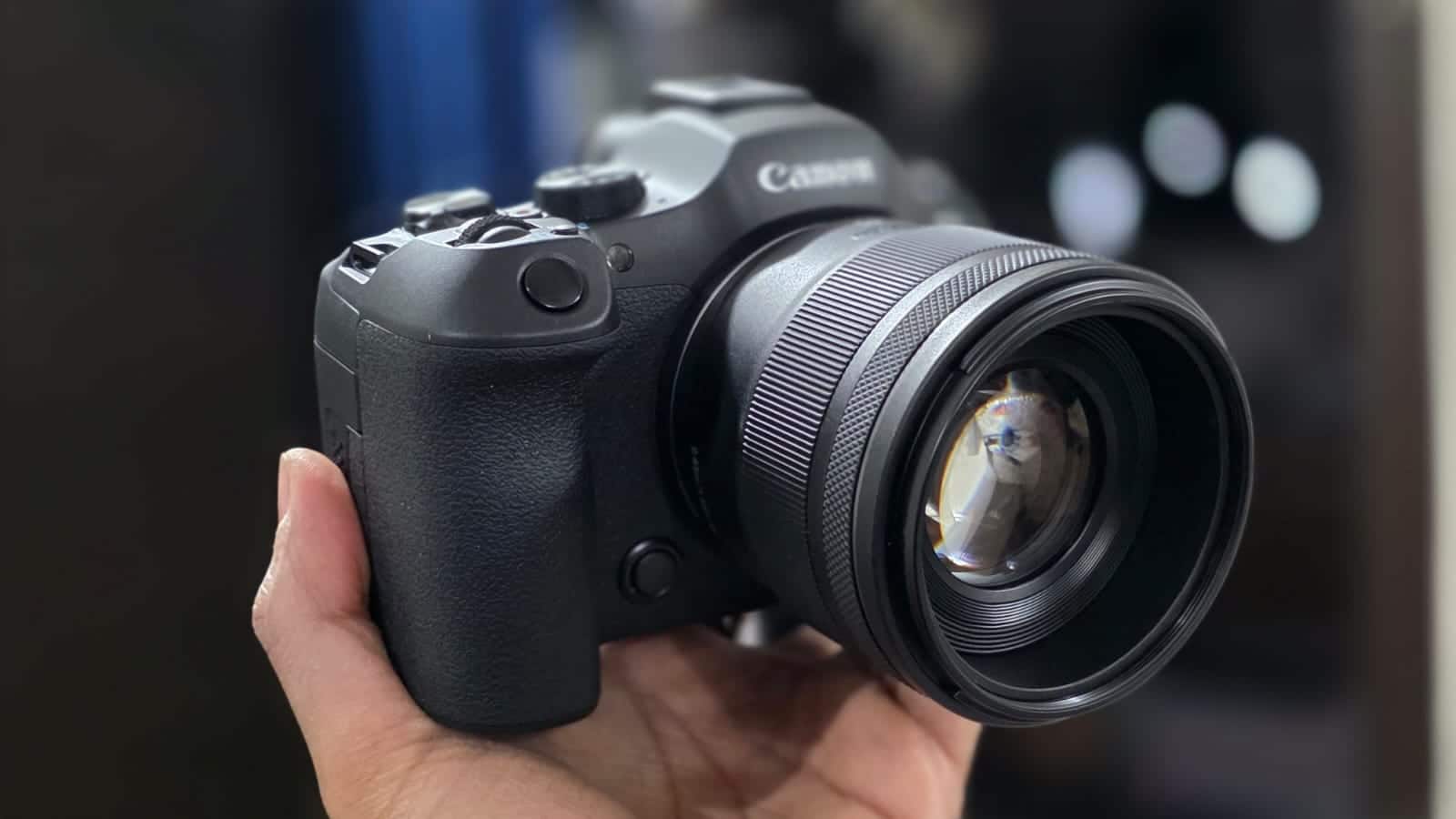
Canon has retained a familiar body design for the EOS R6 Mark III. The overall shape, grip and control layout are very similar to the EOS R6 Mark II, meaning existing Canon users will adapt quickly to the new camera.
The grip remains deep and comfortable, which is particularly useful when shooting with larger telephoto lenses commonly used for sports or wildlife photography. Buttons and control dials are positioned in a way that allows photographers to adjust exposure settings without moving their hands away from the grip.
The fully articulating rear display and electronic viewfinder continue to support both still photography and video shooting, which reflects the camera’s hybrid positioning.
 Canon EOS R6 Mark III
One practical improvement is the introduction of a full-size HDMI port, replacing the micro-HDMI port found on the EOS R6 Mark II. This change improves connection stability when using external monitors or recorders.
Another hardware update is the storage configuration. The EOS R6 Mark III now includes one CFexpress Type B card slot alongside a UHS-II SD card slot. The EOS R6 Mark II used two SD card slots, but the addition of CFexpress allows the new model to support higher-bitrate video formats such as internal Raw recording.
Specifications and performance
The EOS R6 Mark III introduces a 33MP full-frame sensor, which represents a noticeable increase from the 24MP sensor in the EOS R6 Mark II. This increase in resolution provides more detail and improves flexibility for cropping images without significantly reducing image quality.
Despite the higher pixel count, the camera maintains the speed expected from the R6 series. The sensor features faster readout speeds, which helps reduce rolling shutter effects when using the electronic shutter.
 Canon EOS R6 Mark III
Canon continues to rely on its Dual Pixel autofocus system, where each pixel is split into two photodiodes that allow phase detection autofocus across the sensor. This design enables accurate subject detection and tracking across a wide portion of the frame.
The EOS R6 Mark III supports 40 frames per second burst shooting using the electronic shutter, while the mechanical shutter reaches 12 frames per second. These speeds match those of the EOS R6 Mark II but are supported by improved processing and sensor readout.
Fast burst shooting has always been a defining feature of the R6 series, and Canon has refined how this works in the new model.
On the EOS R6 Mark II, pre-capture shooting was available through a dedicated Raw Burst mode. This meant photographers had to switch into a special shooting mode to capture frames before the shutter was fully pressed.
With the EOS R6 Mark III, pre-continuous shooting can be enabled directly in the H+ drive mode, simplifying the workflow. The camera buffers frames before the shutter button is pressed fully, which increases the chance of capturing unpredictable moments.
This feature can be useful when photographing wildlife behaviour, sports action or any scenario where timing is difficult to predict.
Canon also states that the mechanical shutter has been tested for up to 500,000 actuations, a durability figure not typically disclosed for cameras in this segment.
 Canon EOS R6 Mark III
Autofocus performance remains a key strength of the EOS R6 series.
The EOS R6 Mark III continues to support subject detection for humans, animals and vehicles, but Canon has introduced updated algorithms derived from higher-end cameras such as the EOS R1 and EOS R5 Mark II.
One of the new additions is Register People Priority, a feature that allows photographers to register up to ten faces. When multiple people appear in a frame, the camera prioritises the registered faces during autofocus tracking.
This can be particularly useful during events, interviews or portrait sessions where the photographer wants to ensure focus stays on a specific individual.
Video capabilities
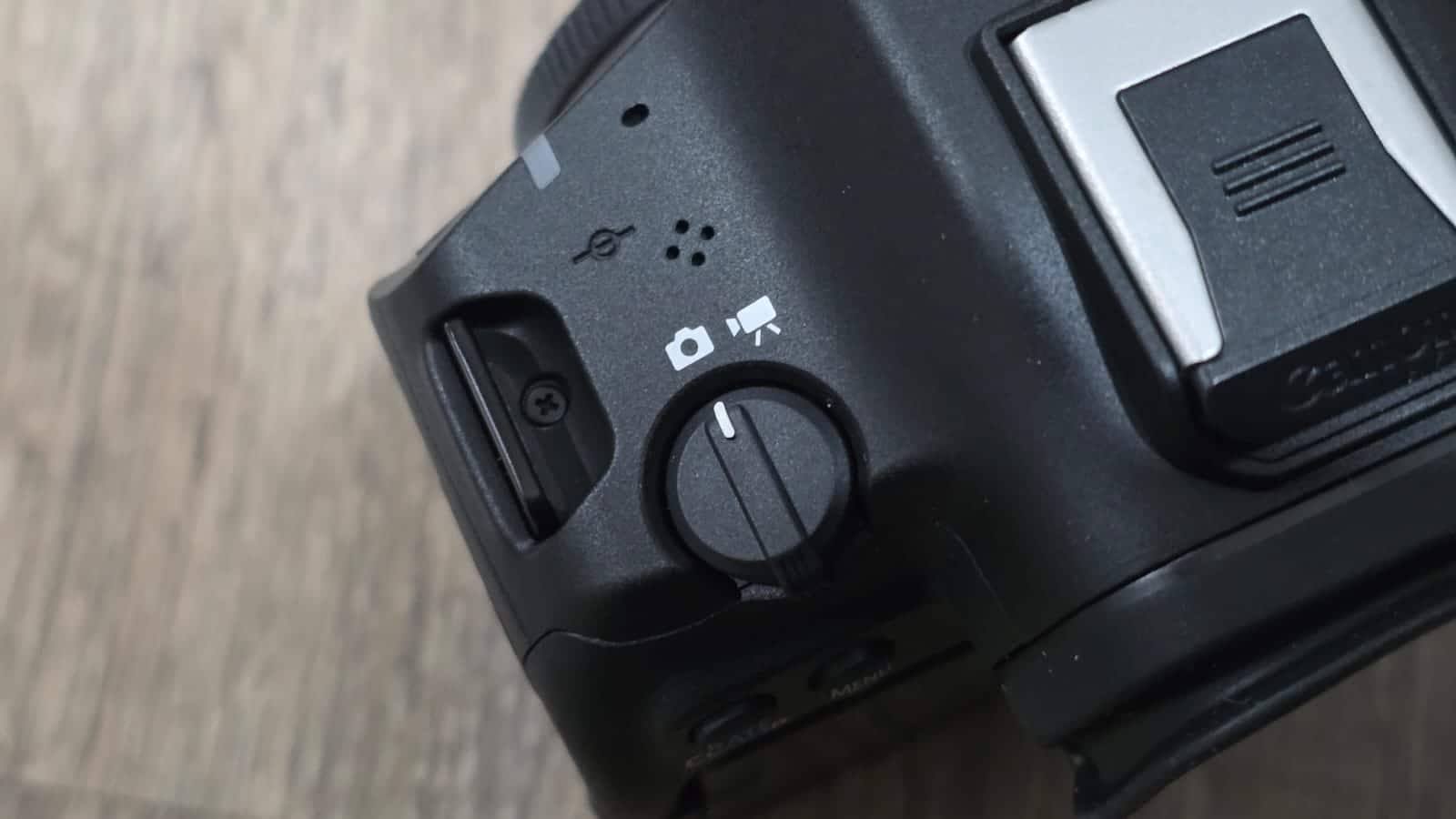
Video recording is one of the areas where the EOS R6 Mark III shows a clear improvement over the previous model.
The camera now supports internal 7K Raw recording at up to 60fps, using Canon Cinema Raw Lite. This feature expands the camera’s capability for professional video production and post-production flexibility.
 Canon EOS R6 Mark III
Another addition is open-gate video recording at up to 7K/30, which captures the entire 3:2 sensor area. This format allows creators to crop the footage later into different aspect ratios, including vertical formats used for social media.
The camera also supports oversampled 4K recording at up to 60fps and 4K recording at up to 120fps, offering flexibility for both high-resolution footage and slow-motion recording.
In comparison, the EOS R6 Mark II was limited to 4K video oversampled from 6K up to 60fps and did not support internal Raw recording.
The EOS R6 Mark III features in-body image stabilisation rated at up to 8.5 stops, slightly higher than the 8-stop stabilisation rating of the EOS R6 Mark II when paired with compatible lenses.
This stabilisation system allows photographers to shoot handheld at slower shutter speeds and also helps reduce shake in handheld video recordings.
Battery life is rated at around 270 shots using the electronic viewfinder or about 510 shots using the rear LCD. While this is slightly lower than the official rating of the EOS R6 Mark II, it remains typical for a full-frame mirrorless camera.
Verdict
The Canon EOS R6 Mark III represents a measured evolution of Canon’s hybrid mirrorless camera strategy.
By introducing a higher-resolution sensor, expanding video recording capabilities, and refining autofocus performance, Canon has improved several areas that matter to photographers and video creators.
At the same time, the camera retains the design, speed and usability that defined the EOS R6 Mark II. This continuity makes the transition easier for existing Canon users while still offering meaningful upgrades.
At Rs 2,36,000 for the body creators who want to shed that amount, the R6 Mark III is capable of handling fast action, general photography and video production, the EOS R6 Mark III continues the R6 series’ role as a versatile hybrid tool within Canon’s mirrorless lineup.


Discover the latest Business News, Sensex, and Nifty updates. Obtain Personal Finance insights, tax queries, and expert opinions on Moneycontrol or download the Moneycontrol App to stay updated!
Find the best of Al News in one place, specially curated for you every weekend.
Stay on top of the latest tech trends and biggest startup news.