Apple has officially confirmed that it will rely on Google’s Gemini models and cloud infrastructure to power future versions of Siri and Apple Intelligence. It is a surprising, pragmatic and politically delicate deal between two long-time partners who are also fierce rivals. Below is a clear, Q&A-style explainer of what the agreement involves and why it matters.
What exactly have Apple and Google agreed to?
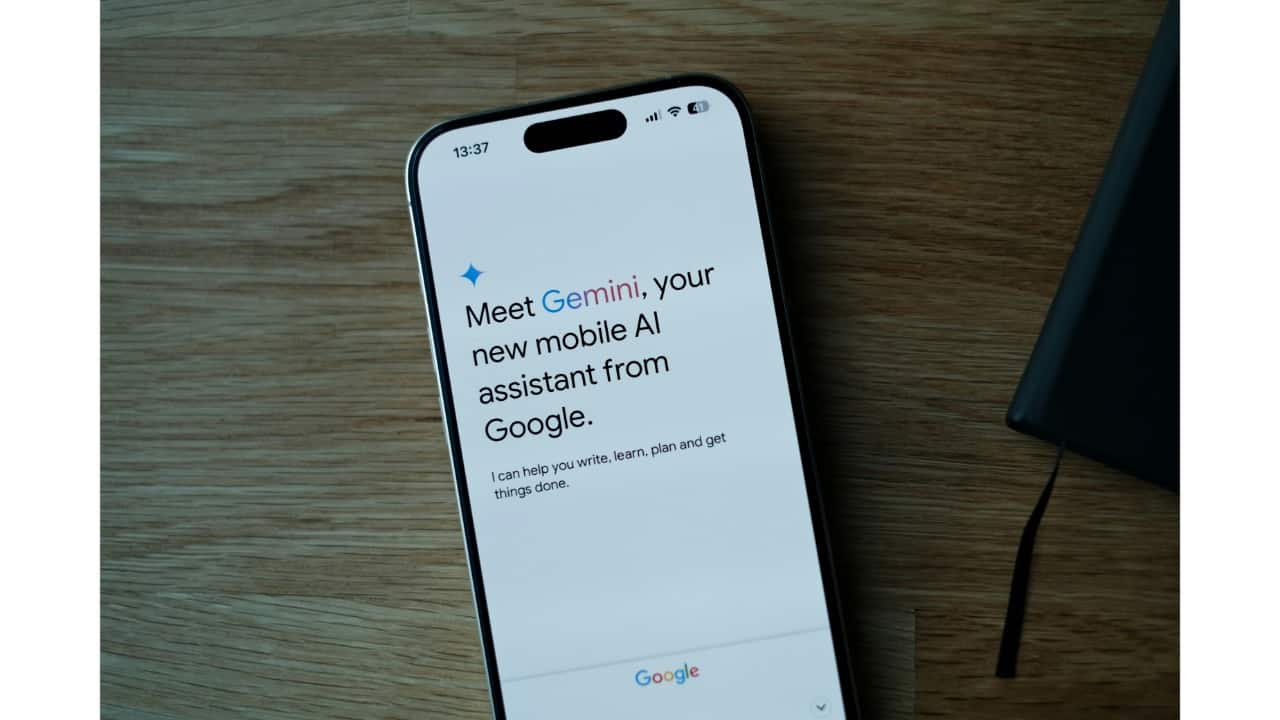
Apple and Google have entered into a multi-year collaboration under which the next generation of Apple Foundation Models will be based on Google’s Gemini models and cloud technology. These models will help power future Apple Intelligence features, including a more personalised version of Siri expected to launch later this year.
Apple will continue to brand and ship these features as part of Apple Intelligence. Google is not building Siri, nor is it consumer-facing in this arrangement. Instead, Gemini becomes a core technical layer underneath Apple’s AI stack.
Crucially, the deal is not exclusive. Apple has left the door open to working with other AI providers over time, and it will continue to develop its own models internally. It already has a partnership with OpenAI and ChatGPT does power a lot of Apple Intelligence features.
Why did Apple choose Google?
Apple’s statement is unusually direct. After evaluating multiple options, including OpenAI and Anthropic, it concluded that Google’s technology offered the “most capable foundation” for its needs.
In simple terms, Google has spent more time and money training large-scale, general-purpose AI models than almost anyone else. Gemini is deeply integrated with Google’s cloud infrastructure, has access to massive compute resources and has already been deployed at global scale across consumer and enterprise products.
Apple, by contrast, is late to large language models that operate primarily in the cloud. Its strength lies in hardware, silicon design and tightly controlled software ecosystems. Rather than trying to catch up from scratch, Apple appears to have decided that borrowing best-in-class models while layering its own experience, privacy guarantees and UI on top is the faster and safer route.
How does this fit with Apple’s obsession with privacy?
Privacy is the central tension in this deal and also the reason Apple is framing it so carefully.
Apple says Apple Intelligence will continue to run either on-device or via its Private Cloud Compute infrastructure. That means requests are processed in environments Apple controls, with limited data retention and no model training on personal user data.
Google’s role is to provide the underlying AI models and cloud capabilities, not to ingest Apple user data for advertising or training purposes. Apple insists that its industry-leading privacy standards will remain intact throughout the partnership.
For users, this means Gemini-powered intelligence without signing into a Google account or feeding data into Google’s ad ecosystem, at least in theory.
Is Apple paying Google for this?
Neither company has disclosed financial terms, but reporting from Bloomberg suggests Apple will pay Google roughly $1 billion per year for access to Gemini models.
If accurate, that would make this one of the most expensive AI infrastructure deals in the consumer tech world. It also mirrors Apple’s long-standing arrangement with Google for search, where Apple has historically received billions annually to keep Google as the default search engine on iPhones.
The key difference is that, this time, Apple is the one writing the cheque.
What does this mean for Siri?
This deal is primarily about fixing Siri.
Despite years of incremental improvements, Siri has lagged behind ChatGPT, Gemini and other modern assistants in conversational ability, contextual awareness and task completion. Apple has promised a more personalised Siri since WWDC 2024, but repeatedly delayed its launch.
By anchoring Siri to Gemini-powered foundation models, Apple gains access to more capable reasoning, better language understanding and improved on-screen awareness. Features such as personal context, in-app actions and deeper system integration now have a more realistic technical backbone.
In short, this partnership gives Apple a fighting chance to make Siri feel modern again.
 Gemini
What does Google get out of this?
For Google, the benefits are strategic rather than consumer-facing.
First, it cements Gemini as a serious rival to OpenAI’s models at a time when the AI ecosystem is fragmenting across providers. Having Apple, the world’s most influential consumer hardware company, build on Gemini is a powerful endorsement.
Second, it creates a new, long-term revenue stream for Google Cloud and its AI division, independent of advertising.
Third, it helps Google stay embedded in the iPhone ecosystem at a moment when regulatory pressure threatens its default search deals. Even if search agreements are curtailed, Google remains deeply woven into Apple’s future.
Does this raise antitrust concerns?
Almost certainly.
Google is already facing multiple antitrust cases, including a landmark US ruling that found it illegally maintained a monopoly in online search. That case put its relationship with Apple under intense scrutiny, particularly the billions paid to secure default search placement.
While this AI deal is not exclusive and operates differently from search defaults, regulators are likely to examine whether it further entrenches Google’s market power in AI infrastructure.
Apple, for its part, will argue that it evaluated multiple vendors and chose the best technology available.
What does this mean for users?
For users, the upside is clear: smarter features, a more capable Siri and AI that feels more useful across photos, writing, notifications and apps.
The risk is subtler. Apple’s AI will still feel quieter and more constrained than competitors, prioritising safety and privacy over spectacle. Those hoping for a ChatGPT-style assistant may still find Apple’s approach conservative.
But if the execution is right, this partnership could finally deliver intelligence that works invisibly and reliably, rather than loudly and inconsistently.
Is this a long-term shift for Apple?
Not necessarily.
Apple still wants to own its destiny. The deal with Google buys time, capability and credibility while Apple continues developing its own foundation models.
For now, it is a rare admission that even Apple cannot do everything alone. In the AI race, pragmatism has beaten pride.


Discover the latest Business News, Sensex, and Nifty updates. Obtain Personal Finance insights, tax queries, and expert opinions on Moneycontrol or download the Moneycontrol App to stay updated!
Find the best of Al News in one place, specially curated for you every weekend.
Stay on top of the latest tech trends and biggest startup news.