Once this T20 World Cup moved to the Caribbean, India’s spin bowlers had come into their own. Kuldeep Yadav, who didn’t play before the Super 8s, had taken 10 wickets in four matches before the final, at an economy rate less than 6 an over. Axar Patel had 8 wickets for the tournament and was going at less than 7. Ravindra Jadeja may have lost his wicket-taking mojo, but he too was conceding just over 7 an over.
On a belter of a Bridgetown pitch, all that changed. India’s slow bowlers were smashed for seven sixes and eight fours and went for 106 in the nine overs they bowled. Axar, with the priceless wicket of Tristan Stubbs which ended the biggest partnership of the South Africa innings (58), was the only one to make any impression.
With one half of his bowling plan shredded, Rohit Sharma could have been forgiven some panic. But when you have Jasprit Bumrah in your XI, no match is ever lost. With just 30 needed off the last five overs, and six wickets in hand, it’s no exaggeration to say that the Proteas had an entire hand and a couple of fingers on the trophy. At that stage of the innings, a bowler conceding 8 or 9 runs an over is considered exceptional. South Africa just needed a run a ball.
Bumrah came on and bowled three dot balls while conceding just four. The much-maligned Hardik Pandya then returned, picked up the key wicket of Heinrich Klaasen and gave away only four singles. Despite two such overs, it was still South Africa’s match to lose – 22 needed from 18 balls is a stroll when you have five wickets remaining.
Where would Rohit go next? Bumrah had produced one of the balls of the tournament to clean up Reeza Hendricks in the Powerplay, but he had only one over left. Bowling him out with another two overs to go was a huge risk. But with the asking rate so much in South Africa’s favour, Rohit was left no option.
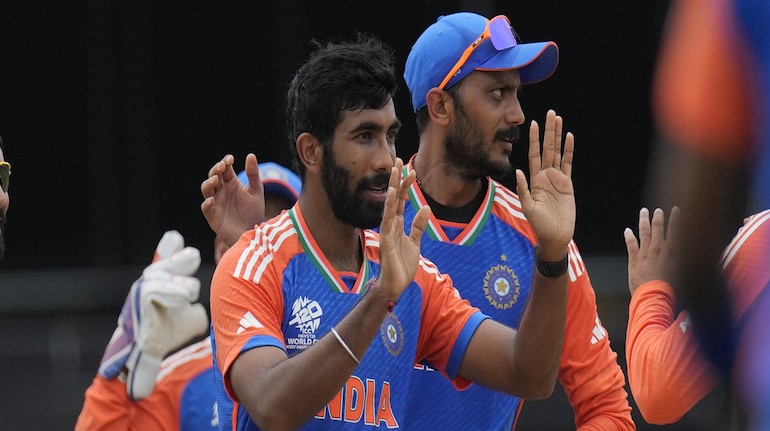
Most bowlers would have wilted under such pressure. But even with the weight of millions of fans’ expectations weighing down on his shoulders, the half-smile never left Bumrah’s face. So confident is he of executing his skills that the match situation seems almost irrelevant. Starting the over with two dots and a single to David Miller, Bumrah then summoned up another magic ball. A nervous Marco Jansen did little wrong, but the inward movement beat his bat and clipped the bails.
He finished the over with another dot and a single. Overs 16 and 18, in a T20 game, and he had bowled seven balls that South Africa couldn’t score off while conceding just 6 runs. Add in a wicket for good measure. It meant that he finished the World Cup with 15 wickets at an economy rate of 4.17 an over. The adjudication panel for Player of the Tournament had the shortest and easiest task in cricket history.
Five years ago, on a tour of the Caribbean, India played a Test in Antigua. Bumrah finished with figures of 5-7 in the second innings. Afterwards, Ravi Shastri, then coach, introduced him to Andy Roberts, the Antiguan who had been the undisputed leader of the greatest collection of pace bowlers the world has seen.
Roberts is a man of few words, who let the ball make conversation over a decade when West Indies dominated the sport like no team ever has. But he was enthused enough to tell Bumrah: “You could have taken the new ball for our team.”
There really is no greater compliment for a pace bowler.
In exclusive arrangement with RevSportzDiscover the latest Business News, Sensex, and Nifty updates. Obtain Personal Finance insights, tax queries, and expert opinions on Moneycontrol or download the Moneycontrol App to stay updated!
Find the best of Al News in one place, specially curated for you every weekend.
Stay on top of the latest tech trends and biggest startup news.