




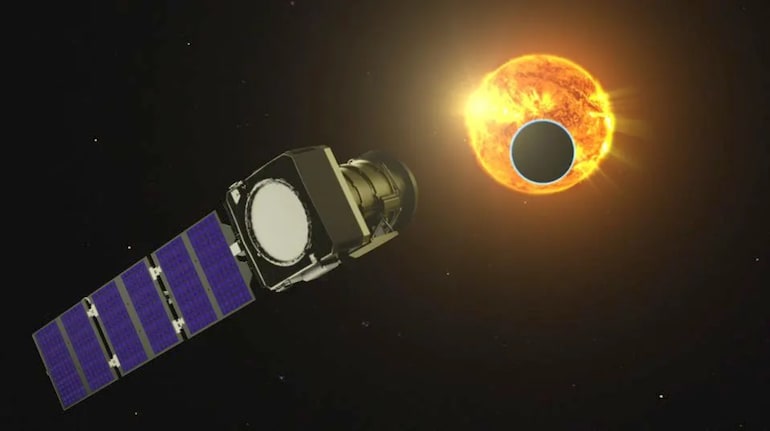
The James Webb Space Telescope (JWST) has transformed space research. It captures infrared light, revealing hidden details of the universe. However, time is limited, with demand far exceeding availability. To support its mission, NASA is launching Pandora, a small but vital satellite.
Studying Exoplanet AtmospheresPandora, set to launch in late 2025, will study 20 exoplanets. It will analyse their atmospheres for water, clouds and haze. These elements are key indicators of potential habitability. Unlike JWST, Pandora can observe exoplanets for longer periods. This extended focus allows for more detailed atmospheric studies.
JWST faces issues with stellar light interfering with data. Pandora is designed to separate planetary signals from stellar variations. It will track both star brightness and exoplanet transits. This will improve the accuracy of atmospheric readings. Although smaller than JWST, Pandora’s patience makes it invaluable.
Mission and Future ProspectsPandora will observe each exoplanet 10 times over a year. Each observation will last for 24 hours, gathering precise data. Scientists believe this will refine JWST’s future studies. By working together, these telescopes will deepen our understanding of exoplanets.
Discover the latest Business News, Sensex, and Nifty updates. Obtain Personal Finance insights, tax queries, and expert opinions on Moneycontrol or download the Moneycontrol App to stay updated!
Find the best of Al News in one place, specially curated for you every weekend.
Stay on top of the latest tech trends and biggest startup news.



