






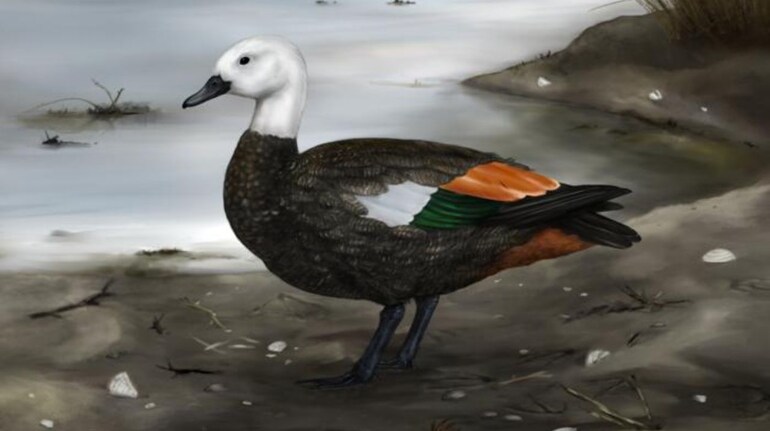
A newly described extinct bird from Rēkohu Chatham Islands reveals how nature reshapes animals over time. Researchers say the shelduck adapted quickly to its remote environment.
Evolution shaped by island conditions
Scientists at the University of Otago identified the Rēkohu shelduck. Its ancestors reached the islands nearly 390,000 years ago. That span was long enough for major changes to appear. Researchers found the bird developed shorter, stronger wings and longer legs. These traits suggest it was on the path to losing flight.
The team linked these changes to food abundance and safety. With no ground predators, wings became less important for survival. Strong winds also reduced the need to fly often. Longer, sturdier legs supported more muscle for quick take-offs. Smaller wings made this extra force essential.
Connection to New Zealand species
Ancient DNA showed the Rēkohu shelduck’s closest relative is the paradise shelduck from Aotearoa New Zealand. Unlike its cousin, the bird spent more time on the ground. It became extinct before the 19th century due to hunting and predators.
The Hokotehi Moriori Trust gifted the bird its names. Tadorna rekohu and Rēkohu shelduck honour the island’s heritage and culture. Trust leaders say the discovery links their community to ancestral treasures. The findings appear in the Zoological Journal of the Linnean Society.
Discover the latest Business News, Sensex, and Nifty updates. Obtain Personal Finance insights, tax queries, and expert opinions on Moneycontrol or download the Moneycontrol App to stay updated!
Find the best of Al News in one place, specially curated for you every weekend.
Stay on top of the latest tech trends and biggest startup news.



