






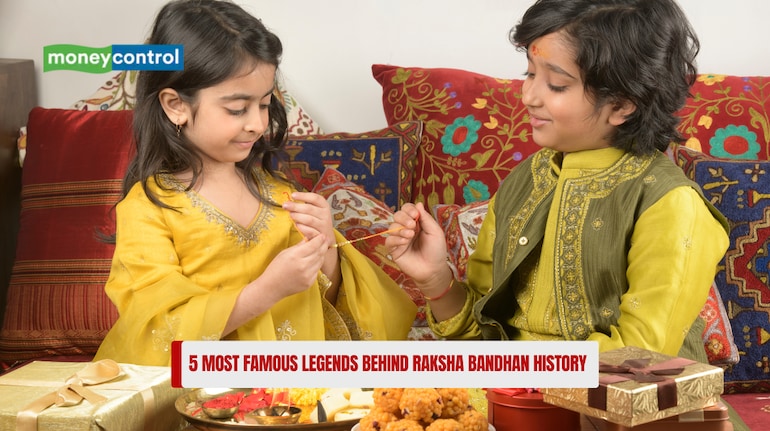
Raksha Bandhan is one of the most cherished Hindu festivals, celebrating the sacred bond between brothers and sisters. Observed on the full moon day of Shravan month, this festival holds deep cultural and spiritual meaning. As sisters tie a Rakhi (sacred thread) on their brother’s wrist, they pray for his long life, while brothers vow to protect them. But did you know that the tradition of Raksha Bandhan dates back to ancient times? Here are five famous legends from Hindu scriptures and historical tales that reveal the true origin of Raksha Bandhan.
1. Draupadi and Shri Krishna
One of the most well-known Raksha Bandhan stories is from the Mahabharata. When Lord Krishna injured his finger during battle, Draupadi, the wife of the Pandavas, tore a piece of her saree and tied it around his wound. Touched by her gesture, Krishna promised to protect her always. Later, during the infamous disrobing episode in the Kaurava court, Krishna kept that promise by providing her with endless fabric, saving her dignity. This tale beautifully reflects the essence of Raksha Bandhan – protection, love, and faith.
2. Yama and Yamuna
According to Hindu mythology, the river goddess Yamuna tied a Rakhi to her brother, Yama; the Lord of Death. Touched by her devotion and love, Yama granted her immortality and declared that whoever receives a Rakhi from his sister with true affection will be blessed with a long and healthy life. This story adds a spiritual dimension to the festival, highlighting Raksha Bandhan’s meaning beyond mortal ties.
3. Queen Karnavati and Emperor Humayun
This historical legend dates back to medieval India. Queen Karnavati of Mewar, facing a threat from Bahadur Shah, sent a Rakhi to Mughal emperor Humayun seeking his protection. Moved by her gesture, Humayun marched with his army to defend her kingdom. Although he arrived late, this story is often cited as an example of how Raksha Bandhan transcends religion and culture, reinforcing the values of unity and honor.
4. Indra and Indrani
Another early legend comes from the Bhavishya Purana, where Indrani, the wife of Lord Indra (King of the Devas), tied a sacred thread on his wrist to protect him during his battle against the demons. This Rakhi thread, blessed with sacred mantras, empowered Indra to win the war. This narrative showcases the original form of Raksha Bandhan as a spiritual act of protection during times of adversity.
5. Rani Padmini and the Rajput Warriors
In Rajasthan, it is said that Rani Padmini sent Rakhis to various Rajput warriors, urging them to protect her kingdom and its honor. This tradition symbolized the courage, sacrifice, and brotherhood that Raksha Bandhan celebrates. It also highlights how the Rakhi became a token of loyalty and duty during times of war.
From epic legends to royal tales, Raksha Bandhan has evolved, but its core values remain unchanged love, loyalty, and protection. Today, sisters tie Rakhi to brothers, cousins, and even friends, celebrating bonds of care and commitment. Many women also tie Rakhis to soldiers and jawans as a symbol of respect and gratitude.
The history of Raksha Bandhan is deeply rooted in Indian culture and sacred texts. These five timeless legends remind us that the Rakhi is more than just a thread—it's a promise, a blessing, and a symbol of undying love. As you celebrate this beautiful festival, remember its divine origins and the countless stories that continue to inspire generations.
Discover the latest Business News, Sensex, and Nifty updates. Obtain Personal Finance insights, tax queries, and expert opinions on Moneycontrol or download the Moneycontrol App to stay updated!
Find the best of Al News in one place, specially curated for you every weekend.
Stay on top of the latest tech trends and biggest startup news.









