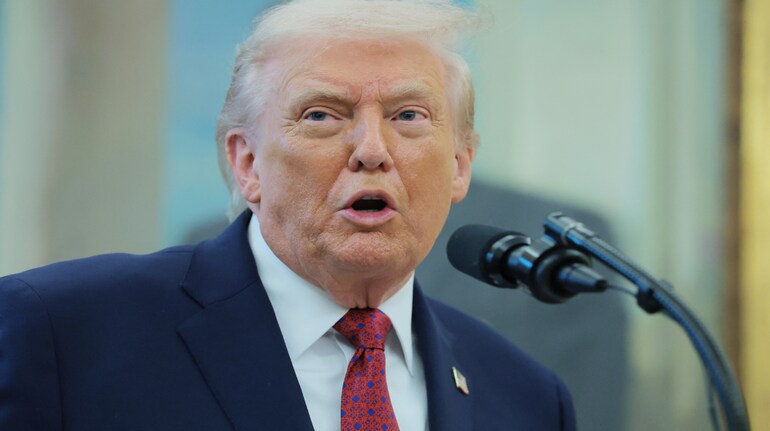
With tariffs proving unpopular and the cost of living still a sore point in the US, President Donald Trump and his team are leaning on a familiar political lever: promise households money. The idea being signalled is two-track. One is a possible “tariff rebate”, framed as a dividend funded by customs revenue collected from broad-based import duties. The other is a coming surge in tax refunds in early 2026, driven by a new set of tax cuts enacted in July and designed to show up when people file returns, the New York Times reported.
The rebate idea, still light on detailTrump has repeatedly floated one-time payments of about $2,000 to many families, financed out of tariff revenue. But the administration has not published a plan, and any large-scale rebate would require congressional action. The concept also revives an earlier pattern from this term, when the White House mused about paying households a “dividend” from savings attributed to government cost-cutting, an idea that never turned into a program.
In the meantime, the US administration has used tariff revenue as a talking point to justify other payouts, including roughly $12 billion in newly earmarked aid for farmers strained by the trade war. That only sharpens the central question for rebates: how much tariff money is actually available once competing claims on it are accounted for.
Why economists are scepticalEconomists argue that cheques may feel good but miss the underlying reasons prices remain elevated. Housing constraints have kept rents and mortgage costs high, and tariffs themselves can raise the price of imported goods and inputs. Injecting more cash into the economy can also add to inflationary pressure if supply constraints remain, creating a cycle in which higher prices chase higher payouts.
The arithmetic is another constraint. Customs revenue is sizable, but a nationwide rebate programme can quickly outgrow it, especially if eligibility is broad. Some analyses suggest that a $2,000-style design, even with income limits, could cost more than annual tariff collections, forcing lawmakers to choose between cutting the benefit, narrowing eligibility or finding funding elsewhere.
The quieter payoff: Bigger refunds in early 2026Alongside the rebate chatter, the White House is actively promoting what it says will be a blockbuster refund season in 2026. The logic is straightforward: if withholding tables are not adjusted to reflect new tax breaks, households may see the benefit later as a larger refund rather than earlier as a slightly higher paycheque. That timing can make the payoff feel more dramatic, even though it is still the result of policy choices already baked into law.
Who benefits most, and what happens nextRefund boosts will not land evenly. Some provisions are tightly targeted, and the biggest gains may accrue to taxpayers positioned to use specific deductions. Politically, though, lump-sum payments can be powerful because they are visible. The next test is whether the White House turns the tariff rebate from a talking point into a legislative push, and whether voters treat cheques and refunds as relief, or as a distraction from the price pressures they feel every week.
Discover the latest Business News, Sensex, and Nifty updates. Obtain Personal Finance insights, tax queries, and expert opinions on Moneycontrol or download the Moneycontrol App to stay updated!
Find the best of Al News in one place, specially curated for you every weekend.
Stay on top of the latest tech trends and biggest startup news.