






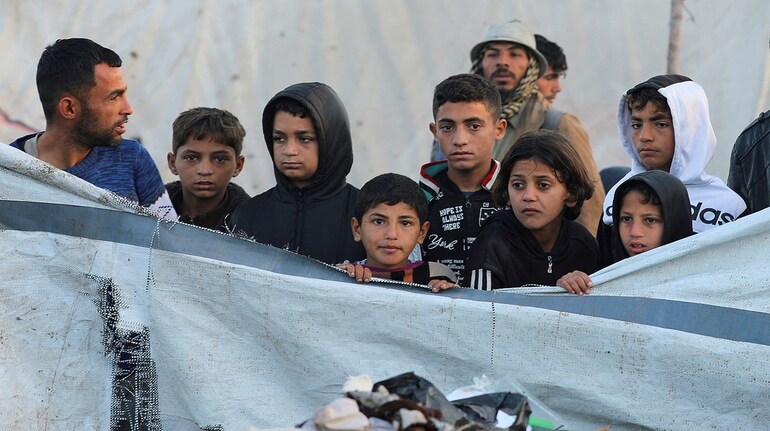
The fragile ceasefire between Israel and Hamas is on the brink of collapse just over three weeks after it began, as disputes over hostages and humanitarian aid escalate. Both sides are reinforcing their positions ahead of a crucial deadline on Saturday, raising fears that fighting could soon resume, The Wall Street Journal reported.
Hostage delays heighten tensions
The ceasefire agreement, structured in phases, was designed to facilitate the release of hostages in exchange for Palestinian prisoners and humanitarian aid to Gaza. However, Hamas has refused to proceed with the next scheduled exchange until more aid—such as shelter and supplies—enters the besieged enclave. Israel, in response, has warned that it will restart military operations if the hostages are not released as planned.
Saturday marks a key test for the ceasefire, as the next group of hostages is expected to be freed. Israel has already deployed additional troops to Gaza, preparing for a potential escalation. Hamas, meanwhile, has ordered its fighters to go into hiding and switch to secure communication channels in anticipation of renewed combat.
Political pressures complicate negotiations
The truce’s second phase, which requires Israel to fully withdraw from Gaza in exchange for the release of all remaining hostages, has become a major point of contention. Prime Minister Benjamin Netanyahu faces pressure from far-right members of his ruling coalition, who have threatened to withdraw their support if he agrees to any deal that leaves Hamas in power. This political uncertainty has further delayed talks, raising concerns that negotiations may break down entirely.
Some Israeli officials have issued mixed messages about the government’s position, creating additional confusion. While Netanyahu has warned Hamas to release the hostages, he has stopped short of explicitly endorsing US President Donald Trump’s demand for the immediate release of all captives.
Trump’s ultimatum fuels uncertainty
Trump’s involvement in the ceasefire talks has introduced another layer of complexity. The US President, who played a role in brokering the truce, has issued a direct ultimatum to Hamas, demanding the release of all hostages rather than the phased approach initially agreed upon. His stance has emboldened Israeli hardliners while alarming Hamas, further complicating efforts to maintain the cease-fire.
In addition, Trump’s controversial proposal to relocate Gaza’s population to neighbouring Arab countries has sparked backlash from regional mediators, who argue that such a plan is unrealistic and could destabilize the region further.
Uncertain future for cease-fire
The delay in hostage releases has increased pressure on Netanyahu’s government, particularly from families of captives who fear time is running out. Some recently released hostages have confirmed that those still in captivity are facing dire conditions. Critics argue that Netanyahu is prioritizing his political survival over advancing to the next phase of the cease-fire agreement.
Mediators are working to resolve the crisis before Saturday’s deadline, but tensions remain high. If negotiations fail, Israel could resume military operations, plunging the region back into conflict.
Discover the latest Business News, Sensex, and Nifty updates. Obtain Personal Finance insights, tax queries, and expert opinions on Moneycontrol or download the Moneycontrol App to stay updated!
Find the best of Al News in one place, specially curated for you every weekend.
Stay on top of the latest tech trends and biggest startup news.









