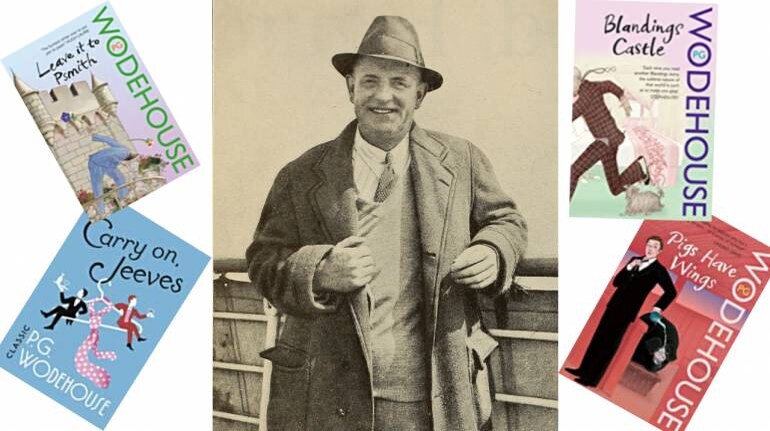
During a recent hearing in the Mumbai High Court, the counsel for Gautam Navlakha, human rights activist and journalist arrested in the Bhima Koregaon case, brought up a literary matter. He said that prison officials had prevented the accused from receiving a book by P.G. Wodehouse. The reason they gave was that it was a security risk. “Wodehouse, a security threat?” the judge reportedly responded. “That’s quite comical.”
The honourable judge’s reaction was perfectly apt. But let’s pause for a moment. What if the prison authorities in their wisdom have spotted what generations of readers haven’t? What if Wodehouse was actually a revolutionary whose work contains disguised messages calling for an overthrow of the current order?
Since the prodigious author wrote well over 100 books, film scripts and plays, one can only dip into a few to make the case. Take the character of Psmith, to begin with. This engaging young man has the habit of addressing others as “comrade”. If that isn’t a red flag, what is?
It gets worse. In Psmith, Journalist, the character helps to takes over a household affairs magazine with the intention of turning it into “red-hot stuff”, an unmuzzled guardian of people’s rights. He fills it with articles criticising tenement landlords and others that vehemently stand up for the underdog. Imagine if our media adopted such forthright tactics. National foundations would totter.
Then, there are Wodehouse’s best known characters, Jeeves and Wooster. On the face of it, the novels in which they appear are sparkling confections that can’t help make one smile, if not laugh out loud. You need to read between the lines to realise how insidious they are.
The butler Jeeves is clearly a member of the proletariat, and his employer Bertie Wooster is a feckless part of the bourgeoisie. Jeeves is portrayed as supremely intelligent and resourceful, with Bertie referring to him as being “so dashed competent in every respect”. He turns to him for help in getting out of several scrapes, even taking his advice on matters of socks, shirts, ties and, on one occasion, the tricky subject of growing a moustache.
This is how Wodehouse undermines the natural order of things, with scant respect for tradition and authority. One shudders to think of the impact on impressionable readers. For all you know, Wodehouse was toying with a plot that would end with Jeeves lecturing members of the Drones Club on dialectical materialism.
In the novels set in Blandings Castle, Wodehouse takes aim at the eccentricities of Lord Emsworth, the woolly-headed peer besotted with his prize pig. Again, one comes across the alarming stance of making fun of respected members of society.
Here, the figure of Galahad Threepwood is shown as a counterpoint to the absent-minded lord. Threepwood is the black sheep of the family with a scandalous past and considered to be a wastrel. Yet, he is depicted as jaunty, popular, and always attempting to spread sweetness and light.
In this way, Wodehouse inserts the message of revolutionary class consciousness into his work. This becomes even more evident with another recurring character, Roderick Spode, leader of a group known as the Black Shorts. This fine fellow is mocked even by Bertie Wooster, who firmly tells him: “The trouble with you, Spode, is that just because you have succeeded in inducing a handful of half-wits to disfigure the London scene by going about in black shorts, you think you're someone. You hear them shouting ‘Heil, Spode!’ and you imagine it is the Voice of the People.”
It’s not only in his novels and short stories that Wodehouse tried to upend the existing order. Take a piece he wrote for Vanity Fair magazine in 1919. Here, he compares the complicated process of filing income tax returns to a game that the whole family can enjoy.
“Here was Father with his spectacles on,” Wodehouse writes, “with Mother leaning over his shoulder and pointing out that, by taking Sec. 6428 H and shoving it on top of Sub-Sec. 9730, he could claim immunity from the tax mentioned in Sec. 4587 M.” This is simply spreading discontent in the guise of promoting family values. Quite shocking.
Such are the subtle messages of the writer whose work is being denied entry into prisons by the sagacious Indian authorities. Another anti-national plot foiled.
Discover the latest Business News, Sensex, and Nifty updates. Obtain Personal Finance insights, tax queries, and expert opinions on Moneycontrol or download the Moneycontrol App to stay updated!
Find the best of Al News in one place, specially curated for you every weekend.
Stay on top of the latest tech trends and biggest startup news.