In the first decade of India’s economic liberalisation, which is also the last decade for the single-screen theatre’s reign, few filmmakers rose from the Hindi film industry’s netherworld to make the most of a time and place that once was and never will be.
Cinema Marte Dum Tak, Amazon Prime Video’s six-episode docuseries, is a cheerfully entertaining and often poignant look at these filmmakers who, as co-creator Vasan Bala tells Moneycontrol, “made feature films in the time and budget it takes to make a short film.”
The series, which premiered on Friday, looks back at the career of four filmmakers: Vinod Talwar, Kishan Shah, Dilip Gulati and J Neelam. From the early 1990s to the early 2000s, they rolled out hundreds of feature films which could cost less than Rs 4 lakh and earn up to Rs 40 lakh within a week.
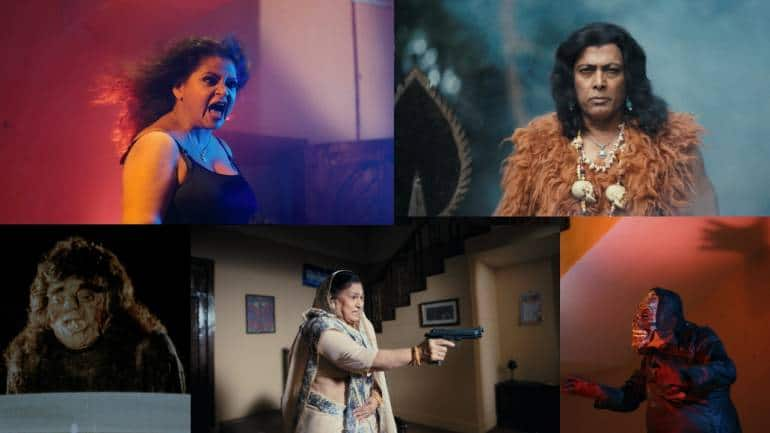 Stills from 'Cinema Marte Dum Tak'.
The formula? Mostly non-stars, minimal locations, skin show, violence, horror, and innuendo-filled dialogue — a combination that the interviewees proclaim to have worked wonders for their working-class audience of labourers and rickshaw-pullers.
Over time, with the Hindi film industry’s corporatisation, rise of multiplexes, and the onslaught of the Bhojpuri film industry that absorbed the raunchiness of these movies, Bollywood’s little, impish cousin disappeared.
“When we set out to look for these filmmakers, they had all gone dark and underground, retired into their family life, miles away from cinema,” research head Pritesh Kumar Srivastava tells Moneycontrol. He adds that their starting wish-list of filmmakers to interview had up to 50 names but several refused to appear in the series.
Bala explains, “In the corporate space paperwork, legal clearances take a long time but the pulp-movie industry believed in per-day cash and a handshake to start and finish a movie. This drastically different mindsets needed to come as one.”
We had got a glimpse of this world in Ashim Ahluwalia’s Nawazuddin Siddiqui-starrer Miss Lovely (2012), in which a duo of filmmaker brothers combine sex, violence and grotesque horror in quickly made low-budget films that draw huge profits in a short period. Five years later, Shamya Dasgupta’s non-fiction book Don’t Disturb The Dead: The Story of the Ramsay Brothers (2017, HarperCollins) looked into the lives of Bollywood’s horror genre pioneers, the Ramsay brothers, mistakenly believed to have inspired Miss Lovely.
"Miss Lovely wasn't inspired by the Ramsays at all, but by other, more dubious brothers,” Ahluwalia wrote in the foreword, adding that his film took inspiration from the “rougher, cheaper, wilder lot” of filmmakers who borrowed Ramsays’ methods to make “primal, anarchic films”, which, are, often, dismissed pejoratively as B-grade, C-grade, or Z-grade cinema. Ahluwalia is credited as the creative consultant for the Vice Studios' production.
“Because of the kind of films they made, and how society understood them, they were distrustful easily,” Srivastava says about the difficulties in bringing the interviewees together. Co-director Disha Rindani adds how the filmmakers would abuse Srivastava and stop taking his calls or responding to emails for months.
“Once word of mouth spread within their industry that this series is happening for real and we are legit, people started agreeing to be part of our series,” Bala says. These films often featured actors who have simultaneously been part of A-list productions: Raza Murad, Kiran Kumar, Mukesh Rishi and Harish Patel. They appear in the series, offering their observations and anecdotes from time to time.
The series was conceived when Vice Media’s Samira Kanwar approached Srivastava to “make something” on these films in 2019. Bala entered the picture in 2020 as executive producer.
“By the time I was there, Pritesh had introduced the potential interviewees to us and all that was left to do was pitch it to Amazon,” Bala says.
The makers had decided that they wouldn’t be “laughing at them but with them” or “accept them, or not, or whatever, with their good, bad and ugly, as anybody would want to be accepted”. The idea was not to create a “hahaha show, like MTV spoofs, where we would laugh at someone’s expense,” Bala clarifies.
The series is structured around Talwar, Shah, Gulati and Neelam, who have all but left filmmaking, gearing up to make one short film each in their own inimitable style. Interviews and clippings from their works are interspersed in the documentary. In the end, the foursome are touchingly given a red-carpet premiere, a sort of mainstream acknowledgement they yearned for but never received in their prime.
“Initially, we thought the four directors would make one film but that terrible idea was quickly dropped because each has their own style,” Bala says, “It was interesting to see how they get their crew together in a short time and shoot their film on negative (film roll)”.
Production of Cinema Marte Dum Tak was often halted throughout 2020 and 2021 owing to the COVID-induced lockdown. Srivastava and his team would have to stay in constant touch with the interviewees so they don’t lose interest, or, worse, disappear.
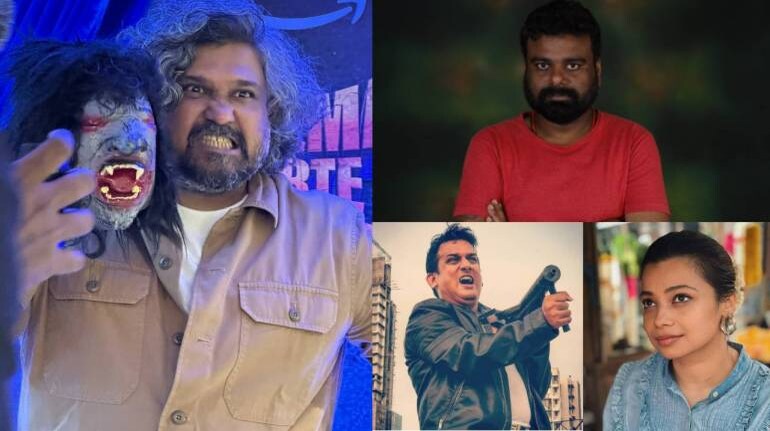
 (From left) Yesteryear directors J Neelam, Vinod Talwar, Dilip Gulati and Kishan Shah.
But as Rindani tells Moneycontrol, “The last piece of the puzzle was Kanti Shah,” and until his interview had been secured, the makers were not entirely feeling confident.
Kanti Shah, younger brother of Kishan Shah, was the most financially successful of these filmmakers. He managed to finish films quickly, had an aesthetic style better than most, and had the gall to get top stars, such as Dharmendra and Mithun Chakraborty, to act in his films. These films, such as Loha (1997), and, especially, Gunda (1998), are today cult classics, even among the most mainstream of Hindi film-watching cinephiles.
Kanti Shah does appear in the series but, interestingly, he has soured relations with his peers, and, apparently, his family, too.
“The deal with Kanti is that you are alone at the top,” Bala observes. “His success brought him narcissism and megalomania.”
Rindani has an interesting insight: “As you see in the series, the others had a family life, or, you have a woman (J Neelam) who is living life with some kind of dignity and normalcy. Kanti, by, contrast, doesn’t have a family life. He is a rake with no fear of judgement by society and has broken those ties. He knows he can’t be judged and he’s able to do what he wants to do.”
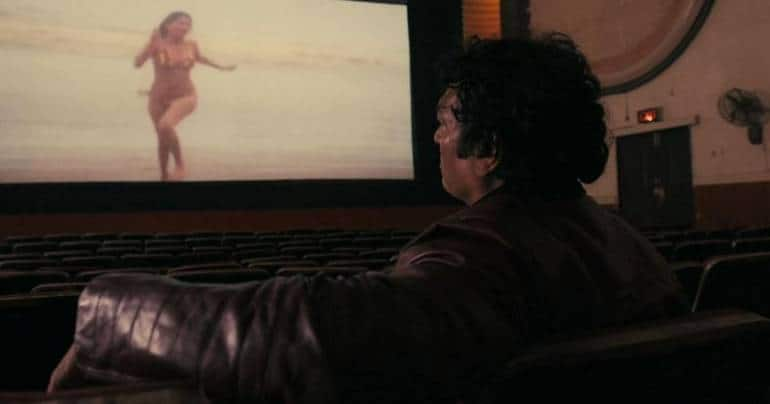 Yesteryear director Kanti Shah watching his 2005 film ‘Angoor’, starring Sapna Sappu. (Photo: Amazon)
Among the researchers on the show was Aseem Chandaver, whom Bala describes as “the biggest fanboy for these sort of films”. Chandaver, Bala says, provided the “analytical framework” for the series: “What is which filmmaker’s style, whose filmmaking gradually declined, who talks too much, that sort of thing Aseem knew best.”
Chandaver, whose Instagram profile offers a treasure trove of moments from those films, tells Moneycontrol, “There are some guys on whom you can make one whole season. You can make a whole season on just Kanti Shah. Or Suresh Jain, the king of sleaze, best-known for his waali films (in late 2000s), Dabbeywali, Kaamwali, Machhliwali.”
The three-year making of the series also witnessed the deaths of many possible interviewees, such as cinematographer Dilip Dey and composer Sawan Kumar Sawan.
One noticeable lack in the series was the voices of the women who starred in these films. These women, in their roles, were frequently in states of undress, molested and raped — staples of the genre. While Neelam does talk about “women empowerment” in these kind of films (it is true that many of these films worked because of the heroine’s star power), it doesn’t quite address the issue.
Turns out that the makers did approach these actresses but “they didn’t want to return and associate with this world,” Rindani says. Sriprada was among those who were approached but she died during the pandemic. Bala, in fact, wants to cast Poonam Dasgupta, a sort of Sridevi of these films, in one of his retromaniac movies. His recent film, Monica, Oh My Darling, for instance, had a role for actor Shiva Rindani, Disha Rindani’s father. Shiva Rindani is also among the interviewees in the series.
Another aspect untouched in the series was that the audience for what Chandaver would call “terribly awesome movies”, instead of B, C, or Z grade, shifted to their smartphone screens, with several streaming sites such as Ullu and Kooku, offering semi-sexual content. It’s not that this audience disappeared into thin air, as the series sometimes suggests.
Rindani says, with the Central Bureau of Investigation cracking down on the porn industry in Gujarat in 2021, the people in the digital space making these films went silent, “restructuring and re-strategising”. In fact, Shiva Rindani was offered to direct a few of these digital-era films.
What’s next for Season Two? Chandaver hopes they “cross international boundaries” and Bala says he has been trying to get Roger Corman, the guru of Hollywood B-movies for Cinema Marte Dum Tak for a long time.
“I have been sliding into his DMs since the pandemic,” Bala says. Corman, who is 96, after all, mentored the who’s who of Hollywood’s greatest directors: Martin Scorsese, Francis Ford Coppola, James Cameron.
Rindani’s suggestion is more local: Ram Gopal Varma. “That’s a great idea,” Bala muses.
Discover the latest Business News, Sensex, and Nifty updates. Obtain Personal Finance insights, tax queries, and expert opinions on Moneycontrol or download the Moneycontrol App to stay updated!

Find the best of Al News in one place, specially curated for you every weekend.
Stay on top of the latest tech trends and biggest startup news.