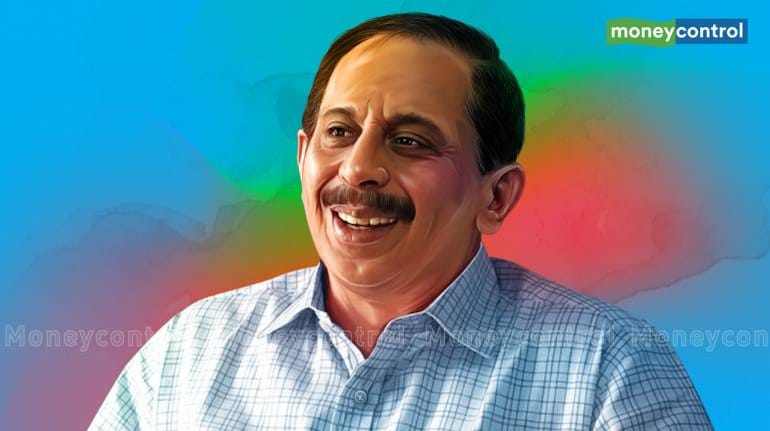
V.J. Kurian who retired as the managing director of Cochin International Airport Limited (CIAL) on Wednesday, June 9, 2021, after spending 20 of his 39 years of work life at the airport, has many firsts to his credit.
A visionary and progressive thinker, he was instrumental to starting the airport and was at its helm when it became a success. When CIAL started in 1999, only Indian Airlines, Air India and Jet Airways operated flights which were followed by Air Sahara a little later. In 2001, the A.B. Vajpayee government gave international status to the airport so foreign airlines started coming in. Pre-Covid, there were 14 foreign airlines flying into Kochi.
CIAL has also been paying dividend from 2003-04, and in 2019-20, the total dividend pay-out touched 282%.

Set up as a public-private partnership (PPP) airport, the idea of following the PPP route came out of a meeting on a cold December day in Delhi in 1991. But for Kurian, a 1983 batch officer of the Indian Administrative Service (IAS), the details of the meeting are as fresh today as they were when he came out of the meeting 30 years ago.
“I was deputed (at that time he was district collector, Cochin) by the Kerala government to go to Delhi for the meeting with Minister for Civil Aviation Madhavrao Scindia. At that time, the airport in Cochin was a naval airport with a civil enclave. The runway was very short, which meant that aircraft coming in could not carry as many passengers as they were allowed to carry. Besides, the erstwhile Indian Airlines had just acquired the new Airbus 320 and that would have to take a major passenger load penalty (or carry much fewer passengers to be able to come there),” Kurian says in a telephonic conversation a day after he retired.
At the meeting, Scindia decided that a new airport was to be built in Kochi, and Kurian was tasked with identifying the land. When the question of financing came up, neither the Airports Authority of India (AAI) nor the Port Trust was willing to put it up. "Rupees eighty crore was required for the expansion of the runway. Cochin risked falling off the air map," Kurian says.
First came the issue of getting enough land (almost 1,000 acres) for the new airport in Cochin. The Navy said it was comfortable with the existing airport while the Port Trust, which owned the land, said you can build an airport in any place but ships need a port and water.
When the land was identified, AAI said it had no money, adding that if CIAL raised the money, it would provide technical support. That is when the idea of a PPP was floated. Kurian was then a young IAS officer with about nine years of service. “The Kerala government said go ahead, and I was made a special officer,” he says.
The rest is history. The money was raised, and the airport came up.
“Finding land was very tough. We had a lot of setbacks during the land acquisition process. We lost cases (on land acquisition) in the High Court and finally won when the Supreme Court gave a verdict in our favour. We also had to evict 820 families for the new airport to come up,” Kurian says.
V. Thulasidas, former chairman and managing director, Air India and Air India Express, and former managing director, Kannur International Airport, says that Kurian has a knack for smiling his way through everything, including the toughest challenges. He built the first non-AAI airport in the country and turned it into one of the major airports.
“We are the pioneers of PPP in the country. Hyderabad, Mumbai, Delhi and Bengaluru (airports) happened much later,” Kurian says. “The idea and implementation of the airport was not copied from other countries. We got some people from AAI on deputation, mainly Keralites. After all, it is not rocket science. You need a runway, a terminal and you need to get the passengers in and out as quickly as possible,” Kurian adds.
Someone who thinks on his feet, Kurian also found a quick solution when there was a small problem with the Kerala State Electricity Board (KSEB) which hiked the power tariff by almost 50%. In a progressive and far sighted move, Kurian turned to solar energy and now the airport is the only one in the world to be run entirely on solar power. “Earlier KSEB was charging Rs 5.60 a unit of electricity which was suddenly increased to Rs 7.60 a unit. We decided to experiment with solar energy.”
It was estimated that the airport needed 48,000 units of electricity a day, so the airport decided to commission a new 52,000 unit solar power project.
P.S. Nair, ex-member HR, AAI, and former chief executive officer and executive director, GMR Airports, says Kurian steered the greenfield Kochi airport project from scratch, withstanding various adversaries in the formative stages. “He pursued the low-cost airport project passionately, making it profitable from day one to the glee of CIAL's shareholders. So much so, that the Economic Regulator benchmarked CIAL's capital cost as the ideal standard. Global recognition to CIAL for 100% self-sufficiency achieved by it for meeting the airport's energy needs through solar power is the best testimony to Kurian's vision, devotion and commitment,” he says.
Kurian and his team always thought out of the box. Since financing was an issue, they decided to approach non-resident Indians (NRIs) from around the world. “It was a new venture, so not many people believed in it. But today there are about 20,000 shareholders in the airport company from 34 countries. Most of them are NRIs. That is how we started out, and then we took loans from banks,” Kurian says.
And in what was probably a first in India, the airport was conceptualized and became operational in six years. It was built as a low-cost airport at Rs 300 crore (which included the cost of land), while Kannur airport which came up later was built at a cost of almost Rs 2,000 crore.
Suresh Nair, general manager, India, Sri Lanka and Bangladesh, AirAsia Group, calls Kurian an “entrepreneurial bureaucrat”.
“He is very hands-on and every time someone goes to him with a problem, Kurian will do his best to solve it as quickly as possible. He is passionate about the aviation industry and has also built up a maintenance repair and overhaul facility at the airport,” Nair says. He adds that Kurian also built a solid team around him which included A.C.K Nair, who was director of CIAL. Nair adds that Kurian was one of the brains behind the start of Air Kerala, an airline linking Kerala with the Gulf. However, the airline never took off as government permission was not forthcoming.
“Our idea was unique. We wanted the airline to be owned by a large number of people like the airport was. If we had been allowed to operate, do you think Emirates and other Gulf airlines would have stood a chance?” Kurian asks. It was proposed that Rs 6,000 would be collected from anyone interested in becoming a member of the new airline. It was decided not to pay dividend for the first 10 years but in exchange, give a discount of up to Rs 1,000 on one return trip on Air Kerala.
“Which means you get your money back in six years. But the catch was that it forced you to travel by Air Kerala. Now if you travel, your wife will also travel. She will either become a member of Air Kerala or pay the full fare and travel. It was a very revolutionary concept. If we had done it, we would have finished off everyone; even Emirates would have been out,” Kurian says.
The promoters of Air Kerala were looking at about 2 million shareholders and there were 2.5 million Keralites in the Gulf itself, Kurian points out. “All these NRIs would have been captive travellers for us. We also said we will incur losses for the first six years. But we will ensure all of you get a discount. We thought everybody will become a shareholder because they will get a discount,” he adds.
Kurian says that the airline would have had its own airport also, as it would have been owned by CIAL. Incidentally two hangars were also built which are now being rented out to maintenance repair and overhaul major, AirWorks.
The project never saw the day of light as the then government mandated that any airline which wanted to fly abroad must have operated in India for five years and have a fleet of 20 aircraft. Air Kerala failed on both counts as it was to start operations between Kerala and the Gulf from day one. “They (Central government) never wanted the new concept. Look at it now. A foreign airline can fly into India with one aircraft but Indian carriers cannot,” rues Kurian.
Ask Kurian if he feels that now there are one too many airports in the state (Kerala has four airports) and pat comes the reply, “If a country like New Zealand with a population of about 4.5 million to 5 million can have six international airports, then why not here? I feel there is scope for more airports, especially as the economy grows and people tend to travel more and more business develops.” Incidentally, the combined traffic flow at the other three airports in the state is less than that at CIAL.
After having worked for close to four decades, Kurian who comes from an agriculture family, now thinks he “needs a rest.” “I do not want to do any work now,” he says.
Not a bad journey for a person who is the first from his family to be involved in the airport business.
Discover the latest Business News, Sensex, and Nifty updates. Obtain Personal Finance insights, tax queries, and expert opinions on Moneycontrol or download the Moneycontrol App to stay updated!
Find the best of Al News in one place, specially curated for you every weekend.
Stay on top of the latest tech trends and biggest startup news.