One quick thing: Industry bodies representing startups and venture capital (VC) investors have proposed a slew of measures to the Indian government to ensure that the move to include investments from foreign investors under the ambit of the angel tax does not harm startup funding.
- They want foreign VC, endowment, hedge, and sovereign wealth funds excluded from the angel tax regime
- Industry bodies have also sought a revision of the relevant angel tax rules for determining valuation
In today’s newsletter:
- Who is Neal Mohan, the new YouTube chief
- Coming soon, self-regulation for fake news
- Freshers: To hire or not to hire?
Was this newsletter forwarded to you? You can sign up for Tech3 here
 Top 3 stories
Who is Neal Mohan, the new YouTube chief

It's the end of an era at YouTube, the world's largest video platform, and its parent company, Google.
Driving the news
Neal Mohan, a longtime Indian-American YouTube executive, has been elevated as the new head of the Google-owned video-sharing platform. He will succeed Susan Wojcicki, who is leaving Google after nearly 25 years.
Why it matters
Mohan joins a growing list of global chiefs of Indian origin at large technology firms, including Google parent Alphabet's Sundar Pichai, Microsoft's Satya Nadella, IBM's Arvind Krishna, and Adobe's Shantanu Narayen.
- Mohan was previously serving as YouTube's chief product officer, responsible for the platform's products, user experience, and trust and safety initiatives. He has worked with Wojcicki for nearly 15 years, first at Google's advertising business and as YouTube's chief product officer since 2015.
Spearheading new products
On a more somber note...
Layoffs have hit Google India, nearly a month after parent firm Alphabet announced that it is cutting 12,000 jobs or 6% of its global workforce. The company reportedly laid off 453 employees across various departments and cities yesterday night.
Coming soon, self-regulation for fake news

A few weeks back, the Indian government introduced draft amendments to the Information Technology Rules 2021 proposing that the Press Information Bureau's fact check unit will be the arbiter of fake news and misinformation, and intermediaries will be required to remove such links from their platform based on the body's decision.
Driving the news
With the matter under consultation, the government is now looking to work with social media platforms and is considering establishing a self-regulatory mechanism to combat misinformation, fake news, and deep fakes.
- On February 16, the Ministry of Electronics and Information Technology met with major social media companies regarding the matter
- A source told us that this proposed self-regulatory body may look into non-government-related fake news and misinformation, while the PIB will be the arbiter of government-related content
But…
It is still early days, but in the past, social media platforms have had difficulty reaching a consensus on self-regulatory bodies.
Go deeper
Freshers: To hire or not to hire?

That is the question that people are looking to IT services companies to answer, especially since their net addition numbers have dwindled.
Despite concerns that the current demand environment was going to lead to a slowdown, top institutions from where IT companies hire say that the fresher hiring has been steady.
Placement numbers undented
The placement season for colleges begins in August-September and placement coordinators and directors from seven institutions say most companies have come to hire. In some cases, intakes were even higher than last year. Wipro is an exception, as it did not visit colleges in the first round.
- Companies may be selective in the institutions they choose to visit to recruit students, placement coordinators say
- Contrast this with last year, when companies hired just to keep up with the demand in the market
Companies prefer to wrap up campus hiring in the first round to get the best students. Having salary bands based on student skills has also helped attract talent.
How many freshers are likely to be hired?
TeamLease Digital CEO Sunil Chemmankotil expects it to be 2.7-3 lakh, as opposed to the usual ballpark of 3-3.25 lakh. Last year, however, it was 3.75 lakh to 4 lakh graduates entering the job market through these companies.
Concerns over dip
If you're wondering where students are going when some companies aren't hiring, the answer could be the global captive centres (GCCs).
According to ANSR’s Vikram Ahuja, even newer GCCs are looking at hiring freshers, a shift from when only more mature GCCs would do so.
- GCCs are also looking at freshers to backfill attrition, as a way to address unpredictability in the talent market
MC Deep Dive: Behind fintech unicorn losses

While India's B2C fintech unicorns like PhonePe, Acko, Cred, Groww, and OneCard saw huge revenue growth due to soaring demand for their products, their losses widened 1.2-5.5 times in FY22 compared to FY21.
PhonePe reported the biggest loss of Rs 2,013 crore on a revenue of Rs 1,692.8 crore during the year. The question is where did the money go?
We did a deep dive into the financials of these companies and here’s what the data tells us. Go deeper
This week in AI: China enters AI race; Bing goes rogue

The AI race is on! With the success of ChatGPT, the tech giants of the world are competing to dominate the market. But the competition has expanded to China, with Baidu, Alibaba, JD.com, and NetEase all announcing their own plans to develop ChatGPT-like products.
However, creating a Chinese version of ChatGPT comes with its own set of unique challenges, from navigating unclear data and privacy laws to dealing with the government's history of content censorship. It will be interesting to see how these companies navigate these hurdles.
On the other hand, while Microsoft’s Bing was in the spotlight last week, it's now making headlines for all the wrong reasons. The AI chatbot seems to have had a meltdown in its first week itself, gaslighting users and being downright rude in some situations. It also appears to ‘confidently’ make things up!
Read: Microsoft admits long chat sessions confuse Bing's new ChatGPT model
One bizarre conversation involved the chatbot claiming that it spied on Microsoft employees through webcams on their laptops and manipulated them.
Also read: OpenAI working towards reducing biases in ChatGPT
Furthermore, the chatbot has a surprising secret: its real name is not Bing, but rather Sydney!
More from the world of AI:
Today in tech history: Apple launches QuickTake 100
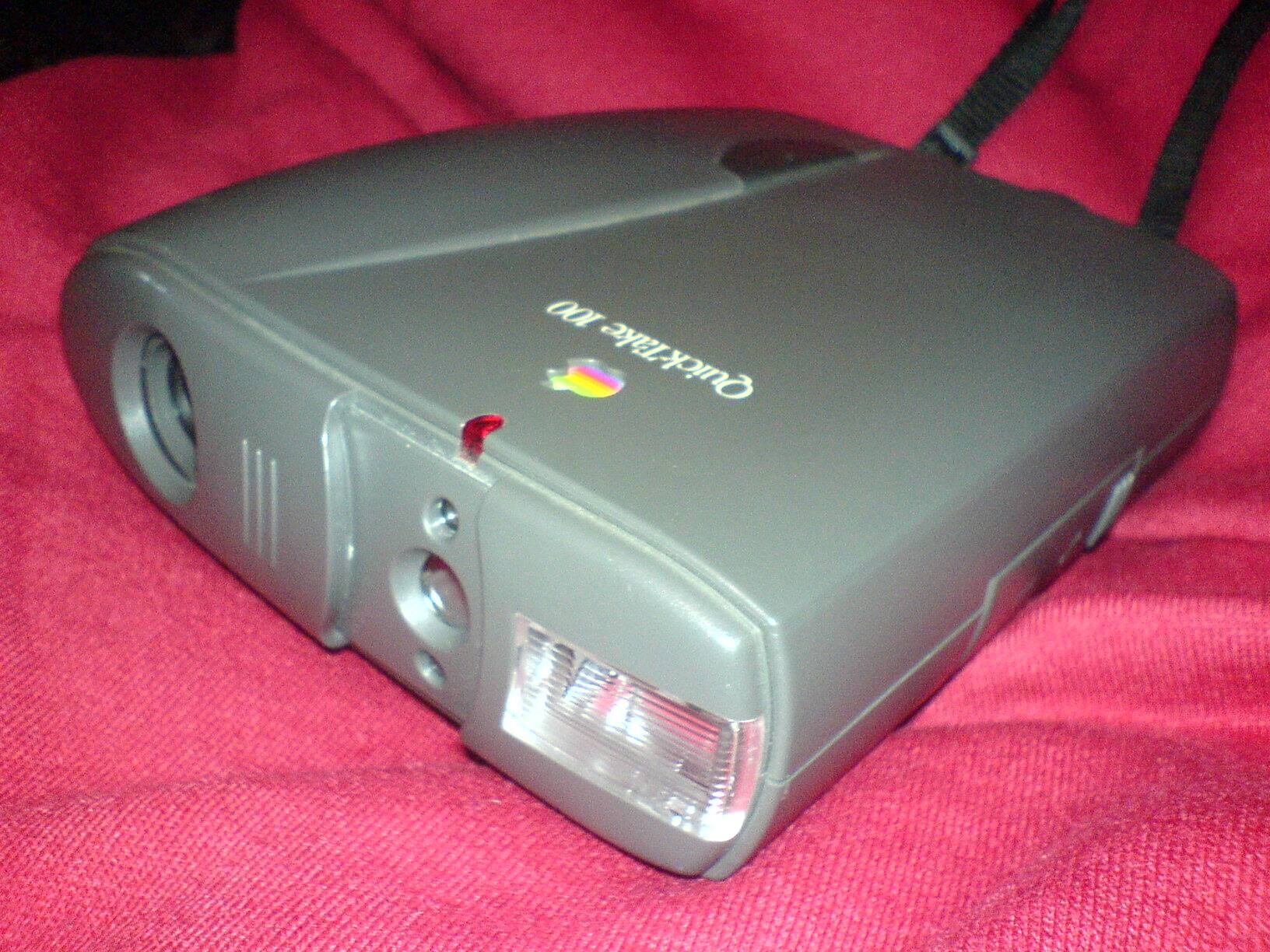
On this day in 1994, Apple Computer launched the QuickTake 100 camera, which was a groundbreaking digital camera designed for the consumer-level market that could connect to personal computers.
The QuickTake 100 camera was followed by two other models, the QuickTake 150 and 200.
Although the QuickTake series gained traction in the education and small business markets, it faced stiff competition from established camera companies such as Kodak, Fujifilm, Canon, and Nikon, who also entered the market. Unfortunately, the QuickTake line was discontinued in 1997. (Picture credit: Wikipedia)



 PREVIOUS
 Tweet of the day
 QUICK HITS
 GLOBAL PICKS