Earnings Watch: HCLTech Q1 net profit falls 10% to Rs 3,843 crore…Headcount trimmed by 269, attrition steady at 12.8%.
One quick thing: No scan, no QR sticker: Bengaluru shopkeepers ditch UPI amid GST heat.
In today's newsletter:
- Ola Electric's new strategy: From aggressive growth to profit mode
- India wants to know your AI recipe
- TCS CEO: Uncertainty won't last, confident FY26 will improve
Also: History was made at this year’s Wimbledon, the oldest and arguably most prestigious tennis tournament. Scroll below for more deets!
P.S.: Introducing the Tech3 Podcast, your daily dose of tech and startup insights. Monday to Friday! Check it out on Spotify or Apple Podcasts
Was this newsletter forwarded to you? You can sign up for Tech3 here
 Top 3 Stories
Ola Electric’s new strategy: From aggressive growth to profit mode
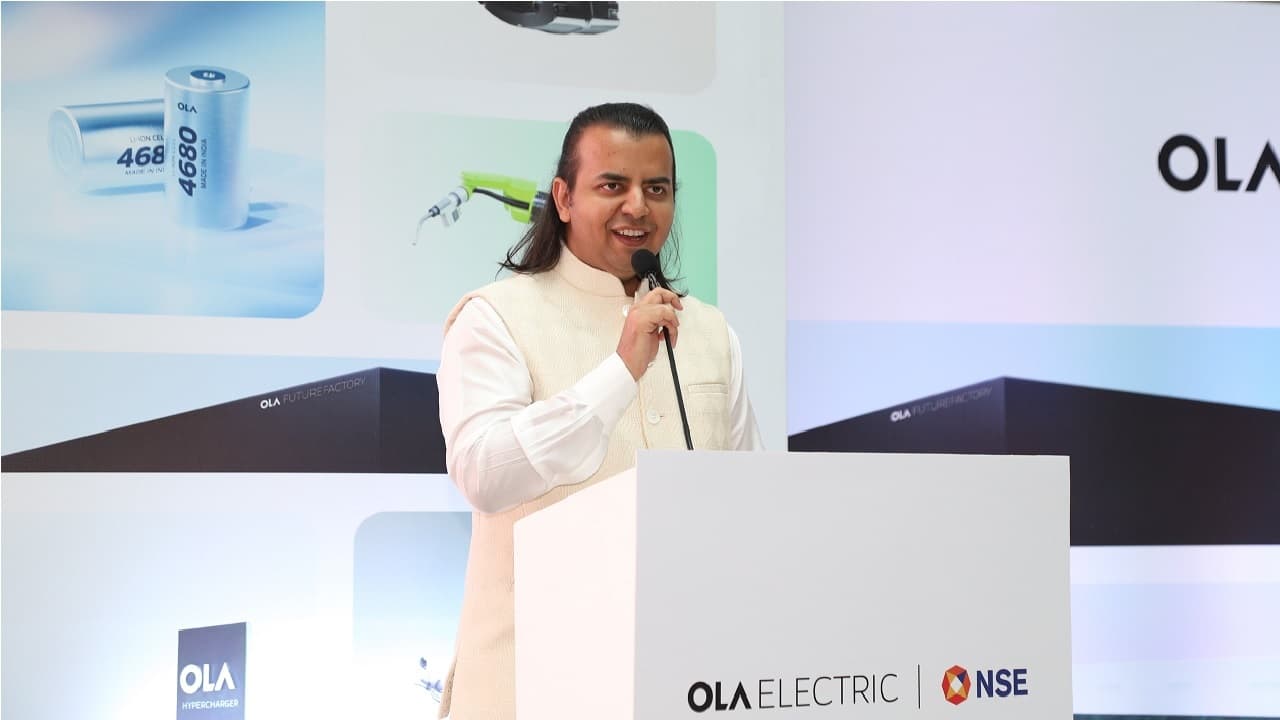
From blitzscaling to balance, Ola Electric CEO Bhavish Aggarwal is recalibrating his playbook, trading hypergrowth for a sharper focus on profitability.
Driving the news
Ola Electric is shifting gears as the Indian EV market matures, focusing on profitability and scale instead of rapid expansion.
“We have transitioned our strategy from aggressive penetration to a more balanced, profitable growth strategy…as India’s EV market moves from breakneck expansion to consolidation,” Aggarwal said during the Q1 FY26 earnings call.
Ola Electric’s auto business turned EBITDA-positive in June, driven by cost reductions under Project Lakshya and stronger margins from the Gen3 platform, which now accounts for 80% of sales.
Q1 Report Card
The electric vehicle maker narrowed its consolidated net loss to Rs 428 crore in Q1 FY26 from Rs 870 crore in the previous quarter, though losses widened year-on-year (YoY). Gross margins have improved significantly, even without subsidies.
- However, on an YoY basis, revenue for the quarter fell to Rs 828 crore, marking a 49.6% decline from Rs 1,644 crore.
Ola Electric expects its auto segment to be free cash flow positive by FY26-end and is ramping up its Cell Giga Factory capacity from 1.4 GWh to 5 GWh, with delivery of its first 4680 cell vehicles planned for Navratri.
Credit refinance, retail crackdown pose mixed signals
Even as Ola Electric’s shares rose 17% on growth optimism, the company is navigating headwinds.
- It is in talks with bankers to raise Rs 1,000–1,200 crore in private credit to refinance existing loans, its second funding move since going public in August 2024.
Regulatory pressure has also intensified, with the Maharashtra Transport Department reportedly ordering the shutdown of 388 Ola Electric Mobility outlets, accounting for around 90% of its presence in the state, over missing vehicle storage permits.
- This move could impact sales in the next quarter if the issue persists for a longer duration, experts say.
Despite challenges, Aggarwal remains bullish: “Our long-term edge lies in integrated manufacturing, in-house tech, and a direct-to-customer channel. This is compounding our advantage across every part of the business,” he said.
Read More
India wants to know your AI recipe

India wants to know what’s cooking inside your AI and they have a detailed list of requirements.
Driving the news
India’s cybersecurity agency, CERT-In, has made it mandatory for all AI systems used in government, PSUs, and essential services to include an AI Bill of Materials (AIBOM), a comprehensive record of the system’s inner workings.
- The AIBOM must detail ingredients such as model version, training datasets, known vulnerabilities, and environmental impact among others.
Tell me more
CERT-In's July 9 directive is part of updated technical guidelines on software and digital infrastructure security.
- Developers must automate and maintain live documentation of AIBOMs throughout the AI system's lifecycle.
- It applies to all AI tools used in public sector settings, regardless of risk level.
What experts are saying
“It appears that CERT-In's objective with these guidelines is to have businesses automate the AIBOM generation process and ensure exhaustive documentation,” said Sarmad S Ahmad of Ikigai Law.
But this, he added, could be “tedious and will require businesses to invest time and resources.”
Jameela Sahiba, Associate Director at The Dialogue, flagged broader concerns:
- Transparency may be limited for proprietary or third-party models
- The mandate could inhibit open-source innovation
- No differentiation between high- and low-risk AI systems
The impact, positive or otherwise, will depend on how CERT-In supports developers in complying, and whether the policy evolves to account for AI’s varied risk spectrum.
Go deeper
TCS CEO: Uncertainty won’t last, confident FY26 will improve
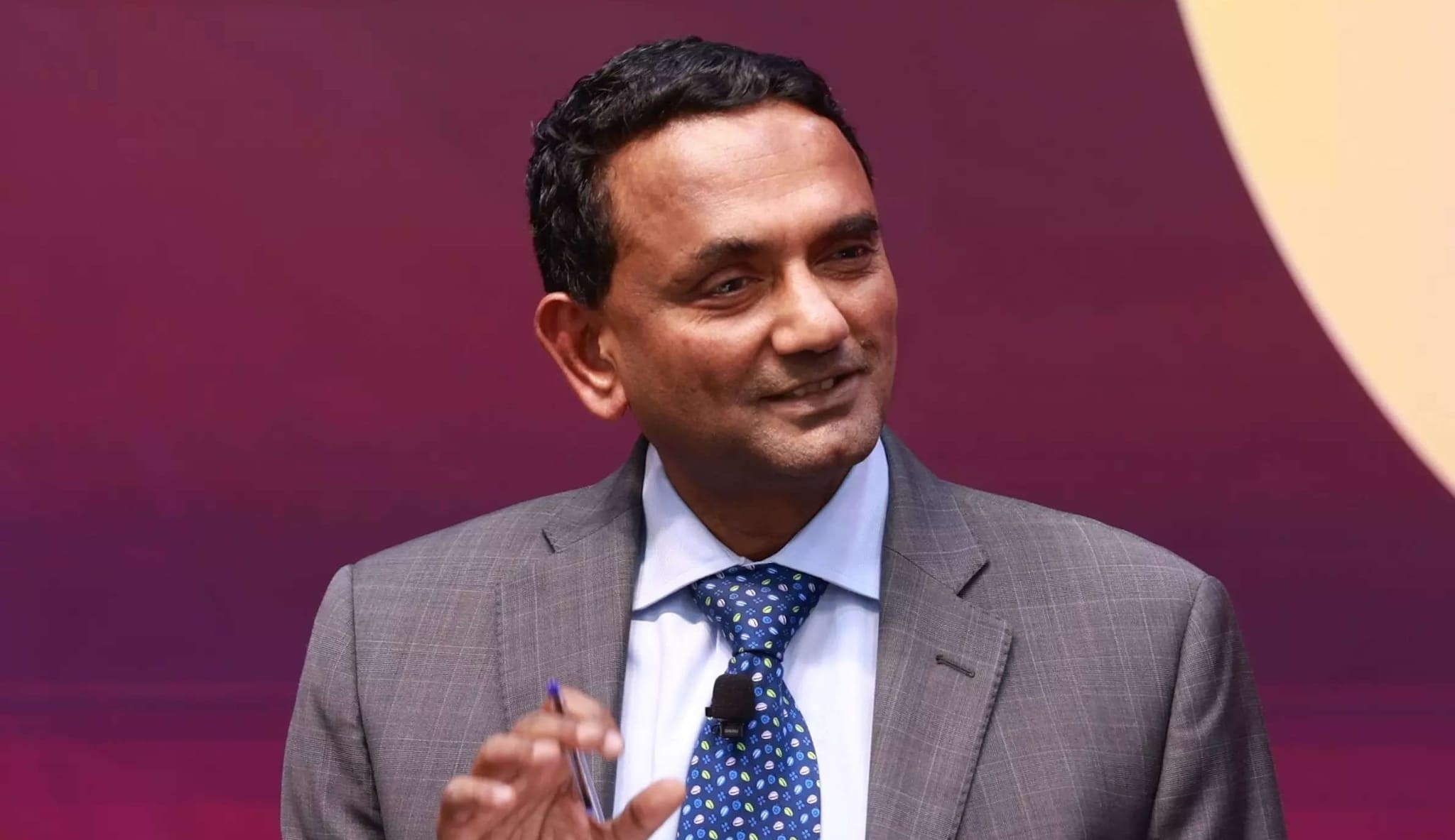
K Krithivasan, CEO and MD of the country’s largest software exporter Tata Consultancy Services (TCS) is not losing hopes, despite its lacklustre Q1 performance.
“The uncertainty cannot last long. The clarity should emerge and spend should come back,” Krithivasan tells us in an interview.
Brighter days ahead
TCS reported a 3.3% YoY decline in revenue on a constant currency basis, largely due to the conclusion of its Rs 15,000 crore BSNL deal. However, Krithivasan believes brighter days are ahead.
- The IT firm's FY26 international business revenue will be better than FY25, he said.
What's fuelling his optimism
India’s growing demand for sovereign cloud and artificial intelligence, recovery in international revenues, and diversification into emerging markets are fueling Krithivasan's optimism
- TCS launched its suite of sovereign cloud, AI and cybersecurity offering in Q1
- The CEO is betting on structural digital investments — like India’s AI Mission — to spur tech spending.
The pain points
Krithivasan also didn't shy away from acknowledging the challenges that TCS is facing at present.
- He noted delays in deal closures and decision-making in Q1, amid macroeconomic uncertainties driven by geopolitical and trade tensions.
- While technology services have remained resilient, areas such as retail, consumer business, manufacturing and auto are expected to face challenges, with their fate hinging on the outcome of Trump-era tariffs.
Dig deeper



 PREVIOUS
 QUICK HITS
 GLOBAL PICKS