Just in: HUL-Honasa call truce
One quick thing: Medikabazaar ousts Ex-CEO Vivek Tiwari over financial misconduct
In today’s newsletter:
- IT's a washout: Infosys disappoints after TCS, Wipro
- Flipkart employees back to office 5 days a week
- Model Context Protocol explained
Programming note: There will be no edition of MCTech3 on April 18, and we’ll be back in your inbox on Monday (April 21).
Was this newsletter forwarded to you? You can sign up for Tech3 here
 Top 3 stories
IT's a washout: Infosys disappoints after TCS, Wipro
It’s been a rough quarter for India’s top IT players. First TCS, then Wipro, and now Infosys. Industry giants are showing signs of strain as macro headwinds persist and uncertainty continues amid Trump's tariffs, with low visibility on client spends.
Below the mark
Infosys, India’s second-largest IT services company, reported a disappointing fourth quarter for FY25, issuing a cautious revenue growth forecast for FY26.
- Infosys now expects 0–3% revenue growth in constant currency terms for FY26
This comes after the company had raised its FY25 guidance in January to 4.5–5%, only months after a previous cut to 3.75–4.5%.
Q4 report card
The company reported a 12% YoY decline in net profit, coming in at Rs 7,033 crore.
- On a sequential basis, however, profit rose by 3.3%
- Consolidated revenue for the quarter stood at Rs 40,925 crore, up 7.9% YoY
Despite the weak outlook, Infosys leadership remains optimistic.
"We have built a resilient organisation with sharp focus on client-centricity and responsiveness to the market," said Infosys CEO Salil Parekh.
Meanwhile, Parekh received ESOPs worth Rs 50 crore, part of performance-based Restricted Stock Units.
- Parekh was the 2nd-highest paid CEO in India’s IT sector in FY24 at Rs 66.25 crore, behind Wipro’s Thierry Delaporte
Also read: Infosys to acquire Houston-based energy consulting firm, MRE Consulting
Headcount turns positive
Infosys added 199 employees in Q4, taking the FY25 net headcount addition to 6,388.
- Total headcount stands at 323,578
- Attrition ticked up to 14.1%, from 13.7% in the December quarter
Flipkart employees back to office 5 days a week

Fewer virtual conversations and more water cooler talks for Flipkart employees.
Tell me more
Walmart-owned Flipkart has put an end to its work-from-home (WFH) policy.
- While WFH flexibility had been in place since 2020, Flipkart had, over the past few months, begun calling back senior employees in phases
Now, all employees, across roles and functions, will be expected to work from the office. That said, the return-to-office arrangement will be gradual, with flexibility in certain cases.
- Employees will also be allowed to work from home on some days, which they can avail from time to time over the year
Timing the move
Flipkart is calling all employees back to the office at a time when competition is brewing.
And on the quick commerce front:
- Blinkit is upping the ante, Zepto is preparing to go public, and Swiggy Instamart is getting more aggressive
Interestingly, Flipkart is among the last few new-age companies, especially in the e-commerce space, to end its WFH policy.
- While Amazon called its employees back around six months ago, Meesho staffers have been working from the office for over a year
- Similarly, Zepto and Blinkit employees have been working from the office for five days a week for several months now
Dig deeper
Model Context Protocol explained
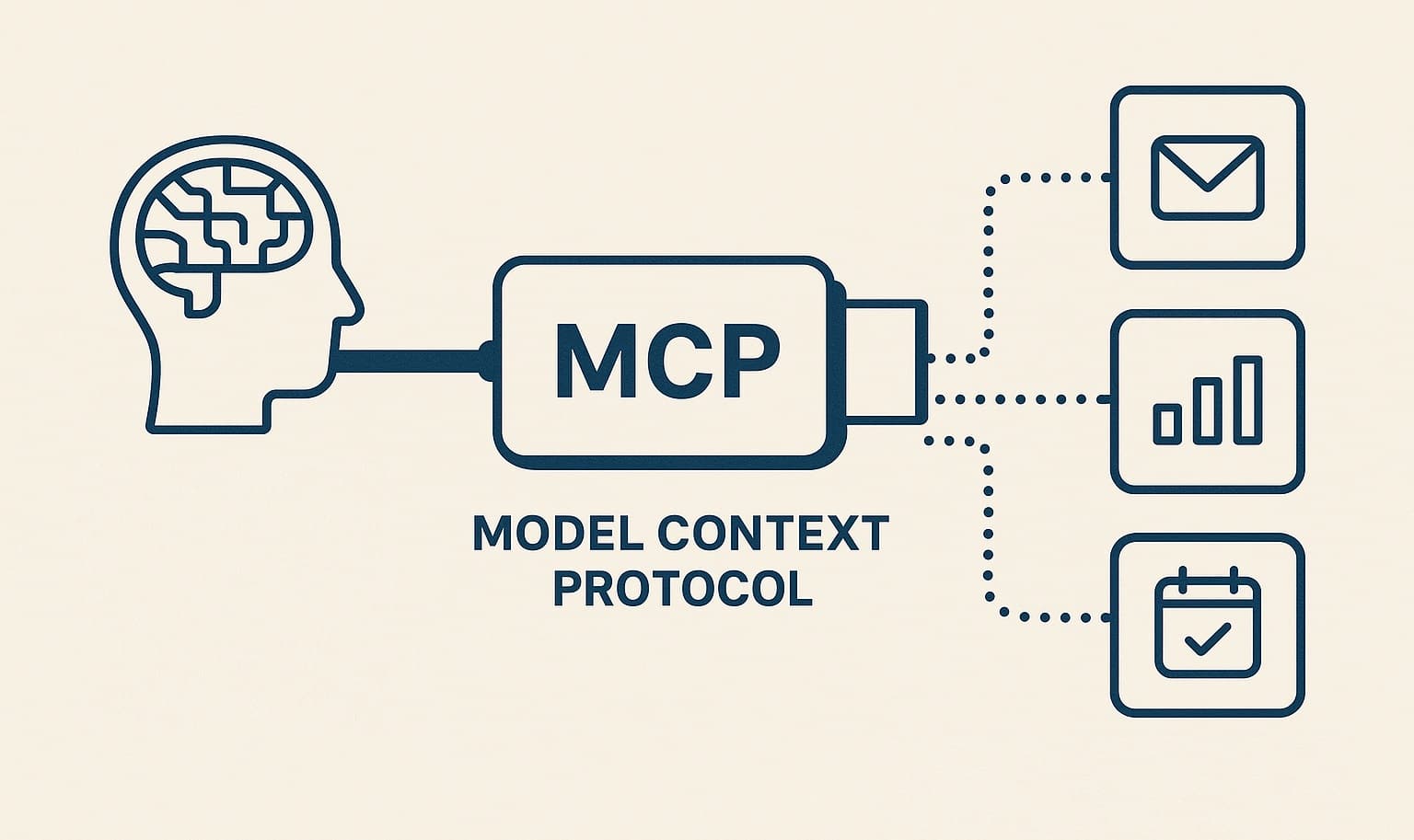
In the high-stakes world of AI, rivals don’t typically play nice. But there’s one headache that’s got these rivals collaborating:
- How to get AI models to talk to the outside world
Large language models (LLMs) are smart — but they live in silos. No context. No access to files or apps unless a custom integration is coded into the system.
- Enter Model Context Protocol (MCP) — the “USB-C port” for AI
What is MCP?
Developed by Anthropic, MCP is an open-source protocol that lets AI models connect to external data sources and tools.
- MCP acts as a bridge between AI and real-world data
- MCP lets AI agents take actions, decide which tools to use, and automate tasks without handholding
Use cases
- Coding assistants: Let AI fetch documentation or libraries in real-time from IDEs (Integrated Development Environments, like Cursor or VS Code, where developers write and debug code)
- Chatbots for business: Pull real-time data from customer support databases before responding, improving accuracy and personalisation
- Research tools: Pull in up-to-date data from APIs for analysis
- Workflow automation: Connect to tools like Slack or Google Calendar to automate day-to-day operations
Who’s in?
Everyone.
Since its launch in November, MCP has gained wide support from the industry.
- Anthropic built it. OpenAI, Google, Microsoft are adopting it
- Perplexity is using it for real-time search
- Composio is offering managed servers so devs don’t have to start from scratch
It seems that in the cutthroat world of AI, even rivals have come to understand that AI works better when it’s connected.
Dig deeper



 PREVIOUS
 QUICK HITS
 GLOBAL PICKS