Just in: New income tax bill to consider crypto as undisclosed income during searches
One quick thing: Infosys to issue increment letters by Feb-end, hikes in 5%-8% range
In today’s newsletter:
- Are gig workers underpaid in India?
- No fine-tuning allowed under IndiaAI mission
- India emerges as AR hub for Snapchat
Was this newsletter forwarded to you? You can sign up for Tech3 here
 Top 3 stories
Are gig workers underpaid in India?

India’s 10 million-strong gig workforce is expected to touch 23.5 million by 2030. But are gig worker earnings keeping pace? Let’s look at what the data says.
Driving the news
Almost 98% of the gig workers in India earn less than Rs 5 lakh per year, according to data from TeamLease Digital.
- Of this, over three-quarters –77.6% – earn Rs 2.5 lakh and under, while nearly 20% earn between Rs 2.5 lakh and Rs 5 lakh
- A small minority – 2.6%– take home between Rs 5 lakh and Rs 7 lakh per year, the data showed
To earn these wages, 85% of the gig workers put in eight hours a day, while around 21% work for over 12 hours.
Where the demand lies
Rapidly growing sectors like quick commerce, food delivery, and e-commerce, together account for around 40% of the gig workforce.
- Companies that operate large delivery fleets and warehouses, like Swiggy, Zomato, Zepto, and Flipkart, currently employ the largest number of gig workers
Delivery workers for these firms have, however, pointed to a lack of transparency on how their commissions are calculated, citing “arbitrary” and “unexplained” pay deductions.
- While these companies do offer their workers insurance covers as well, delivery workers say that the process of claiming this insurance is a cumbersome process, with reimbursements made too late
Booster shot
The government has also recently announced several schemes for gig worker betterment.
However, a lack of clarity on the implementation of these schemes has left industry stakeholders wanting.
Dig deeper
No fine-tuning allowed under IndiaAI mission

The race to build India's own foundational AI models just got a whole lot more interesting.
No fine-tuning allowed
The Ministry of Electronics and Information Technology (MeitY) made an important announcement regarding the IndiaAI Mission guidelines.
This includes models like ChatGPT, LLaMA, and others, where no new substantial innovation is added.
- The government has allocated Rs 1,500 crore for developing models
If you were under the impression that modifying pre-existing models could be considered foundational work, it’s time to pivot.
Key restrictions
While fine-tuning is off the table, there are still pathways for model development, but with clear stipulations:
- Using open-source models is acceptable—only if significant innovation is involved
- Distillation-based models will be assessed on a case-by-case basis
- Proposals focusing on multi-Indian language models will be given preference
Datasets take centre stage
The government has acknowledged the critical role of high-quality datasets in building foundational models.
Dig deeper
India emerges as AR hub for Snapchat
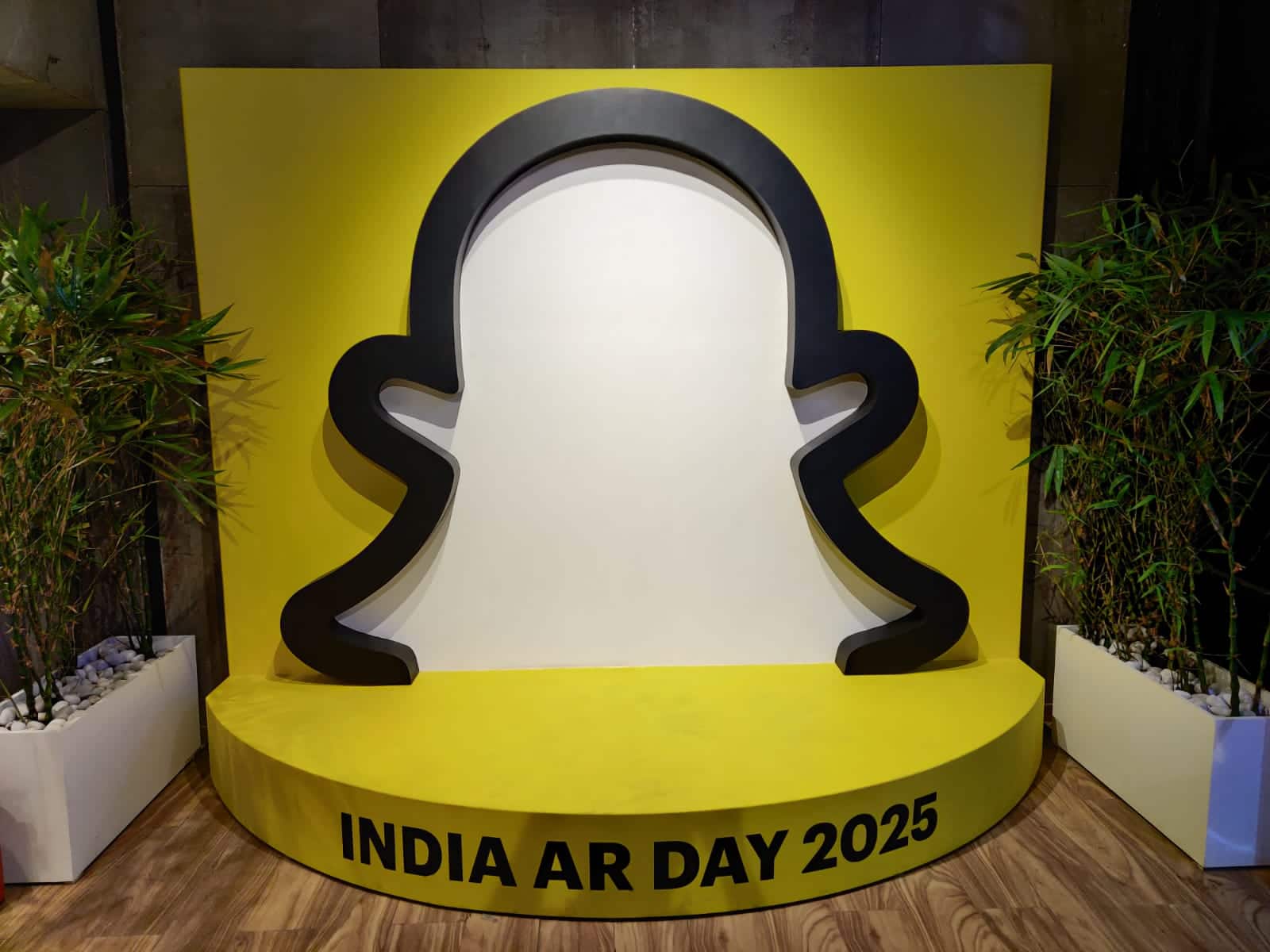
Snapchat parent Snap Inc. is tapping into India’s growing AR developer base to supercharge its future ambitions.
What's happening?
India is Snap's second-largest market for AR developers, which has grown by more than 50% in the past two years.
Snap Inc co-founder Bobby Murphy said the highest number of lenses published on Snapchat comes from India.
- With over 200 million users, India is one of the biggest markets for Snapchat
Globally, over 375,000 creators worldwide have built over four million AR Lenses, which Snapchat users have engaged with more than 4.5 trillion times in the past year.
Also read: Snapchat parent looks to attract India Gen Z users with localised experiences: India MD Pulkit Trivedi
What's the plan?
Snap is aiming to reach a broader segment of AR developers, particularly in Tier 2 and Tier 3 cities through a range of initiatives, head of AR developer relations Srivatsan Jayashankar told us. This include:
- Collaborating with educational institutions to attract young talent
- Conducting training workshops for Lens Studio, it's AR authoring software
- Expanding its Snap Lens Network, where Snap chooses select developers to mentor and closely work with them on a range of initiatives
Another key area of focus is helping more developers and partners connect with brands, enabling them to monetise their work and create a large business around AR effects.
The Spectacle push
Snap is also encouraging Indian developers to build new experiences for its Spectacles AR glasses, powered by its new operating system Snap OS.
- Jayashankar told us that a few Indian developers are already building experiences for the platform
The operating system features a natural interface which uses the person's hands and voice. It places the main menu directly in the palm of the user's hand, with no controllers necessary.
Go deeper



 PREVIOUS
 QUICK HITS
 GLOBAL PICKS