What's latest at Musk's Twitter: It seems that Elon Musk, Twitter's new owner, has bigger aspirations than just charging $8 for a verification badge. The tech billionaire is apparently considering placing Twitter behind a paywall in another bid to monetise the platform. Here’s a look at the latest from Musk's Twitter:
In today’s newsletter:
- India's SpaceX moment
- Employees abandon the crypto dream
- IT services jobs touch a record low
Also, what happens when dystopian ideas come to reality? No, we are not talking about the Musk-Twitter saga this time. Scroll below for more deets!
Was this newsletter forwarded to you? You can sign up for Tech3 here.
 Top 3 stories
Is this India's SpaceX moment?

The day has been frenetic for India's space startup ecosystem, with two significant developments that could shape the future of the country's space industry.
First, in what has been termed "India's SpaceX moment," Hyderabad-based startup Skyroot Aerospace announced plans to launch India's first privately developed rocket from Sriharikota next week.
To put things into perspective, unlike the United States, which has several private companies exploring space, the Indian Space Research Organisation (ISRO) has had this task for decades.
The sky is the limit
Skyroot Aerospace will launch its rocket Vikram-S from Sriharikota between November 12 and 16, depending on weather conditions.
- The mission has been named Prarambh, which means "beginning," and the mission director will be the startup's co-founder and CEO Pawan Kumar Chandana.
- Three customer payloads will be carried by the rocket, which is a single-stage suborbital launch vehicle.
A giant leap
The second significant development concerns Agnikul Cosmos, a Chennai-based space-tech startup that successfully test-fired its 3D-printed rocket engine called Agnilet from the Vikram Sarabhai Space Center (VSSC) in Thiruvananthapuram.
- Agnilet is made all at once, unlike most other rocket engines, which have thousands of parts that need to be put together.
- Earlier, the IIT Madras-incubated startup announced that it had secured a patent for the engine.
Agnikul, like Skyroot, is a rocket maker. They are currently developing a small satellite rocket capable of carrying up to 100 kg of payload to low-Earth orbits.
Employees abandon the crypto dream

When the going gets tough, the tough get going.
This isn’t true in all cases. Many young professionals in India who entered the crypto business during its bull run are now looking for alternative opportunities.
A reality check
We spoke with at least a half-dozen people who had been laid off or had left crypto startups. With the ongoing crypto winter, which has resulted in the failure of even the most well-known crypto startups, employees are anxious about the future of working in this volatile sector.
The job scene
Aside from these worries, the number of crypto jobs has been falling in recent months. About 1,100 job opportunities in Indian crypto startups have now been reduced to 200. Startups in this space now account for less than 2 percent of all jobs.
- Over the past three months, the number of jobs in Web3, blockchain, and crypto has gone down by 27 percent.
Binance-FTX saga
Meanwhile, the spat between Changpeng Zhao (CZ) and Sam Bankman-Fried, the founders of two of the largest cryptocurrency exchanges is only making things worse.
A recent announcement by Binance CEO CZ said that the exchange would be selling its whole portfolio of FTT tokens as a post-exit risk management strategy.
- The FTT token has plummeted as a result of this public feud on Twitter. On November 8th, it fell by around 20%. Furthermore, FTT is trading 19% down at $17.93.
The industry is concerned that this may result in a liquidity problem for FTX and a replay of the Luna-style collapse, with a cascade effect on the global crypto ecosystem.
Go deeper.
IT services jobs touch a record low
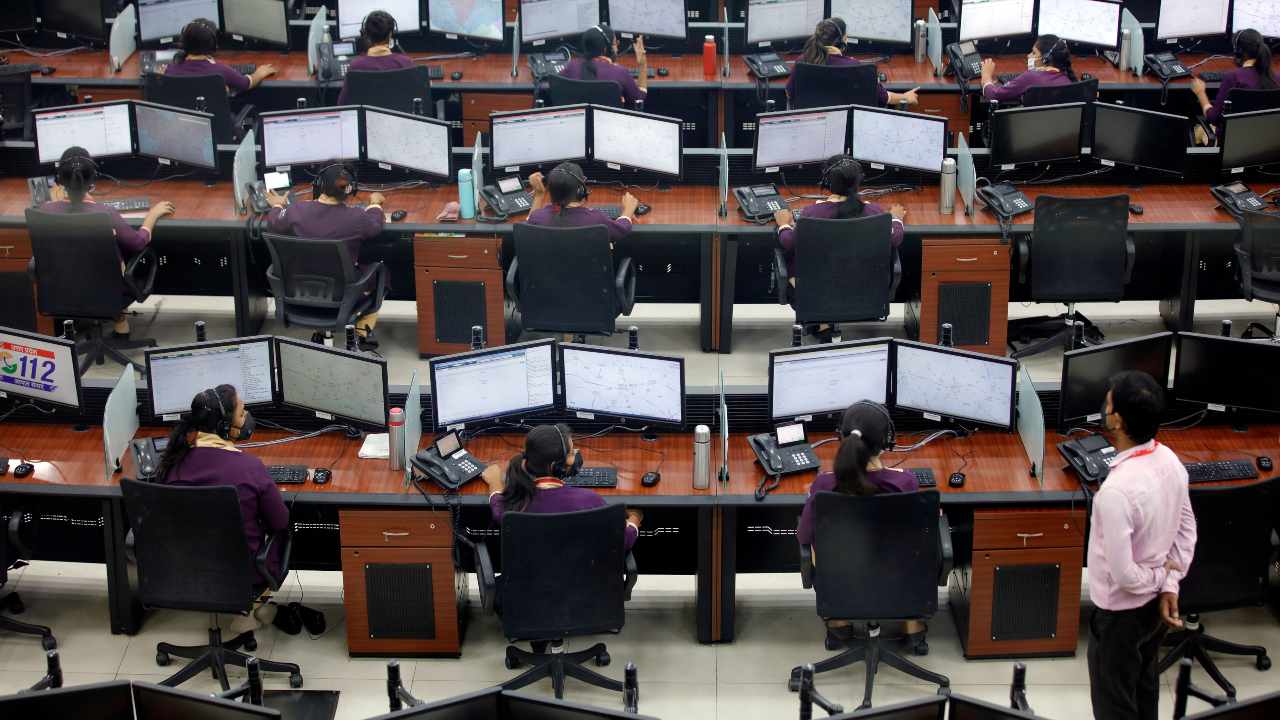
For several quarters, IT services companies were in the news for their hiring figures, as they hired in record numbers to capitalise on pandemic-induced demand. From that record hiring spree as well as elevated attrition numbers, companies have slowed down hiring as they look to utilise the employees they have hired.
According to Xpheno data, job openings in the IT sector in October were 50 percent lower than in October 2021.
- In October, the IT services sector had 60,000 active job openings, the lowest in 22 months
- Active job openings in the sector fell 14 percent from September
Tech’s ongoing struggles
Data showed that active job openings in tech services and product companies, as well as tech startups all declined in October.
- Tech sector’s hiring volume and velocity continue to be impacted due to concerns surrounding inflation in local as well as key client markets, according to Xpheno.
The hiring decline was evident when the IT majors reported their Q2 results last month. Comparing the second quarter to the first, net employee additions fell by 45 percent.
- Non-tech sectors, on the other hand, are making up for the fall in job openings at tech companies.
How much do IT employees make in 5 years?
During the dream run of jobs during the pandemic, when the ball was in the candidate's court, crazy high salaries for tech talent had become the norm.
This trend is already waning, but what opportunities are available to early-career candidates and how much can they expect to earn? Read the analysis here.



 PREVIOUS
 Tweet of the day
 QUICK HITS
 DEALS OF THE DAY
 GLOBAL PICKS