-
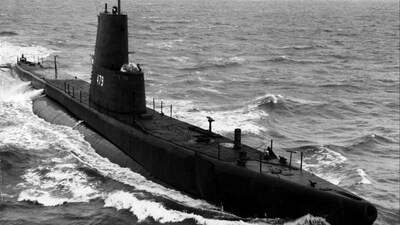
When Indian Navy sank Pakistan's PNS Ghazi: US submarine strike on Iranian warship echoes 1971 war moment
-

Pakistan blocks JPMorgan's bid to buy landmark New York hotel, plans to revamp it
People familiar with the situation said the bank had been pursuing the property for more than a year. One person close to the discussions said, “JPM was aggressively chasing the Roosevelt hotel.”
-
‘Ignoring its own track record’: India dismisses Pakistan’s ‘hypocritical’ criticism over Canada uranium deal
India rejected Pakistan’s criticism of its uranium deal with Canada, calling Islamabad hypocritical over nuclear concerns. Both sides traded accusations over proliferation history, safeguards, and regional stability amid long-standing strategic rivalry.
-
PCB breaks silence on Salman Mirza’s alleged misconduct with woman at Sri Lanka hotel
The cricketer in question, according to reports, was Salman Mirza, as the reports added that the cricketer was even fined by the Pakistan Cricket Board (PCB).
-
‘If you don’t withdraw…’: Shia cleric warns of humiliation for PM Shehbaz Sharif over Gaza Peace Board participation
A Shia cleric has demanded Pakistan withdraw from the US-led Gaza Peace Board, warning the government of political humiliation. His remarks highlight rising tensions ahead of elections and domestic backlash over foreign policy.
-
Indians, Pakistanis share what they respect about each other in viral post: Food, music, SRK & Kohli
The responses formed a rare, unfiltered snapshot of mutual respect — and a reminder that behind geopolitical narratives, ordinary Indians and Pakistanis often see each other with far more nuance than politics suggest.
-
Aleem Dar resigns after Pakistan's poor show at T20 World Cup
A source close to Dar said that he resigned because he was not happy with the undue authority given to the team’s head coach Mike Hesson in selection matters.
-
Dressing room tension mounts as Pakistan players complain about coach Mike Hesson to PCB: Report
The report also hinted that Hesson's dominant approach might have disrupted the dressing room. He was accused of going ahead with big decisions without getting the captain's consent.
-
Will Pakistan be dragged into Iran war? Why Saudi defence pact puts Asim Munir in a bind
Iran War News: The question being asked in diplomatic circles is whether Islamabad could be pulled into the conflict because of its close strategic relationship with Saudi Arabia.
-
Asim Munir’s Iran-US mediation bid fell flat: Ishaq Dar explains why Pakistan’s ‘grand slam’ diplomacy failed
According to Ishaq Dar, Pakistan had even offered to host secret talks in Islamabad in an attempt to create a diplomatic channel between the two adversaries.
-
'Give them Akram, Warne and Akhtar, will still lose': Pakistan captain, coach face brutal backlash after T20 WC exit
Latif slammed Salman adding that even if he had the services of legends like Wasim Akram and Waqar Younis, he would have lost the game.
-
Pakistan bombs Bagram Air Base in major escalation with Taliban, raises questions over Asim Munir's motives
Satellite photographs show visible damage at the airfield, suggesting that the strikes were part of a larger escalation in Pakistan’s cross-border campaign against Afghan targets.
-
Israel-Iran conflict: Why are Pak govt and Munir deploying air defence systems and troops to Saudi Arabia?
Pakistan has deployed air defence systems, troops and military assets to Saudi Arabia under a strategic defence pact, reinforcing Gulf security as Middle East tensions escalate amid the ongoing Iran-Israel conflict.
-
‘Chhoti soch hai’: Shahid Afridi blasts PKR 5 million penalty following Pakistan’s T20 WC debacle
Pakistan's journey in the tournament ended on a disappointing note as they were unable to reach the semi-finals.
-
Iran war sparks chaos in Pakistan: How it exposes Asim Munir’s double game and his failure to control the streets
The irony is that Pakistan had little direct stake in the US-Israel operation against Iran. Yet the country ended up paying a domestic price for it.
-
Pakistan President Zardari claims India preparing for another war, New Delhi calls it 'defensive posturing'
During the address, Zardari also attempted to portray Pakistan as a responsible nuclear power while simultaneously warning India about the consequences of conflict.
-
Amid Iran-US war, Afghanistan claims precision strikes on Pakistan’s Nur Khan Airbase | WATCH
Afghan officials said the action was carried out in response to recent Pakistani military strikes on Afghan territory, signalling a major escalation in the cross-border confrontation.
-
Why are Chinese arms under scrutiny after reported failures in Pakistan, Venezuela and Iran?
Chinese weapons systems faced scrutiny after reported failures in Pakistan, Venezuela and Iran, where air defences were allegedly breached by US and Indian strikes, raising questions over performance, integration and battlefield reliability.
-
Saqlain Mushtaq blames Pakistan coach Mike Hesson for son-in-law Shadab Khan’s T20 World Cup struggles
Shadab Khan took 5 wickets in the tournament and scored 118 runs in seven matches.
-
‘Khud kaptaani chodenge ya PCB hatayega?’: Salman Ali Agha grilled after T20 World Cup exit – WATCH
Pakistan were eliminated from semifinal contention even though they defeated Sri Lanka in their last Super Eights match but the margin of victory wasn’t enough to take their Net Run Rate above New Zealand.
-
After T20 World Cup setback, Pakistan turn focus to Bangladesh ODIs
It is worth noting that Pakistan was the only country that had supported Bangladesh when they had asked the International Cricket Council (ICC) to shift their venues from India to Sri Lanka.
-
T20 WC: Dasun Shanaka puts on a show but Pakistan beat Sri Lanka by 5 runs in Pallekele
Sri Lanka captain Dasun Shanaka smashed 76 off 31 deliveries with a strike-rate of 245.16 with 8 sixes and 2 fours.
-
Pakistan eliminated from T20 World Cup 2026
Pakistan eliminated out of T20 World Cup 2026.
-
‘Nahi hone wala’: Virender Sehwag tears into Pakistan’s T20 World Cup semi-final hopes
To boost their NRR above the Kiwis, Pakistan need to win by at least 65 runs. If they bat second, then they have to chase down the target in 13.1 overs.
-
PHF brings in three hockey legends for important roles, Samiullah to be new chief selector
Pakistan players wanted Dutch coach Roelant Oltmans but the interim set up cited shortage of time as the reason for bringing in Junaid again.