-
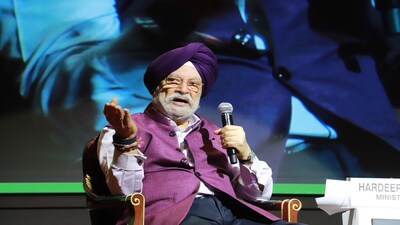
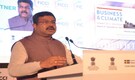
Minister of Petroleum and Natural Gas Hardeep Singh Puri said India has diversified its oil sources to shield itself from geopolitical uncertainties such as the secondary sanctions’ threat by US President Donald Trump on Russian oil.
-

Domestic refiners have diversified their crude oil sourcing and are now buying from more countries than before, to secure supplies. India is currently purchasing crude oil from 40 countries, compared to only 27 nations supplying in 2007.
-
Speaking at India Bio Energy & Tech Expo, the oil minister said the government is actively collaborating with the automobile industry to develop vehicles compatible with ethanol.
-
If crude supply is not disrupted any more, oil marketing companies may consider fuel retail price cuts, the minister said.
-
India had planned to use 1 percent SAF for its domestic commercial flights by 2025, which would require around 140 million liters of SAF per year to achieve, Union Minister Hardeep Singh Puri said.
-
Speaking at CNBC-TV18 India Business Leader Awards (IBLA) on December 2, Puri said deepening of oil supply cuts by the Organisation of Petroleum Exporting Countries (OPEC) and its allies, or OPEC+, has led to plummeting of crude prices.
-
Unlike the United States and the European Union, India does not have policies governing sustainable aviation fuel yet. The European Commission SAF mandate is expected to start in 2025 with a minimum volume of SAF at 2%.
-
The minister clarified on the Budget fine prints stating that the Rs 35,000 crore earmarked for the ministry for energy transition and security does not include the compensation to OMCs for losses made on price freeze.
-
"E20 petrol (petrol blended with 20 per cent ethanol) in some quantity will be available from April 2023 and the rest to be covered by 2025," Oil Minister Hardeep Puri said.
-
Heavily taxed petrol and diesel rates have shot to their highest prices this month. Taxes, both central and state, make up for 55 percent of the retail price of petrol and 50 percent of diesel rates.
-
Iran's Oil Minister, Bijan Zanganeh, said his country does not agree with holding any OPEC+ meeting in the absence of a clear proposal and expected outcome from such talks for the oil market
-
Prices of diesel and petrol in India have surged to a record high, stoking opposition criticism of Prime Minister Narendra Modi's administration for causing hardship to ordinary people.
-
Incidentally, oil firms after keeping rates unchanged for a day, today cut petrol price by 4 paisa per litre and by 3 paisa in case of diesel despite firming international oil rates.
-
There are two regulatory bodies in the oil and gas sector - the Petroleum and Natural Gas Regulatory Board, which is a regulator for the downstream activities like laying of pipelines and fuel marketing but without powers to review pricing.
-
The Association of Scientific & Technical Officers (ASTO) cited examples of falling production at the western offshore Panna/Mukta fields that were privatised in the 1990s, and Reliance Industries' flagging KG-D6 fields to state that ONGC has done well with its ageing fields.
-
India imports about half of its annual consumption of 27 million tonnes of petcoke, Dharmendra Pradhan said in a tweet.
-
The event, which was held to create awareness around promotion of 'green rides' through cycles, was flagged off from Jawaharlal Nehru Stadium.
-
"There are two kinds of taxes (on petroleum products). One is the central excise and the other one is state VAT. That is the reason we are expecting uniform tax mechanism from the industry point of view," Pradhan told PTI.
-
State-owned oil companies in June dumped the 15-year old practice of revising rates on 1st and 16th of every month and instead adopted a dynamic daily price revision to instantly reflect changes in cost. Rates during the first fortnight dropped but have since July 3 been on the rise.
-
"In exchange, we have given the proposal for a gas pipeline from Chittagong to Tripura. We are pursuing the matter diplomatically and I would also visit Bangladesh soon," Pradhan told reporters here.
-
The government had previously asked Indian Oil (IOC), Bharat Petroleum (BPCL) and Hindustan Petroleum (HPCL) to raise rates of subsidised domestic LPG (liquefied petroleum gas) by Rs 2 per 14.2-kg cylinder per month (excluding VAT).
-
State-owned Indian Oil Corp (IOC), Bharat Petroleum Corp Ltd (BPCL) and Hindustan Petroleum Corp Ltd (HPCL) are building the integrated complex with a refining capacity of 60 million tonnes per annum at Babulwadi, Taluka Rajapur, Ratnagiri district.
-
ONGC Videsh, the overseas investment arm of India's top explorer Oil and Natural Gas Corp, is among several companies prequalified to bid for offshore exploration and production licences from the Middle Eastern nation.
-
"After our conversation with the prime minister, he gave the green light to his excellency (the Iraqi oil minister) to approve" the nine-month extension, Falih said.
-
"Very soon, work will start on the Rajasthan refinery project. We have finalised the financial assessment," he said at the Global Natural Resources Conclave here.