


co-presented by
ASSOCIATE SPONSORS
co-presented by


ASSOCIATE SPONSORS




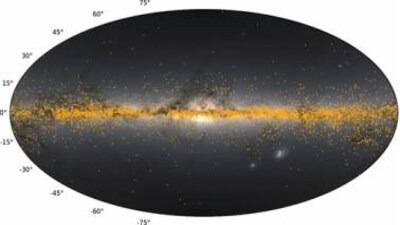
Indian astronomers have charted hidden layers of cosmic dust in the Milky Way, revealing complex structures that shape star formation and galactic evolution.

NASA’s Roman Space Telescope will map billions of stars, revealing hidden dust and gas, helping astronomers uncover the Milky Way’s secrets like never before.
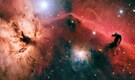
The Horsehead Nebula is one of the sky’s best known. It sits in the Orion constellation, glowing near other star fields.

Astronomers captured a stunning view of spiral galaxy NGC 7497 entangled in dusty clouds of the Milky Way, with faint galactic cirrus and MBM 54 reflecting starlight nearly a thousand light-years away.

As the solar system moved through this dust-rich region, Earth may have received an increased influx of interstellar particles.
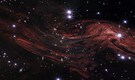
NASA's Webb Telescope captures stunning infrared light echoes from a supernova, revealing intricate details of interstellar dust and cosmic structure, revolutionizing our understanding of star death.
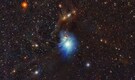
The pre-solar interstellar dust that formed the very building blocks of planets and stars represents exotic grains.


