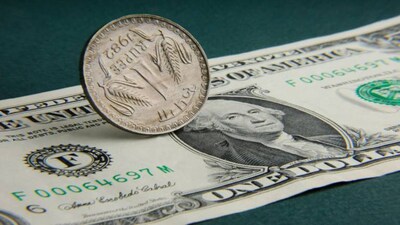
General government debt rose 11.5 percent as of March 2024 compared with the previous year, households and nonprofit institutions serving households declined 16.5 percent.
Foreign currency reserves as a ratio to external debt stood slightly lower at 97.8 per cent as of end-March 2022 than 100.6 per cent a year ago.
India’s Debt Service Ratio, a measure of a country’s ability to service debt given current receipts, has declined from around 40% in the 1990s to around 5% today.
A large pile of external debt is coming up for redemption this year. The interesting part is half of the repayments are of past long-term debt coming at an unfortunate time.
External debt that must be repaid in 2022 rose to 44.4 percent of India's total external debt as on December 31 from 43.2 percent at the end of September 2021, accounting for 43.1 percent of the foreign exchange reserves.
External debt to GDP ratio rose marginally to 21.1 percent from 20.6 percent as at end-March 2020.
The external debt figures stood at $557.4 billion as of June this year, as against $471.9 billion at the end of March 2017, as per RBI numbers.
On a sequential basis, total external debt at end- September 2017 increased by USD 10 billion (2.1 percent) from the end-June 2017 level.
According to a Finance Ministry report, per capita debt (calaculated on basis of Union Government debt) is at Rs 53,796 as on March 31, 2016, as against Rs 49,270 on March 31, 2015.
India's external debt decreased by USD 0.8 billion from the end-March 2016 level to USD 484 billion at end-September 2016, the government said.
India's external debt stood at USD 485.6 billion at March-end 2016, increasing by USD 10.6 billion, or 2.2 percent, year-on-year due to rise in long-term debt, particularly NRI deposits.
India's external debt stood at USD 485.6 billion at the end of March 2016, recording an increase of USD 10.6 billion year-on-year, primarily on account of a rise in outstanding NRI deposits, the RBI said today.
However, as per the sources, S&P is concerned over certain issues like falling exports, rise in external debt and political logjam in the economy.
According to Samiran Chakraborty of Standard Chartered Bank, the debt situation warrants some caution. At 390 billion debt, India‘s forex reserves cover (at 290 billion) is worryingly inadequate.
The rupee witnessed sharp moves over the past year and ended the year with 10 percent depreciation. USD/INR [dollar-to-rupee] had depreciated massively in the first six months to trade at a historic high of 57.32 on June 22, 2012. The continued depreciation of USD/INR was in line with its emerging market peers.
After S&P's negative rating outlook yesterday, Nizam Idris of Macquarie Bank believes that its implications can be far reaching if other rating agencies also follow suit. Mulling about a possibility of a downgrade in the absence of reforms, Idris expects the rupee to hover around the Rs 52 to Rs 54 per dollar rate.
China's National Development and Reform Commission (NDRC), the country's top economic planner, said foreign-funded banks are allowed to borrow as much as USD 24 billion of medium and long-term external debt this year.
Speaking to CNBC-TV18, VM Mohan of India Cements says that the depreciation of Rs 5 in the rupee has hurt their P&L by Rs 30 crore per annum.
China has an outstanding total external debt of USD 585.97 billion by the end of March this year, the country's foreign exchange regulator said today.