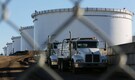
Oil markets did not react more strongly to Washington's pressure as the move was expected.
Oil prices climbed on Tuesday, helped by expectations that an OPEC-led output cut would be extended beyond June but gains were pegged back by concerns about persistently high crude inventories.
Prices for front-month Brent crude futures, the international benchmark for oil, were at USD 51.86 per barrel at 0401 GMT, up 24 cents, or 0.5 percent, from their last close.
The Federal Reserve on Tuesday started a two-day meeting where it is expected to raise rates eight years after a devastating recession opened an era of loose US monetary policy.
At the same time, traders are keeping an eye on US monetary policy as a rise in American interest rates would likely push up the dollar against other currencies, making oil imports more expensive in some other countries.
The American Petroleum Institute said late on Tuesday that US crude oil stockpiles rose by 4.6 million barrels to 457.8 million barrels in the week to September 25. Analysts polled by Reuters had expected an increase of only 102,000 barrels.
Front-month US West Texas Intermediate (WTI) crude futures traded up 55 cents at USD 45.14 per barrel at 0755 GMT. Brent was up 45 cents at USD 48.20 a barrel.
Front-month Brent LCOc1, the global oil benchmark, had gained USD 1.10 to USD 44.24 a barrel by 0300 GMT (11.00 p.m. EDT), having ended down 7 cents at USD 43.14 on Wednesday.
China cut interest rates on Tuesday and lowered the reserves banks must hold in its latest move to calm fears about a severe economic slowdown in a country whose major equities index, the Shanghai Composite Index, is now 43% below the June peak for the year.
US stock futures resumed their descent in early Asian trade and Asian shares were seen on the defensive on Wednesday as monetary easing by China's central bank had limited success in cheering up nervous investors
Oil markets paused for a breather after prices tumbled about 20 percent in July because of a supply glut.
Asian investors focused on OPEC production figures that showed members of the Organization of the Petroleum Exporting Countries produced around 3 million barrels of oil per day more than daily demand in the second quarter, a Reuters survey showed.
Oil prices resumed their declines in Asia on Wednesday following a US report showing stockpiles surged last week, with analysts warning for further weakness ahead.
Oil prices edged lower on Tuesday, dragged down by a firm dollar and ample supply of both crude and refined products.
These concerns compounded downward pressure on prices from the supply side as the prospect of a deal on Iran's nuclear work raised the possibility of more supply reaching a market many analysts see as already having too much oil.
Front-month US crude futures were trading at USD 52.79 per barrel at 0036 GMT, up 46 cents from their last settlement. The slight gain followed an 8 percent fall between Monday and Tuesday that pulled the contract down to levels last seen in April.
Oil prices rose in Asia on Wednesday as dealers awaited the latest US energy report and a Federal Reserve policy announcement later in the day that dealers hope will shed light on its plans for hiking interest rates, analysts said.
Oil saw steep falls earlier this week as a resurgent dollar weighed on the market amid concerns US crude supplies may have started rising again after three weeks of draws.
US crude futures rose on Wednesday after a more than three percent slide in the previous session, supported by a larger than expected drop in crude inventories, although a firmer dollar capped gains.
Oil bulls have pushed prices higher this week, after a rally of between 20 percent and 25 percent in April, despite a continued build in US crude stockpiles and indications that the OPEC cartel will keep production at current high levels at a meeting next month.
A stronger US dollar also weighed on the dollar-denominated commodity, while investors waited for data on US commercial crude oil inventories later this week for more direction.
Oil prices had gained nearly $10 a barrel this month on tensions in the Middle East and concerns over slowing output growth in the United States, before starting to drop back.
With a self-imposed deadline set for the end of the day, the United States, Britain, France, Germany, Russia and China ramped up the pace of negotiations with Iran in Switzerland over an outline deal on Tehran's nuclear programme.
Oil futures extended losses on Tuesday, as Iran and six world powers ramped up the pace of negotiations to reach a preliminary deal that could ease sanctions and allow more Iranian crude onto world markets.
US crude oil for May delivery gained 7 cents at USD 47.58 a barrel as of 0036 GMT after settling up 6 cents at USD 47.51 in the previous session.