


co-presented by
ASSOCIATE SPONSORS
co-presented by


ASSOCIATE SPONSORS


Stock analysis is used by traders to make buy and sell call. It’s an approach to make informed decisions while investing in stocks. Stock analysis can be categorised into – fundamental analysis and technical analysis. Fundamental analysis is evaluation of data from sources, including financial records, economic reports, company assets, and market share. Analysts typically study the company’s financial statements – balance sheet, income statement, cash flow statement, and footnotes. These statements are made available to the investors in the form of quarterly earnings, disclosures to stock exchanges in compliance with the Securities and Exchange Board of India (Sebi) norms. In fundamental analysis, the analysts particularly check for a company's core income, income from other sources, profitability, guidance, assets and liabilities and debt ratio among other parameters. The other method, i.e. the technical analysis focuses purely on statistical data. It works on two assumptions; one, the stock price reflects the fundamentals. Second, the study of past and present movement in prices can help determine the future price trends. Technical analysis primarily deals with price, volume, demand and supply factors. This method is effective only when supply and demand forces influence the market. However, when outside factors are involved in a price movement, technical analysis may not be successful. More
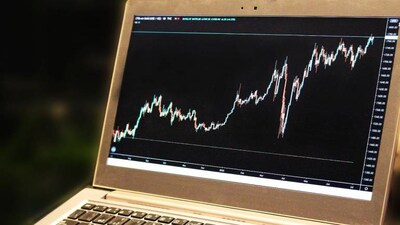
Angel One is in a strong uptrend as it continues to form higher tops and bottoms across all time frames. On the weekly timeframe, the stock has had multiple resistance breakouts around Rs 1,750-1,800, indicating further strength

In the current fall, from an investor's point of view, this is certainly an excellent opportunity to bag quality stocks in a staggered manner but for traders, it will be difficult to say that worse is behind, says Sameet Chavan of Angel One

Here's what Shrikant Chouhan of Kotak Securities recommends investors should do with these stocks when the market resumes trading today.

Here's what Shrikant Chouhan of Kotak Securities recommends investors should do with these stocks when the market resumes trading today

Here's what Mazhar Mohammad of chartviewindia.in, recommends investors should do with these stocks when the market resumes trading today.

The Nifty 50 is expected to range between 18,000 and 18,400 in the F&O expiry week, experts said, and all eyes are on the banking sector.

While a status quo on rates was expected, the equity market cheered the continuity in the monetary policy stance of the RBI MPC.

Technical charts suggest that the banking index may outperform in the coming sessions as Bank Nifty has managed to close above the key resistance level of 36,400.

Over the last five years, private sector banks have rapidly gained market share to around 30 percent (2020) from around 18 percent (2015).

Bank Nifty is looking much stronger than Nifty and we can expect it to test 25,000-25,250 levels in the coming sessions.

As far as supports are concerned, 9,900 continues to be seen as a key support on a closing basis while 9,544 - 9,900 will be a support zone for the coming week.

The volatility index India VIX remained unchanged near 38 levels. Due to recovery from the lower levels, it has formed a dragonfly Doji candlestick pattern on the weekly scale which is a bullish reversal candle.

Prime Minister, Narendra Modi said the package will focus on four factors - Liquidity, Land, Labour and Laws.

Emkay feels housing finance companies (HFCs) are better placed compared to asset finance companies (AFCs).

Sudarshan Sukhani of s2analytics.com recommends buying Castrol India with stop loss at Rs 147 and target of Rs 154 and Escorts with stop loss at Rs 830 and target of Rs 860.

Emkay also turned overweight on the stock in its NBFC Emkay Alpha Portfolio.

This week is an eventful one as participants are closely eyeing the earnings announcements, macroeconomic prints and pre-budget discussions.

Sudarshan Sukhani of s2analytics.com recommends buying Bata India with stop loss at Rs 1660 and target of Rs 1750 and Wipro with stop loss at Rs 246 and target of Rs 259.

Ashwani Gujral of ashwanigujral.com recommends buying Escorts with a stop loss of Rs 658, target of Rs 680, JSW Steel with a stop loss of Rs 262, target of Rs 278 and Asian Paints with a stop loss of Rs 1730, target of Rs 1775.

Experts expect stock-specific activity to continue and as it is a 'buy of dips' market, recommend buying quality stocks for better returns
DII and FII buying at various bottoms have arrested the downfall and we see buying interest from various market participants, said Vijay Kuppa of Orowealth.

In October, the Sensex rose 3.8 percent and the Nifty was up 3.5 percent.

Dinesh Thakkar of Angel Broking said though MF inflows this year have slowed down, he was very confident that MF inflows will pick up from here on as market sentiment improves

We expect volatility to inch higher this week as participants will unwind and rollover their derivatives positions due to schedule F&O expiry on July 25

A move above 11,620-11,590 can trigger short covering rallies to the upper end of the range which is 11,850. Any significant move will be visible on a breakout on either side from this range.


