






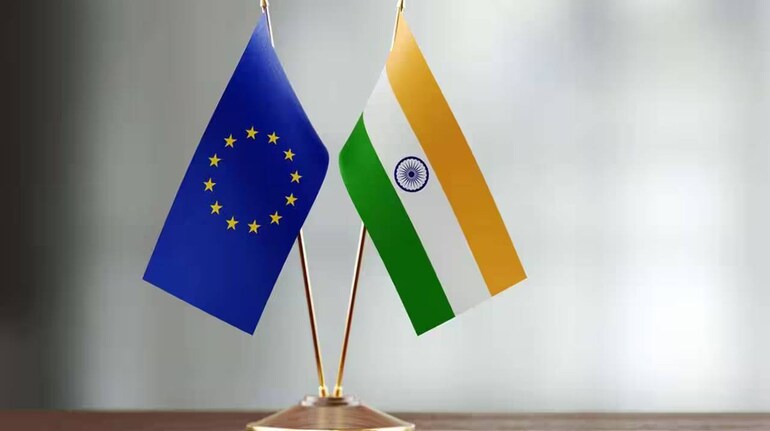
As the global economic landscape undergoes its most significant restructuring in decades, the proposed India–EU Free Trade Agreement (FTA) has moved from being a routine trade negotiation to becoming an industrial necessity.
For Indian manufacturers, both established and emerging, the agreement promises something far more consequential than tariff reductions: it offers the stability, capital, and regulatory clarity that underpin long-term competitiveness in global value chains.
For years, India’s labour-intensive and export-oriented sectors—textiles, leather, footwear, furniture, food processing—have operated at a disadvantage. Several of our competitors in Southeast Asia enjoy preferential access to European markets through FTAs that India does not have.
This has allowed them to scale up exports at speed, attract significant foreign investment, and embed themselves deeply in European production networks. The consequence for India has been a growing competitiveness gap. Without similar preferential access, delays translate into lost export opportunities and, more importantly, missed chances to modernise and upgrade industrial capacities.
The real value of an India–EU FTA lies in the stability it brings to the investment environment. Indian industry continues to navigate an unpredictable terrain marked by shifting tariffs, evolving non-tariff barriers, inconsistent standards recognition, and regulatory opacity. For businesses trying to expand capacity or diversify product lines, unpredictability functions as an invisible tax. It raises financing costs, complicates long-term planning, and deters global investors who look for reliable frameworks before committing capital.
A comprehensive FTA changes that. It provides stable tariff timelines, clarity on rules of origin, mutually accepted standards, and transparent regulatory processes. This is the kind of structure global investors need.
As Commerce and Industry Minister Piyush Goyal has emphasised, the aim is to craft “a truly win-win agreement that not only facilitates the exchange of goods and services but also promotes investment, innovation, sustainable practices, and deeper cooperation between the two regions.” His framing captures the broader purpose of the negotiation: the agreement is not only about enabling India to sell more to Europe; it is equally about encouraging Europe to invest more deeply in India.
Indeed, the greatest potential benefit for Indian industry lies in unlocking new streams of European capital and technology. Many European firms remain cautious about long-term investments in markets where taxation and regulatory regimes can shift with little notice. A clear FTA framework signals that India is a stable, rules-based partner. Such assurance encourages companies to bring advanced manufacturing, clean technologies, and R&D operations into the country.
This combination of European technological depth with India’s industrial scale and cost competitiveness can dramatically strengthen India’s position in global supply chains, particularly in electronics, automotive components, pharmaceuticals, chemicals, and renewable energy.
The agreement also holds strategic relevance in a rapidly fragmenting world. Global supply chains are being reconfigured as businesses diversify away from single-source dependencies.
Europe is actively seeking reliable partners for critical inputs and manufacturing. India, with its scale, skilled workforce, and improving infrastructure, is one of the most compelling candidates to serve as a principal diversification partner. An FTA provides the institutional anchor that such long-term economic cooperation demands.
The experience of the EU–Vietnam FTA offers a compelling comparison. In the four years since it came into force, Vietnam’s exports to the EU have surged by more than 56 percent. Foreign investment has followed, and Vietnam has rapidly upgraded its industrial ecosystem. If a smaller economy can achieve such gains, the potential for India—with its vast market, deeper talent pool, and larger industrial base—is far greater. The risks of delay are equally clear. Investors are reallocating capacity now, not years from now. Supply chains are being established now. Factories, once located, do not move easily. If India does not secure its place quickly, others will fill the gap.
Negotiations have reached a stage where, as the commerce minister recently noted, “the air is pregnant with possibilities.” The opportunity for India is strategic, not tactical. The FTA is not a concession; it is a platform for long-term industrial expansion. It will provide Indian exporters with a more competitive European foothold while giving manufacturers access to high-quality machinery, green technologies, and intermediate goods that can accelerate domestic modernisation.
An India–EU FTA is not a “nice-to-have.” For Indian industry — for workers — for growth — it is a vital structural enabler. By offering predictability, reducing trade and regulatory friction, attracting investment, and positioning India as a credible global-supply-chain hub, an FTA doesn’t just promise better exports — it promises deeper, more sustainable economic integration. If India plays its cards well - combining industrial ambition with smart negotiation - the gains for Indian industry could far outweigh any short-term pain.
In many ways, the India–EU FTA represents the scaffolding for India’s next industrial leap. It offers the regulatory foundation, external confidence, and investment pipeline needed for Indian industry to move up the value chain and integrate more deeply with the world’s most advanced markets.
The moment demands clarity and urgency. For a rising India that seeks to be a central player in global manufacturing and supply-chain architecture, the agreement is not optional. It is essential.
(Views are personal and do not represent the stand of this publication.)
Discover the latest Business News, Sensex, and Nifty updates. Obtain Personal Finance insights, tax queries, and expert opinions on Moneycontrol or download the Moneycontrol App to stay updated!
Find the best of Al News in one place, specially curated for you every weekend.
Stay on top of the latest tech trends and biggest startup news.









