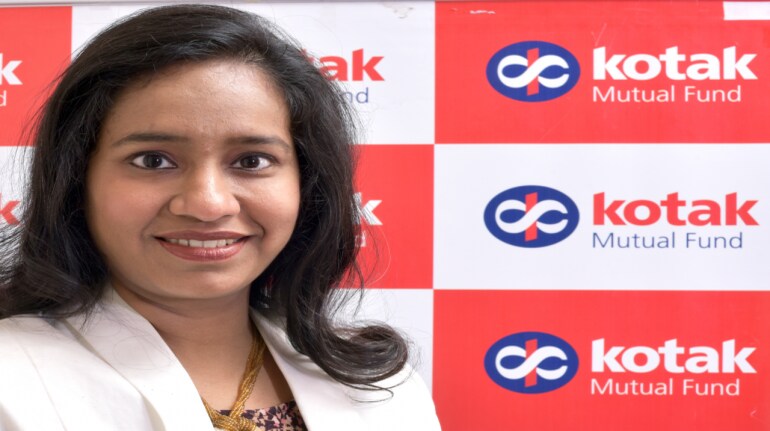
Lakshmi Iyer
Gold has historically had an emotional, a traditional - and for better or worse - a financial appeal for Indian buyers. Gold is deeply intertwined with our social, religious and family customs and festivals. Nothing better represents this aspect than our festivals like Diwali, Dussehra, Askhaya Tritiya, etc... So at the onset, let me wish you all the very best and success for all your new ventures and productive enterprises that you may take.
As a financial professional, it is our studied opinion that over the long term, it is the equities that create wealth and fend off inflation. Though gold also does have its place in the allocation scale, it should not be utilised as a strategic medium to generate wealth over the long term.
The growth period in gold usually comes in phases. This has to do with the fact that gold internationally is considered as a store of value; especially when the outlook on dominant currencies begins to weaken. A simple algorithm for gold demand is: jewellery demand outlook in India, plus jewellery demand outlook in China, minus growth outlook on US Dollar.
As far as jewellery demand outlook in India and China is concerned, there is degree of demand inelasticity due to the effect of customs and traditions. Having said that, Indian investors have increasingly migrated towards other asset classes in the past as the performance in the gold has slackened. Though in 2016, gold in rupee terms did give double-digit returns. This was on account of the ETF buying in the international market as traditional gold investors sold their stock.
However, over the past 2-3 years, the gold prices have remained largely range-bound. With inflation in India likely to remain well below the 5 percent level for most part, the investors’ migration to other higher yielding asset classes is likely to continue.
Additionally, demonetisation has also impacted the gold demand to some extent. Due to the impact of demonetisation, similar gold demand levels for idle cash may not be seen soon. Albeit, the jewellery buying impulse is likely to remain. So overall, the gold demand outlook from India is expected to be muted.
The demand outlook from China is likely to be stable. The rising restrictions on home purchase in China, and weakening yuan has provided a stimulus to gold buying to a certain extent. So this may help gold to an extent.
But more importantly, the outlook on gold going forward may primarily be decided by the inverse outlook on key currencies, especially the US Dollar and the Euro. On one hand, the rising interest rate environment in the US economy is likely to strengthen the dollar, but on the other hand, the high geo-political volatility does create growth conditions for gold.
For one, there is rising geopolitical risk between US and North Korea. North Korea had made a failed missile test launch only recently. This has added to regional tension. This issue does not seem to be getting resolved any time soon and involves security and economic interests of Korea, China, US, Japan and much of East Asia. This uncertainty is likely to push gold buying amongst international investors.
The other major event on the anvil is French Presidential Elections. Even though the chances of a ‘’FREXIT’’ (France Exit) referendum has diminished after the first round of elections; but the uncertainty remains until results of second round of French presidential elections does not come through.
From advisory point of view, while stock markets have rallied and may further move upward if the earnings support the current market valuation, it would be advisable to diversify part of the portfolio into Gold.
We suggest an allocation of 5-10 % into gold and to accumulate on dip. Gold tends to have a negligible/negative correlation with risk asset class like equity. Investor may therefore hedge their portfolio in order for any downside if the earnings do not go as expected.
Another thing to keep in mind is that Rupee has shown strength after UP election results, which has reduced gold returns. If Rupee appreciates further it may reduce the value of gold in India. Gold is a physical asset. Hence, it tends to get linked with cyclicality of commodities as well. So that needs to be kept in mind while investing.
Gold investors are advised to allocate primarily through the gold bonds and/or through Gold ETFs. This way the investor locks-in the value of gold while also gets avoids the issues surrounding gold security, quality, liquidity and service. On a final note, gold is to your financial portfolio what term insurance cover is to your life. It is therefore very incidental that one makes money in gold. On that note.
Happy Investing.
(Author is Chief Investment Officer-Debt & Head – Products at Kotak Mutual Fund)
Discover the latest Business News, Sensex, and Nifty updates. Obtain Personal Finance insights, tax queries, and expert opinions on Moneycontrol or download the Moneycontrol App to stay updated!

Find the best of Al News in one place, specially curated for you every weekend.
Stay on top of the latest tech trends and biggest startup news.