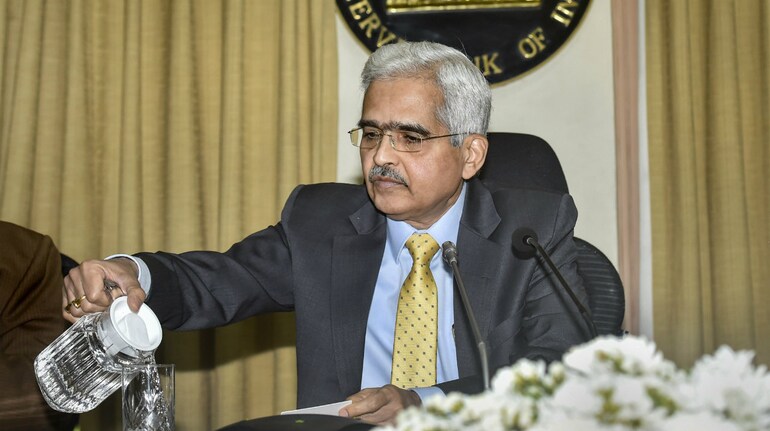
The past few days has been all about how a few ministers of the government and the Reserve Bank of India are divided on what should be the optimal borrowing rate for India Inc. This isn’t the first time such a debate is taking place, and this will far from be the last time either. And it’s not just in India, but world-wide. When the first signs of slowdown germinate, the natural tendency for any government would be to pinpoint the central bank rates for the slowdown. But in reality, interest rates don’t account for even 7 – 9 percent of total cost of production for any manufacturing unit and what’s more, there aren’t very many examples of businesses going down due to exorbitant interest rates charged by banks.

Interest Rates and Manufacturing
In fact, what determines how much a manufacturing unit should produce is often a function of demand for its product and not a function of how economical it is to avail loan from a bank. In this context, the finance minister’s ask for cheaper bank loans in order to propel manufacturing may not quite be the case. Where interest rates play a decisive role is in consumer purchases. Personal loans and consumer durable loans are often a function of how expensive the loan is. But do we want to make interest rates cheap on these products to ensure that people increasingly buy products to demand is a larger question for the policy makers. The real question though is whether we are a juncture where we can afford to go slow on benchmark interest rates to play along with the narrative of the government and the answer to that is a simple no.
This column on September 20 delved into how banks could be in trouble if a rate cut happens any time soon.
Retail Lending Stress
It’s time to revisit the argument in the back of growing stress in the retail lending space, especially on low-value loans. Credit costs in the retail lending space has risen by 50 basis points year-on-year in September FY25 quarter. In some cases, the increase is more pronounced, upwards of 100 bps. Stress for now is primarily emerging from credit cards and microfinance loans, interestingly from a nuanced product and a bottom of pyramid product. Intermittently there is stress from small ticket personal loans as well. In such a scenario, what is helping banks is their ability to generate decent yield. In other words, the ability to pass on the risk of credit cost is helping banks stay afloat.
This is true especially of state-owned banks, which are presently at a level where they are no more dependent on the government for capital. PSU banks (and the banking system as a whole) hasn’t witnessed fresh stress since 2020 since the clean-up of a massive pool of corporate loans got done. Their ability to price loans appropriately has done a lot of good for the system. That said, owing to high cost of operations., state-owned banks are also seeing a gradual reduction in net interest margin, which is well off the peak of 3.3 – 3.5 per cent seen in September FY23 quarter. Alongside this pressure, if banks are forced to lower interest rates, it could further decelerate the loan growth momentum rather than otherwise.
To defend profitability, banks, private and public, may become more selective on whom they should lend to. In simple terms, reiterating what this column stated in September, banks are barely in a comfortable position to lower interest rates. If any, the environment has become far less congenial for one, given the rising stress in select pockets of retail loans.
Reluctance to Lower Interest Rates
Under these circumstances, it would be right to call the clamour of a rate cut more popular than logical. In this context, it is also important to appreciate that whenever there have been differences between the government and RBI on interest rates, the RBI has had the final word. For instance, Dr Duvurri Subbarao from 2010 – 2013 was constantly under pressure by the government to lower repo rates. Not submitting to these demands, for the good of the economy, Subbarao hiked rates from 4.75 per cent in April 2009 to 7.25 per cent in May 2013. Interestingly, when Raghuram Rajan, who was seen close to the then dispensation at the Centre was appointed as central bank chief, he hiked repo rate 7.25 per cent to 8 per cent till January 2014, before he could start cutting rates to balance the economic pressures owing to taper tantrum. When the central bank has the last say on rates, why not we let the regulator work in peace!
Discover the latest Business News, Sensex, and Nifty updates. Obtain Personal Finance insights, tax queries, and expert opinions on Moneycontrol or download the Moneycontrol App to stay updated!
Find the best of Al News in one place, specially curated for you every weekend.
Stay on top of the latest tech trends and biggest startup news.