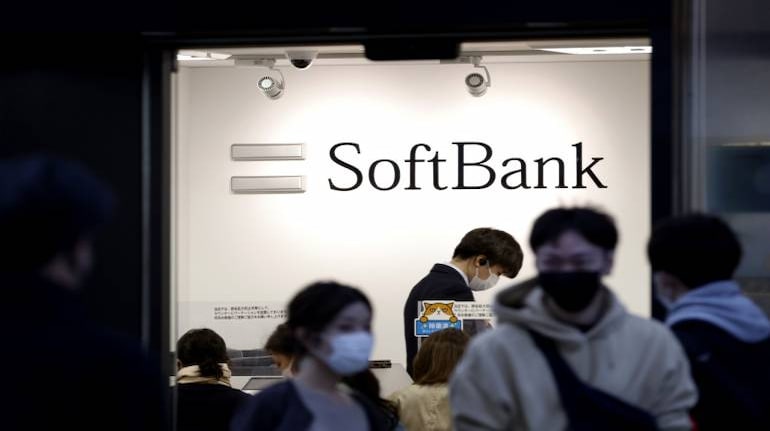
With almost all Wall Street involved, someone in the room knew how to make Arm Holdings Plc’s initial public offering look like a textbook success.
Owner SoftBank Group Corp. ended up pricing the British chip designer’s Nasdaq IPO at $51 per share. This is neatly at the top of the stated price range and followed 11th-hour reports that the deal could have been struck even higher. The impression is of pent-up demand that could help the share price once Arm starts trading.
Is it time to say “thank you” to the Japanese tech investor for reopening a moribund IPO market? Not so fast. At this level, there’s no guarantee Arm’s stock will sustain upward momentum in the coming months. The starting equity valuation is $52 billion, based on the share count on admission. Equity analysts unconnected to the share sale are in a different ballpark. Those at AllianceBernstein Holding LP got to $47 billion, and the number crunchers at Canaccord Genuity Group Inc. reached only $39 billion. If Arm drifts below its issue price and stays there, the impact on sentiment could be dire.
True, the backdrop is one of IPO activity picking up. Grocery delivery firm Instacart Inc. and high-class German shoemaker Birkenstock are preparing to go public in New York. Even so, this still feels like a buyer’s market. Around two-thirds of the constituents of the S&P 500 and Stoxx Europe 600 indexes are down from the beginning of last year. Fund managers can snap up stocks they’re familiar with at prices below their peak. They don’t need to take a risk on an IPO.
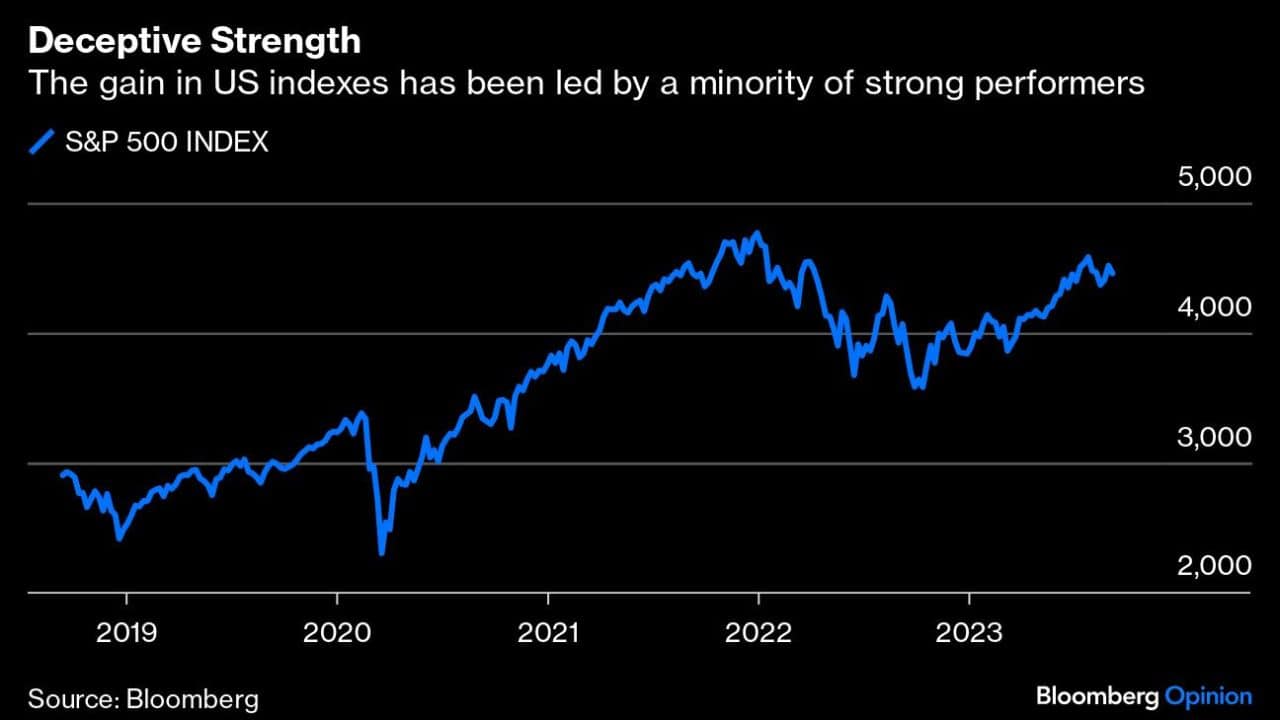 Image: Bloomberg
Arm benefited from its unique position in the semiconductor ecosystem, an AI-based equity story and a strong balance sheet. Contrast this with what’s likely to come from the dominant provider of IPO supply, the private equity industry. The buyouts of 2016 to 2018 that are coming due for resale are unlikely to enjoy comparable characteristics.
The average private equity investment now maturing will have run into a macroeconomic slowdown and rising borrowing costs. Progress on cutting debt from the high levels used in buyouts to the more prudent capital structures accepted by public markets is likely to be behind schedule. Overleveraged, low-growth businesses don’t make attractive IPO candidates.
With the M&A market sluggish, an IPO may nevertheless be the least bad option to exit the investment and return cash. SoftBank’s Arm playbook will have to be rolled out again — but with improvements.
First, recall that SoftBank bought 25% of Arm from its own Vision Fund at a $64 billion valuation shortly before the marketing of the IPO. The basic idea of doing a deal for a stake in the IPO company makes tactical sense. It puts a price on the asset, which should ideally become the floor for any future public stock sale. The way SoftBank did this is not, however, the model. The Vision Fund deal provided no third-party validation of the valuation. It arguably put a ceiling on the price.
A genuinely independent investment in a business heading for IPO would, though, put a credible number in people’s minds. It could also bring debt down and save having to ask future stock market investors to do that job at the IPO — a task they’re likely to find off-putting.
Of course, pre-IPO stake sales must probably be done at an undemanding valuation. Yet if a decent amount of time passes between the transaction and the IPO, investors in the listing may be persuaded the business has subsequently improved and be willing to pay more.
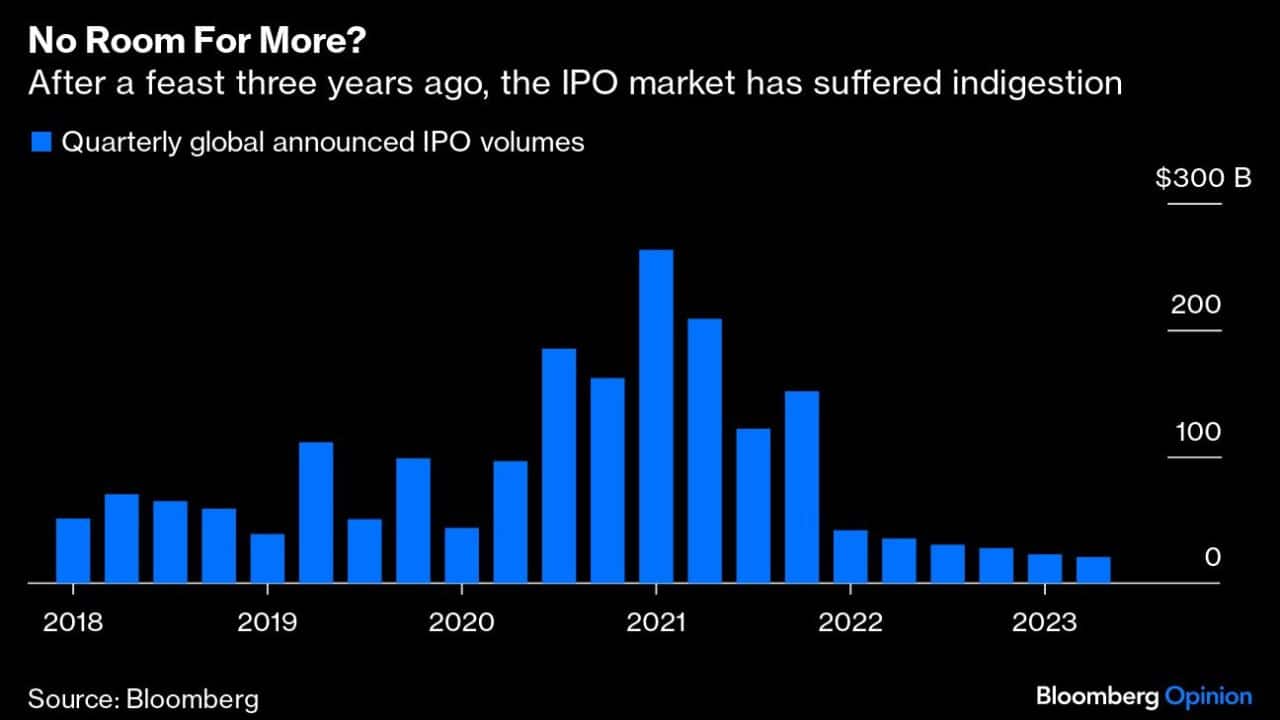 Image: Bloomberg
The second relevant piece of the Arm playbook is the use of cornerstone shareholders in the IPO itself. SoftBank roped in 10 top tech names including Nvdia Corp. and Apple Inc., to commit to buying $735 million of the shares being offered on the same terms as the deal’s regular investors.
An average $74 million each isn’t exactly betting the farm, and the anticipated benefits may be strategic as much as financial. But collectively this who’s who of the tech world validated the price range and left the bankers with less stock to sell. New stock sales can never have too much validation. That said, enlisting asset managers rather than industrial friends and family is most effective.
These dynamics put the potential pre-IPO investors — sovereign wealth funds like Singapore’s GIC Pte or Norway’s Norges Bank and the global names in asset management like Fidelity and BlackRock Inc. — in an extremely strong negotiating position to lend their credibility to deals by investing ahead of the IPO or anchoring it in a set price range. They ought to be able to obtain extremely decent discounts. That will come at the expense of the returns of those bringing the IPO forward.
SoftBank has returned Arm to the markets and deployed tactics we’re likely to see more of. The challenge for successor IPO candidates remains getting deals done — not maxing out on the price.
Discover the latest Business News, Sensex, and Nifty updates. Obtain Personal Finance insights, tax queries, and expert opinions on Moneycontrol or download the Moneycontrol App to stay updated!
Find the best of Al News in one place, specially curated for you every weekend.
Stay on top of the latest tech trends and biggest startup news.