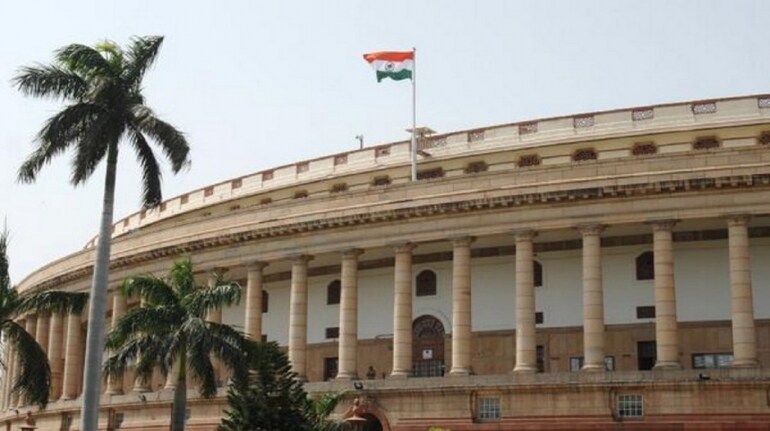
Elections to the 57 seats in Rajya Sabha have created a lot of buzz. This is the last big election to the Upper House before the 2024 Lok Sabha elections. Next year, only 10 members are due for retirement, and status quo is likely to be maintained.
These elections will more or less settle the tallies of the Bharatiya Janata Party (BJP), the Congress, and the regional parties in this house for the next year-and-a-half, and thus will form the base of all legislative processes.
A majority or a working majority is required by any political party in power to pass important Bills. Due to the composition of the upper house, it is difficult for any party to have an absolute majority, which was last achieved by the Congress in 1982-84.
The BJP crossed an important milestone recently when it touched the 100 mark in the Rajya Sabha, a feat last achieved by Congress in 1988. It hopes to be as close to the magic figure of 123 along with its allies (simple majority in the 245-seat Rajya Sabha) as it has unfinished agenda from its election manifesto.
Some of the BJP’s unfulfilled promises, such as the Uniform Civil Code, could see an introduction in Parliament after these elections.
In 2019, when the BJP increased its tally by 10 seats, we saw important legislation like the Citizenship Amendment Act and the abrogation of Article 370 from Jammu & Kashmir.
After the last day for withdrawal of nomination ended on June 3, 41 candidates got elected unopposed to the Rajya Sabha. The BJP-led National Democratic Alliance (NDA)’s 17, the Congress-led United Progressive Alliance (UPA)’s 10, and 14 candidates from the regional parties have won.
Elections to the remaining 16 seats in Maharashtra, Rajasthan, Karnataka, and Haryana will be held on June 10. The BJP has put up an extra candidate in Maharashtra and Karnataka, while backing an independent candidate in Rajasthan and Haryana each.
The NDA could lose 3-5 seats from this round of elections. However, the majority of the seven vacant nominated members positions could owe their allegiance to the ruling coalition, like in the past, keeping its tally around the 100 mark, and its allies at around 15.
It can continue to push its agenda in the House along with the support of smaller and like-minded parties, and independents. However, for constitutional amendments, the BJP would need to build consensus.
The Rajya Sabha polls are also likely to impact the results of the presidential elections to be held in July. As per initial estimates, the BJP was short of 9,194 votes.
The gap could increase marginally, however, the BJP is likely to get its candidate elected with ease through the support of smaller parties, and independents.
The Congress’ tally could increase by a couple of seats, but not drastic enough to change the equations in the Rajya Sabha. It would need to continue to jostle with the regional parties to maintain its status of the main opposition party.
Parties such as the Aam Aadmi Party, the Telangana Rashtra Samithi, and the Dravida Munnetra Kazhagam are likely to improve their strength in the upper house, thus, increasing their bargaining power with allies.
The chorus for a third front excluding the Congress could grow after the polls as these forces could try to put up a joint candidate for the presidential elections, and ask the Congress to back them.
Political parties know in advance how many seats they can win based on their assembly strength and accordingly announce candidates. As is elsewhere, elections are warranted when number of candidates is greater than the number of seats going to the polls.
The process is complex consisting of first preference and second preference votes. There is a particular way of inking your choice, else your vote could get disqualified. In the past, courts have been approached to intervene, and decide on results.
For the 16 seats, we could witness cross-voting due to dissent in the Congress on account of outsider candidates. A few MLAs could defy the whip, and vote for another party candidate.
The MLAs deliberately getting their votes disqualified have also been suspected in the past. On June 10, we could even see some MLAs not turning up due to COVID-19-like symptoms.
Amitabh Tiwari is a former corporate and investment banker-turned political strategist and commentator. Twitter: @politicalbaaba.
Views are personal and do not represent the stand of this publication.
Discover the latest Business News, Sensex, and Nifty updates. Obtain Personal Finance insights, tax queries, and expert opinions on Moneycontrol or download the Moneycontrol App to stay updated!

Find the best of Al News in one place, specially curated for you every weekend.
Stay on top of the latest tech trends and biggest startup news.