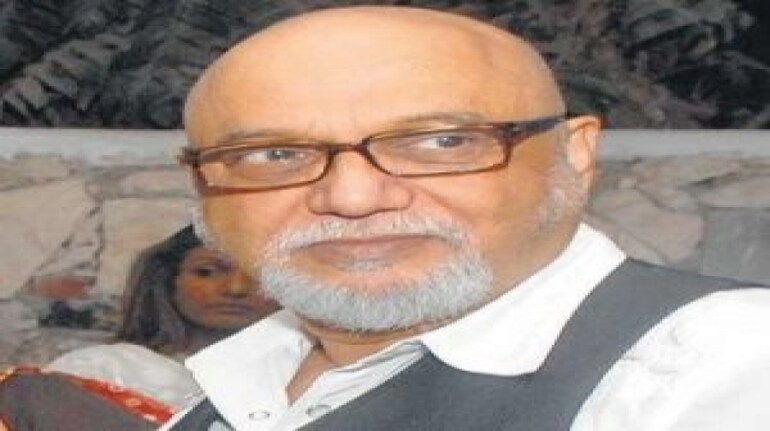
Pritish Nandy, the legendary ex-editor of Illustrated Weekly of India, who passed away on January 8, stood like a rock beside me when my journalistic career hit an air pocket. He helped me battle the turbulence which tossed me around not only as my boss but as a dada – Bengali for older brother.
It’s next to impossible for non-journalists to fathom the importance of the editor in an investigative reporter’s life. Before Nandy, I had the misfortune of losing Vinod Mehta in 2015 and Gautam Adhikari in 2019 – my captains in Sunday Observor and Times of India, respectively. My first and last editors – M. J. Akbar (Sunday) and Krishna Prasad (Outlook) – are around and I fervently wish both a long and healthy life.
In 1985, Pritish hired me as Illustrated Weekly’s Special Correspondent in Calcutta. A year later, I wrote a cover story, “The strange escapades of J. B. Patnaik”. Patnaik was then the all-powerful Chief Minister of Orissa and a Congress Party heavyweight in Rajiv Gandhi’s good books. Bu the expose was not about Patnaik [who died in 2015] being gay or straight. It was based on sworn affidavits given to me by men and women accusing Patnaik of sexually exploiting them when they went to him for help. It was about the misuse of state authority and exchequer.
The expose and its aftermath are still part of journalism and law school curriculum across India. I was barely 27 when I wrote that piece which is considered a milestone in investigative journalism not only because it pushed the frontiers of journalism but also because of the hard lessons it taught the profession.
Four decades later, I can still recall the worst form of police harassment, intimidation and surveillance that I was subjected to during my frequent visits to Orissa for court appearances and meeting lawyers between1986-89.
I had written what I still believe was true but it invited an Rs 1 crore defamation suit and led to me ultimately being a signatory to an unprecedented public apology that Illustrated Weekly was forced to carry condemning its own story. But before the surrender, Pritish and I fought the suit Patnaik filed for three years with the full backing of the management.
But eventually our fightback came to naught and an apology was shoved down my throat and Pritish’s. Patnaik used his clout to compel Illustrated Weekly to publish an apology which, in former Statesman editor S Nihal Singh’s words, was “so demeaning that every journalist felt diminished”. What was most objectionable was acknowledging “a political motivation” behind the expose when there was none. As the author I can vouch for that!
Although a pistol was held to Pritish’s head and mine, he didn’t abandon or disown me. On the contrary, he displayed his anger at the capitulation and his full faith in me by getting me to write the cover story, “A Mafia is Ruling Our Country” in the Illustrated Weekly’s August 27, 1989 issue which carried the cringing apology. Pritish put me up at Shalimar Hotel in Mumbai for a week at the company’s expense so that I could write the cover story slamming India’s who’s who – politicians, business barons, criminals, lawyers, judges, et al – to my heart’s content. The no-holds-barred piece sent the message that Pritish and I were unrepentant and more importantly, that I enjoyed the editor’s full confidence.
Pritish also backed me by publishing hundreds of readers’ letters criticizing and condemning the apology in issue after issue for months. Needless to say, he went up in my esteem by several notches and I was convinced that he had my back. Sticking his neck out, he embodied raw courage, high journalistic principles and unimpeachable integrity. I must confess that I derived great satisfaction seeing him go out on a limb – it did wonders for my self-esteem when the chips were down.
No account of those days would be complete without recalling the stellar role of Sailesh Kottary, Illustrated Weekly's deputy editor, in the magazine's pushback against Patnaik. He spearheaded our defence from Cuttack and Bhubneswar all the way up to the Supreme Court. Always immaculately dressed in matching pants. Shirt, belt and shoes- a pucca Bambaiya gentleman- he had a comforting and calming presence when the going was really tough.
At that time, an appalled Singh, the doyen of Indian journalism, had written that “apart from the hurt caused to journalists’ self-esteem, this landmark apology raises portentous issues of press freedom and of the future of investigative journalism in India”.
Anyway, the clean chit Patnaik wrangled didn’t serve its purpose. A few months after the apology, he was badly lost the 1990 Orissa legislative assembly elections and chief minister-ship which was so dear to him, proving that the electorate believed every word of my expose and evicted him from power.
Pritish and I regretted for years that the surrender took place before the trial could start. The victims’ sworn affidavits and audio tapes, on which the expose was based, were never tested in court. Whether the evidence would have withstood legal scrutiny is open to conjecture; I was given ‘out’ without the umpire raising his finger.
But what was never in doubt was Pritish’s unstinted backing for his typewriter guerillas. In fact, he gave me a promotion and a hefty raise within months of the apology – I was bureau chief at 30 – which was as unprecedented as that stinking apology!

Discover the latest Business News, Sensex, and Nifty updates. Obtain Personal Finance insights, tax queries, and expert opinions on Moneycontrol or download the Moneycontrol App to stay updated!
Find the best of Al News in one place, specially curated for you every weekend.
Stay on top of the latest tech trends and biggest startup news.