Asia had never produced a world champion, but that changed when Viswanathan Anand won the World Junior Chess Championship in 1987. His feat marked the beginning of a remarkable rise.
In 1991, Anand became a candidate and won the first match in the candidates' tournament, which qualified him as one of the top four challengers. This meant that he was among the top in the world at the age of 21, and he remained in the top FIVE for almost two decades.
Over three decades, Anand won the World Championship five times, and some other Indian players reached near the top-20. Yet, they remained at that level. No one really believed that they could progress to the level of candidates for the World Championship.
This raised a worrying question for players like me: When will India produce a second world champion? But circumstances have changed this year.
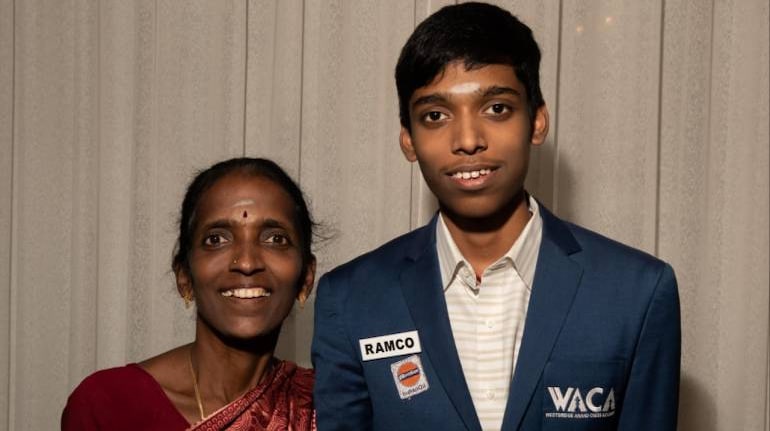
By making it to the finals of the FIDE World Cup and becoming a candidate, Rameshbabu Praggnanandhaa has become only the second Indian to do so. However, this achievement is not a fleeting moment; it holds deeper significance.
2022 Chess Olympiad And A New EpochLet's revisit the 44th Chess Olympiad held last year in India. The Olympiad is the most significant event due to its massive participation, including top players like Magnus Carlsen and Fabiano Caruana.
Since India hosted the event, there was an opportunity to field a second team. Specific criteria determined the team composition, such as Elo ratings, current form, performance in recent months, or specific types of tournaments.
Many of the Indian team’s top-rated players had refrained from participating in specific tournaments for years, often skipping national and Commonwealth championships. They might occasionally engage in the Asian Championship but mostly play in private tournaments.
Consequently, they were not accustomed to facing opponents with Elo ratings of 2400 or 2500; they generally played at levels where risks were minimal. This behaviour pattern persisted among the top players until the emergence of the young generation represented by Praggnanandhaa, Nihal Sarin, Arjun Erigaisi, and Gukesh D.
The opportunity to field a second team in the Olympiad allowed Gukesh, Nihal, and Praggnanandhaa to participate.
Prior to this, the top five seeded players in our team would finish around the tenth position, often between fourth and tenth, without clinching any medals. However, when the young talents had the chance to play in the Olympiad, a remarkable transformation occurred.
India B’s A-Game At OlympiadIn the 44th Chess Olympiad, the India B team played at the top tables throughout.
In fact, when Carlsen arrived at Delhi airport, he inquired about the Indian teams. After observing both teams, he noted that the lower-rated India B team, featuring Gukesh, Nihal, Praggnanandhaa, and others, appeared stronger than the higher-rated India A team.
The India B team went on to secure the bronze medal. More importantly, Gukesh secured a gold medal on the top board, whereas Carlsen managed only a bronze. Additionally, Nihal earned a gold medal, propelling himself ahead of several top players in the world.
Without participating in the Olympiad, these players wouldn't have gained the insight, experience, or understanding of their own latent strength. This realisation propelled them beyond contentment with being ranked 25th or in the 20s globally.
These young talents came to a consensus that if they could outperform Carlsen – earning a gold while he secured only a bronze – in a full-fledged tournament where both played 10 games each, then surely, they possessed significant potential.
They collectively determined that they wouldn't settle for anything less than a world crown. Hence, Praggnanandhaa's achievement this week, is essentially a logical outcome of their outstanding performance for the India B team.
The Praggnanandhaa PhenomenonPrag’s performance can't be seen as an isolated feat. The entire group of teenage players, including Arjun Erigaisi, have collectively forged a path into territory that previous generations couldn't even fathom.
Praggnanandhaa's journey has been truly remarkable, marked by numerous records and achieving the title of international grandmaster at a young age. His performance, defeating Hikaru Nakamura in a blitz game could almost be considered impossible, and the triumph over Caruana was simply fantastic.
Even in the last round, where Praggnanandhaa lost, it wouldn't be fair to say he played poorly. The outcome was more a result of Carlsen's
exceptional skills and abilities rather than a lapse in Praggnanandhaa's play.
If Praggnanandhaa continues to make progress and performs well in the candidates' tournament in April 2024, he might even secure a spot in the world championship match in November 2024.
Praggnanandhaa has significantly transformed India's standing on the global chess stage. Five years ago, India was already recognised as one of the best countries in terms of chess prowess. Today, India is acknowledged as the foremost chess-playing nation globally.
India’s Gen-Z RisesDelving into Praggnanandhaa’s personality, it is evident how dedicated and diligent he is. My perspective is also shaped by my interactions with Coach RB Ramesh, who leads his training.
As the head of the delegation during the Olympiad, I had the privilege of observing coaching camps. The players significantly improved under Coach Ramesh's guidance. It's through such efforts that we achieved our strong position on the top two boards in the Olympiad.
Praggnanandhaa, Gukesh, and all these younger players are notably composed, with a calmness that runs deep. They not only withstand pressure, but they also manage fatigue well. They can engage in 5, 6, 7, even 10 games, be it rapid or with short breaks, all while maintaining their strategic acumen, presence of mind, and calculating prowess.
Moreover, they tend to outperform top players like Nakamura or Caruana when least expected.
If they come across a remarkable game, they show interest and appreciate it. They remain objective rather than subjective in their evaluations. They can acknowledge when they or their opponents make mistakes and dissect these instances with precision. They focus on the board, not solely on strategy, ensuring they beat their opponents – a crucial aspect.
Where The Mind Is Without FearA Russian proverb wisely states that it's not merely good positions that win but rather good moves. Praggnanandhaa wasn't necessarily gaining points easily, much like Caruana. However, the key is his resilience.
Like a boxing match, where you might take knocks but remain standing, he endures through challenging situations. Since he doesn't get knocked out, he keeps playing, waiting for that opportunity to deliver a decisive blow. For instance, against Nakamura and Arjun, he managed to secure victories in seemingly dire situations.
He's able to bounce back and seize opportunities when they arise. Unlike a common player who might think, "I survived today, but can I survive tomorrow against a stronger opponent?" Praggnanandhaa perceives it differently. This personality trait, his strength, his willingness to take risks, and his readiness to accept uncertainty in sports all contribute to his success.
These players fear no one. They're prepared for any kind of challenge, akin to street fighters. Praggnanandhaa demonstrated that he consistently plays for a win, irrespective of the position's outlook, understanding the essence of chess – it's not about being perfect but about outplaying your opponent.
A hearty salute to these young players, especially Praggnanandhaa, for his exceptional performance. India's future in chess is exceedingly bright.
Pravin Thipsay is an Indian chess player who holds the FIDE title of Grandmaster. Views are personal, and do not represent the stand of this publication.Discover the latest Business News, Sensex, and Nifty updates. Obtain Personal Finance insights, tax queries, and expert opinions on Moneycontrol or download the Moneycontrol App to stay updated!
Find the best of Al News in one place, specially curated for you every weekend.
Stay on top of the latest tech trends and biggest startup news.