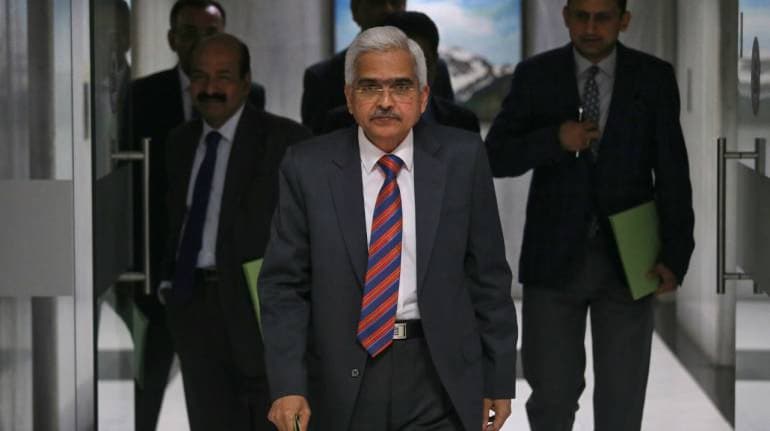
Central banks worldwide have increased interest rates once again. Now all eyes are on the upcoming meeting of the Reserve Bank of India’s Monetary Policy Committee.
Some statements suggest the MPC would soften its war against inflation. For example, a recent report states that the government is in no hurry to bring the inflation rate to its target value of 4 percent. In June, an MPC member stated that interest rate hike should be moderated so as not to “snuff” out growth. In all of these, the main concern is the health of the economy — and rightly so. It is now certain that the growth rate of the Indian economy will be much lower than the RBI projection of 7.2 percent. So, the anxiety is understandable.
Will keeping the interest rate low help? The fact is soft pedalling on interest rate hikes can harm the prospects of returning to high growth rates even more than high interest rates in the economy. The concern is that the high interest rates will reduce credit uptake, and hence investment.
In India, private investment has not really taken off, but it is not because the interest rate is too high. There are plethora of other reasons. The non-food credit uptake did not quite respond to a cut in interest rates even before COVID-19 hit the economy. Between December 2018 and March 2020 the growth rate of non-food credit fell even as policy repo rate decreased.
Somewhat ironically, bank credit growth surged to a nine-year high towards the end of August 2022 in spite of repo rates being increased since May. However, that does not mean a further increase in interest rates will not impact credit uptake; but, it is far from clear that keeping interest rates low will lead to higher credit uptake.
One factor that impacts investment decisions is the level of uncertainty. The decision to undertake any investment depends on two things — expected return from that investment, and the risk associated with investments. The risk-return trade-off in deciding to invest in a venture means that if the uncertainty in the economy increases, the risk goes up, and the expected return has to be significantly high for the investment to take place. So, when uncertainty goes up many projects which would have been funded earlier are no longer funded. Thus, investment falls.
Sometimes uncertainty goes up for external reasons, or for reasons beyond anyone’s control. The prime example is COVID-19. In other cases, uncertainty in the economy goes up because of policy action (or, inaction), like during the policy paralysis during the second term of the United Progressive Alliance (UPA) or the sudden announcement to demonetise Rs 500 and Rs 1000 currency notes in 2016.
Monetary policy can be used to reduce uncertainty in the economy, but if poorly executed it can increase uncertainty manifold. For example, when the VIX index — a measure of volatility in the global economy — shot up in March 2020 with the onset of COVID-19 and lockdowns across countries, a co-ordinated action by the central banks across the world brought down the VIX. On the other hand, indecisiveness on the part of central banks in the second half of 2021 and early 2022 in fighting inflation increased uncertainty.
The RBI too gets the blame. Up to May 2, when a special meeting of the MPC was called and the repo rate was increased by 40 basis points, it was downplaying inflation, and continued its ‘accommodative stance’. This created confusion in the markets. The primary expectations — indeed the mandate for the RBI — is to keep inflation within bounds. If the central bank is seen to be soft, and unwilling to go to war against inflation, that sows seeds of doubt in everyone’s mind about the trajectory of inflation in the economy. This may, in fact, lead inflation to spiral out of control.
So, it is important for the central bank to fight inflation in a timely and consistent manner. Not only that, it has to be seen doing that. It is important to clearly communicate, and set a clear contingent future path for interest rate changes.
Since the emergency meeting in May, the RBI has done that, and has increased interest rates in three consecutive meetings in May, June, and August. This has shown results. In the Households’ Inflation Expectations Survey released by the RBI in August, the households’ median inflation perception for the current period as well as three months and one year ahead periods all fell by at least 50bps.
India is among the better performing countries in the world, both in terms of inflation and growth. However, inflation is still high — globally and in India. The MPC and the RBI must keep up the good work they have done in recent times. It will help fight inflation and reduce uncertainty in the economy. Failure to do so can have grave implications for both inflation and growth.
Partha Chatterjee is Professor and Head, Department of Economic, Shiv Nadar University. Views are personal, and do not represent the stand of this publication.
Discover the latest Business News, Sensex, and Nifty updates. Obtain Personal Finance insights, tax queries, and expert opinions on Moneycontrol or download the Moneycontrol App to stay updated!
Find the best of Al News in one place, specially curated for you every weekend.
Stay on top of the latest tech trends and biggest startup news.