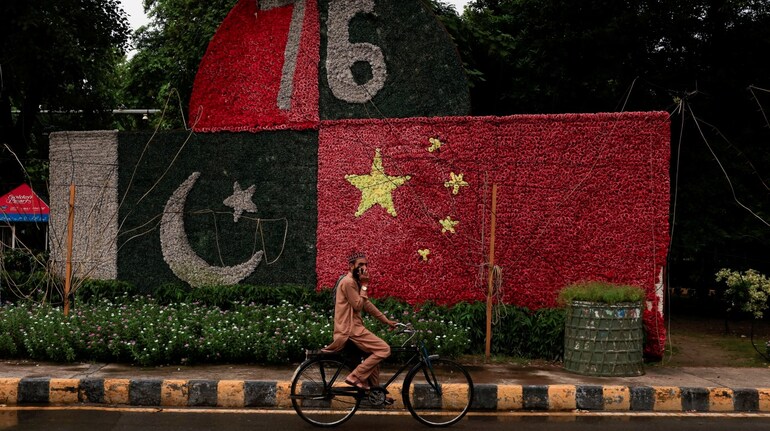
The narrative of an ‘all-weather strategic partnership’ between Pakistan and China has been repeated often enough in official communication, media commentaries, and strategic briefings to overstate the actual operational on-ground reality.
A sombre assessment of their military cooperation, including regular joint exercises and technology transfer, offers a more nuanced understanding of this relationship. While the bilateral defence relationship holds significant consequences for the region, especially India, it falls short of a deeply interoperable nature when compared to NATO standards. Instead, this alliance is purpose-driven, asymmetric, and anchored in regional interests that serve immediate geopolitical concerns.
Interoperability remains central to defence partnerships especially among countries seeking deeper doctrinal, procedural, and technological convergence. NATO’s template, which enables joint operations without the need for identical military platforms, offers a valuable benchmark for evaluating bilateral and multilateral defence integration.
Interoperability in the true sense necessitates a common doctrine, integrated command and control, shared communications and data protocols, and aligned logistics and training systems. China and Pakistan fall short across all these aspects.
The China-Pakistan engagement is predominantly shaped by mutual strategic utility rather than ideological harmony. For Beijing, Pakistan remains a counterweight to India’s influence in the Indian subcontinent. China’s military ties with Pakistan have also brought substantial economic benefits with the defence trade generating significant revenue for Chinese manufacturers, with arms export to Pakistan valued at over $5.28 billion between 2020-2024.
Meanwhile, Islamabad benefits from Chinese military and diplomatic support against a bigger rival, India. The reliability of China as a defence partner was tested by Pakistan in several conflicts with India including in 1965, 1971, and more recently in 2025. That said, militarily – the joint exercises, defence sales, and deep technology transfer should not be conflated with interoperability.
Pakistan and China operate on structurally differing command structures. The Chinese People’s Liberation Army (PLA) operates under a highly centralised, party-controlled system with theatre commands that integrate army, navy, air force, missile, and strategic support units in a single command architecture.
Meanwhile, Pakistan’s defence establishment operates on a personality-centric and fragmented command model, which remains Army-centric. This is particularly exemplified following adoption of the 27th Constitutional Amendment, which established the office of Chief of Defence Forces (CDF).
As a result, in practice the joint exercises such as the air forces’ Shaheen, Sea Guardians of the naval forces, and Warrior of armed forces are tactical familiarisation drills which fall short of strategic integration.
Additionally, technological and hardware incompatibility continues to pose structural complications to operational integration. While the defence partnership now includes joint development of weapon systems, and selective technology transfer, Pakistan’s hybrid arsenal presents a challenge to seamless coordination. A dominant share of Pakistan’s equipment, including J-10CE fighter jets, VT-4 tanks, Type 054A frigates, and the HQ-9 air defence system, comes from China.
That said, Pakistan’s Chinese dominated defence inventory coexists with Western systems such as US-origin F-16s and Swedish Saab radar systems, that operate on different data links, encryption standards, and maintenance architectures. This restricts cross-platform connectivity and impedes integrated command-and-control functions. The use of Western equipment also adds political limitations to Pakistan that cut against deep operational collaboration with China.
This technological disconnect was demonstrated during the May 2025 India-Pakistan conflict, where Chinese systems arguably got their first major combat experience alongside Pakistani forces. China reportedly provided advanced positioning support via the BeiDou satellite network and high resolution ISR feeds, while Pakistan operated China-made J-10Cs armed with PL-15 long-range missiles and deployed HQ-9 surface-to-air missiles.
The US-China Economic and Security Review Commission also reported the use of a wide disinformation campaign by China, using fake social media accounts and AI-generated visuals of Rafale debris, with the intent to undermine the reputation of the French aircraft. Nevertheless, the degree of coordination was more episodic than integrated.
More importantly, China and Pakistan will deliberately avoid formalising their military relationship into a treaty-bound partnership, as strategic ambiguity serves both their interests. Both countries often use terms such as ‘coordination’, ‘cooperation’, and ‘jointness’ to describe their engagements. However, they signify varying levels of collaboration rather than full integration.
For Pakistan, maintaining a degree of strategic elasticity is crucial considering its dependence on Western military equipment and financial institutions like the International Monetary Fund (IMF).
Pakistan heavily relies on imports and collaboration with Western countries, especially for maintenance and upgrades of its F-16 fighter fleet, specialised arms and ammunition, and access to advanced dual-use technologies.
Meanwhile, a formal military pact with Pakistan could risk entangling China directly in a regional conflict, particularly involving India. While limited, episodic tensions between India and Pakistan serve a strategic function for China, given they weigh on Indian military resources, dilute New Delhi’s strategic focus on the Chinese border, and reinforce Pakistan’s dependence on Chinese support. However, a broader regional conflict would contradict China’s greater geopolitical calculations given the risks to economic disruption and instability along its periphery.
While this presents a realistic assessment of the current situation, the deepening military cooperation between China and Pakistan should nonetheless compel India to re-evaluate its defence calculus and resource allocation in light of a plausible two-front conflict scenario. This should further nudge New Delhi to evaluate interoperability in technical terms, as well as assess intent, patterns, and the increasing synchronisation of strategic messaging between Beijing and Islamabad.
(Aishwaria Sonavane is Research Analyst for Pakistan Studies, Indo-Pacific Programme, Takshashila Institution).
Views are personal and do not represent the stand of this publication.
Discover the latest Business News, Sensex, and Nifty updates. Obtain Personal Finance insights, tax queries, and expert opinions on Moneycontrol or download the Moneycontrol App to stay updated!
Find the best of Al News in one place, specially curated for you every weekend.
Stay on top of the latest tech trends and biggest startup news.