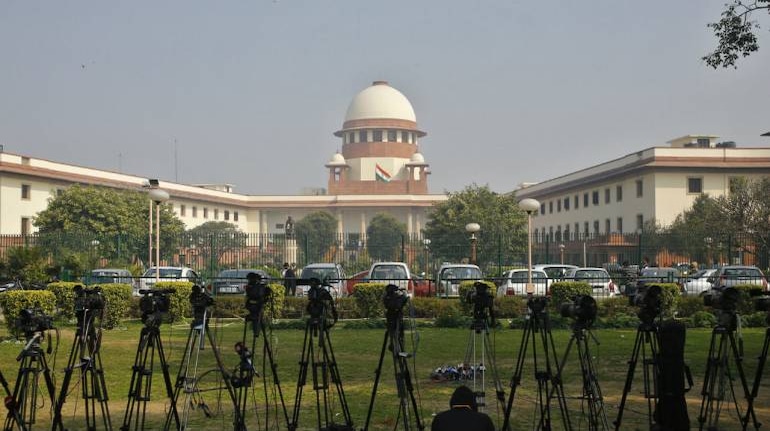
In these contentious times, if you are baffled by the inspiration behind the protesting youth on streets, you can be forgiven for imagining an alternative reality in which Indian courts responded to the constitutional crisis of the year. Would the people have taken to streets if they felt they could rely on the Supreme Court (SC) to be the Sentinel on the qui vive (on the alert), as it proudly claims?
What if the SC had immediately decided on the petitions filed by Kashmiri citizens challenging their alleged illegal detention -- including of minors -- and the communication lockdown that has continued for five months now, as its UK counterpart did in the petitions challenging prorogation of Parliament in light of Brexit?
Or, let’s say, what if the SC -- and the Delhi High Court, a few days later -- had not turned down the plea of those seeking an investigation into the alleged police excesses at Jamia Milia Islamia and protected their right to protest peacefully?
What if the Ayodhya dispute heard by a Constitution Bench had a conclusion that matched the extremely equanimous and voluminous discussion that preceded it? What if the court had not dragged its feet on the question of electoral bonds, which arguably favoured the ruling party disproportionately?
And most importantly, what if the then Chief Justice had not held that impromptu Saturday morning press conference to decry allegations of sexual harassment, raising serious questions about the independence and integrity of the judiciary?
Many of the judges who signed off on the infamous ADM Jabalpur judgment that gave a dictatorial government unfettered powers during the Emergency have subsequently regretted it publicly. Will the judges of today do the same decades later?
In many ways, 2020 will mark a watershed year for the SC. It is expected that the judges will pronounce their verdict on the clampdown in Kashmir immediately on reopening, a full five months after the petitions were filed. It is expected that January will also see a host of litigations related to alleged police atrocities -- denied by the police -- which have been reported from several states. The response of the court will be keenly watched.
But there is much more excitement in store. After recent revelations that the government was perhaps disingenuous in its claims about the anonymity of electoral bonds, it is quite likely that the SC will have to finally hear and decide the case at the earliest. Last May, it denied interim relief to petitioners who were seeking publicising the list of donors and kept the matter pending.
Religion will continue to lead the headlines. The question of whether the top court can interfere to protect fundamental rights of those affected by religious customs is scheduled for hearing from January 14 by a 7-judge bench. The cases under examination range from what is commonly known as Female Genital Mutilation, practised on 6-8 year old girls in the Dawoodi Bohra community, the right of Parsi women who married outside the community to enter the sacred and exclusive fire temple, and the restrictions on menstruating women from participating in religious rituals.
It is expected that the court will uphold fundamental rights. But if it washes its hands off religious customs, it must clarify whether it will intervene in cases of extreme practices such as the bodily harm inflicted on young girls in the name of tradition.
One imagines that political arrests will continue. But the government will find its hands slightly tied after an SC bench recently decried the practice of submitting evidence in sealed covers, which was employed to an outrageous extent last year.
Fresh reports suggest that in the Elgar Parishad case, the Maharashtra police may have doctored evidence to keep activists and lawyers accused in jail for Maoist sympathies. With a new government in place in the state, contours of that litigation should change drastically.
It must juggle with these issues while being constantly conscious of the bulging case backlog as well as serious questions about case allotments to certain judges.
If the ordinary man loses faith in the judiciary delivering justice within a reasonable timeframe, it will be a question of relevance then. The SC is on test, perhaps like never before.
Abraham C Mathews is an advocate based in Delhi. Twitter: @ebbruz. Views are personal.
Discover the latest Business News, Sensex, and Nifty updates. Obtain Personal Finance insights, tax queries, and expert opinions on Moneycontrol or download the Moneycontrol App to stay updated!
Find the best of Al News in one place, specially curated for you every weekend.
Stay on top of the latest tech trends and biggest startup news.