




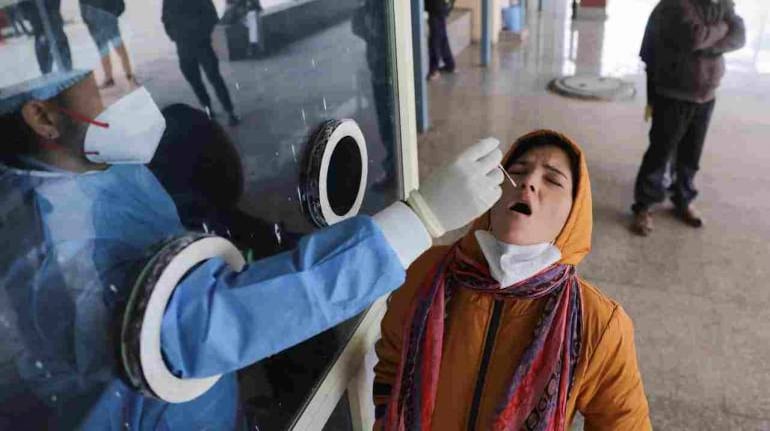
It was the general assumption that the government would have learnt some lessons from the horrific experience of COVID-19, and give positive signals in the Union Budget to alleviate peoples’ anguish. The estimated 3 million deaths — unacceptable by any standard — coupled with the unimaginable suffering people went through, could have been minimised if we had a good functioning health system.
The health sector has been badly neglected these past seven decades — not for want of ideas or capability, but funding and policy attention. Given this, it was a reasonable expectation that after such a devastating experience, the government would turn its attention to develop the health sectors’ institutional resilience to future pandemics.
But the priorities of the government are clearly different. The Budget was geared more for stimulating job-oriented growth by enhancing public investment in infrastructure — roads, mass transport, ports, railways, logistics, etc., alongside a massive step up for the digitisation of most sectors — digital records in health and digital platforms for education, and so on.
The Budget was futuristic as these investments will certainly give dividends in the years to come; but a poor response to coping with current problems of here and now.
So disappointingly, Budget 2022 had nothing on offer for human capability sectors such as health, education, nutrition, employment of the low-skilled or the semi-educated. The health budget of the Ministry of Health & Family Welfare, consisting of the Department of Health & Family Welfare (DHFW), the Department of Health Research (DHR), and the Ministry of Ayush indicated nominal tinkering over Budget Estimates (BE) of last year, and Revised Estimates (RE) as shown in the table below:

Such marginal increases do not provide any room for introducing urgently-needed investments or scale-up ongoing interventions. In fact a higher budget outlay was needed to actually pick up the slide in the ongoing programmes such as child immunisation, reproductive health care services, TB, HIV, and other disease control programmes that were majorly impacted due to the full diversion of resources to cope with the pandemic.
While the BE indicates intention, the RE reflects a truer picture of demand for resources, and expenditures incurred. Accordingly, due to the pandemic, there was a step up in spending by the DHFW and the DHR. If that could be the demand for this year, then the step up of budget allocation for FY 22 is a nominal 0.10 percent and 3.9 percent respectively.
Of concern is the inter-programmatic allocations. In the DHFW, there is a higher priority towards hospital construction as seen in the Budget outlay that shows a 42.8 percent increase from Rs 7,000 crore to Rs 10,000 crore, while the budget for HIV/AIDS has been reduced by 9.56 percent. HIV/AIDS, like TB, affects the poorest people and needs State support.
Likewise, the National Health Mission (NHM) allocation has also been increased from Rs 36,576 crore BE of ‘21 to Rs 37,000 crore in BE ’22 — a mere 1.16 percent increase. It is the NHM that is the real driver of change — all disease control programmes, all preventive health programmes such as child immunisation, etc. are implemented on a 60:40 partnership basis with the states. Increases not even accounting for inflation will imply a reduced availability of funds in real terms, and impact on several ongoing programmes and initiatives.
The NHM is fraught with several issues such as an expanding mandate but limited funding. These issues need to be resolved as several important programmes such as mental health or non-communicable diseases tend to get neglected due to the prioritisation of reproductive child health and communicable diseases, both which cannot be ignored.
The one critical takeaway from the pandemic was substantially increasing investment in health research — more laboratories, and more research. India suffered greatly in handling the pandemic due to lack of adequate research to provide timely data and evidence for decision-making in a highly evolving situation. Yet, the increase is not as much as desired since establishing a chain of BSL III labs need capital.
It is not as if there is no fiscal space. Health infrastructure in the public sector needs a ramp up. Of the Rs 7 lakh-crore earmarked for infrastructure, Rs 1 lakh-crore could have been earmarked for social/health infrastructure among other measures of having progressive taxation in order to reduce the widening inequalities.
There were options, and there were choices to be made. It is important to remember that the future of India cannot be built by a few, but by all, and for that the all have to be educated, healthy, and alive, and not be sick, illiterate, or face premature death.
K Sujatha Rao is former Health Secretary, Government of India. Views are personal, and do not represent the stand of this publication.Discover the latest Business News, Sensex, and Nifty updates. Obtain Personal Finance insights, tax queries, and expert opinions on Moneycontrol or download the Moneycontrol App to stay updated!
Find the best of Al News in one place, specially curated for you every weekend.
Stay on top of the latest tech trends and biggest startup news.




