Prakash Chandra
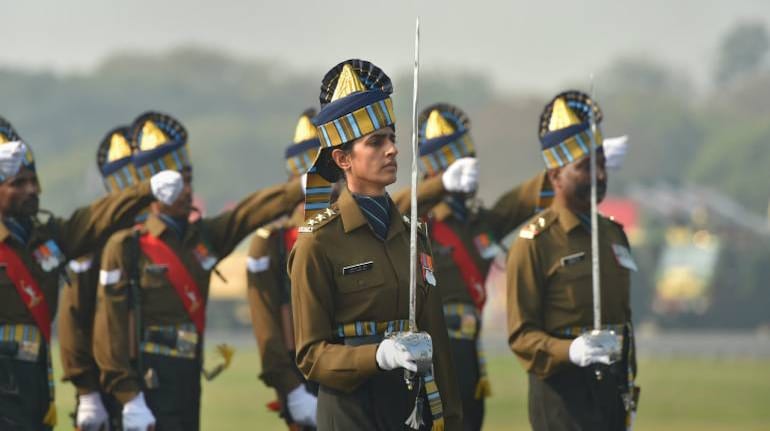
There have been mixed reactions to the Supreme Court’s February 17 ruling for the Indian Army to grant permanent commission for women who opt for it. Many people welcome it as a rational judgment, while others are not so sure if it will prove to be the last word in the longstanding debate on gender parity in the armed forces. What is certain, however, is that the landmark judgment is a catalyst for changing this status quo.
Speaking to mediapersons in New Delhi on February 20, the Chief of the Army Staff (COAS) General Manoj Naravane termed the apex court order as “very enabling” and said that the army had made “a roadmap to implement it”. He said the court’s decision “brings out a sense of clarity and purpose to gainfully employ officers for better efficiency of the organisation. I must assure that everybody in the Indian Army including women officers will be given equal opportunity to contribute to the nation as also progress in their careers.”
The main argument for having gender equality at every level in the army is that it is essential for women to have successful careers within the military. The Indian Army — the fourth largest in the world — has a skewed ratio of male and female officers, with women making up less than 4 percent of the 42,900-strong officer ranks. This is surprising not least because women used to be recruited as nurses in the army as far back as in 1927, and into the medical services, as doctors, in 1943.
In 1992, women were allowed into 10 more services, besides the nursing and medical wings. Never mind if these were mostly under Short Service Commissions (SSCs) for 10 years, with an optional four-year extension. This has been a major handicap for female officers with 14-year-long SSCs who could never aspire to a dedicated career in the armed forces. For officers, regardless of gender, can rise to the rank of a colonel — a requisite command for being promoted to higher ranks — only after putting in a minimum of 15 years of service.
It is not as if women do not have Permanent Commissions (PCs) at the moment. Beginning in 2008, when the PCs were extended to women in streams of Judge Advocate General (JAG) and Army Education Corps, women have been eligible for the PCs in all 10 branches where they are inducted for the SSCs, including Signals, Engineers, Army Aviation, Army Air Defence, Electronics and Mechanical Engineers, Army Service Corps, Army Ordnance Corps and Intelligence. It is another matter that these are staff positions, which mostly involves the management of backroom personnel and not really command jobs that have a larger profile. So, in that sense, the debate is about granting combat and command roles to women officers rather than about granting the PCs.
Significantly, even in its 54-page verdict on February 17, the Supreme Court only provides female officers the opportunity of rising to the colonel level and command non-fighting units. The court also makes it clear that a PC cannot be claimed as a right — a crucial decision which will help keep the top-down pyramidal structure of the armed forces intact, without being overcrowded. The SSC officers currently serve up to a certain age before leaving to join the work force outside, which enables younger officers to enter the force.
An obvious concern about granting the PCs for women officers has to do with their ability to cope in front-line positions. This, however, overlooks the fact that in the modern era of electronic warfare, the focus is on overcoming battle stress rather than on actual physical combat. Exceptions like the CRPF’s 88th Mahila Battalion — with their excellent track record in fighting insurgency in places such as Kashmir and Assam — also prove that given the opportunity women officers can do well in the regular armed forces.
That said, it is unlikely that women will be able to break the ‘brass ceiling’ of combat exclusion policies any time soon. The court acknowledges this. Its verdict does not open combat arms to women, although it cites the examples of foreign armies, such as Israel’s, where women are allowed in combat roles. These women, though, are not deployed in direct infantry combat and serve mostly in the military police or border security, rather than in actual combat.
The Indian Air Force, too, allows combat roles for women fighter pilots — but, like other air forces, follows the unwritten code of women not operating over enemy territory. So, at the end of the day, armies have their own traditions and philosophies and the Indian Army has to choose what is best suited for it.
Prakash Chandra, former editor of Indian Defence Review, writes on aerospace and strategic affairs. Views are personal.

Discover the latest Business News, Sensex, and Nifty updates. Obtain Personal Finance insights, tax queries, and expert opinions on Moneycontrol or download the Moneycontrol App to stay updated!
Find the best of Al News in one place, specially curated for you every weekend.
Stay on top of the latest tech trends and biggest startup news.