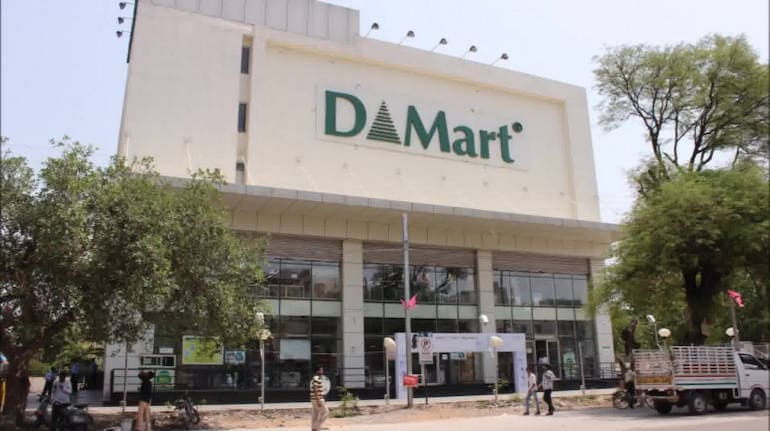
Rarely does an initial public offering have everything going right for it. Either the fundamentals of the company are not good or the sector is going through a rough patch or the promoter group does not give investors confidence. Even if all these parameters are met then the issue price is too expensive, leaving very little on the table for the new investor.
But Avenue Supermarts, which runs the D-Mart supermarket chain, has everything going for it. Its fundamentals are the best in class, the segment of retailing sector that it’s in is growing at a rapid pace. The biggest plus in the company are its promoters who have taken a pragmatic approach in charting its growth plan. Finally, the IPO hits the market at nearly the same valuations as that of its peers despite having exceptionally strong fundamentals and a brighter future.
BackgroundAvenue Supermarts (ASL), incorporated in May 2000, offers a wide range of products with a focus on foods (53 percent of revenue), non-foods – FMCG (20 percent) and general merchandise & apparel (27 percent) product categories. These stores operate under the ‘D-Mart’ brand.
ASL operates 118 stores across 45 cities with retail business area of 3.59 million sq.ft, located in Maharashtra (59 stores), Gujarat (27), Telangana (13), Karnataka (7), Andhra Pradesh (4), Madhya Pradesh (3), Chhattisgarh (1) and NCR (1), Daman (1) and Rajasthan (2). Majority of its stores are in western India with the company having plans of expanding its stores in other parts of the country.
ASL operates 118 stores with a retail business area of 3.57 million sq. ft. with plans of adding 0.5 million sq. ft. every year.
Issue DetailsThe Rs 1,870 crore IPO of ASL will be in the price range of Rs 295-299. The main aim of the issue is to repay debt of the company. Out of the proceeds of the issue Rs 1,080 crore will be utilised to retire debt and Rs 366.60 crore will be used for construction and purchase of fit-outs of new stores. The remaining funds will be for general corporate purpose.
The DifferentiatorUnlike its peers in the industry ASL operates largely on an ownership model with nearly 90 percent of the stores being owned. On the other sites it enters on a long-term lease arrangements for a period of 30 years.
Its new store addition follows a pattern. ASL opens stores using a cluster approach which focusses on having sites close to each other for efficient supply chain. Unlike other players D-Marts are found in densely-populated residential areas with a majority of lower-middle, middle and aspiring upper middle class consumers. Its 21 distribution centers and 6 packing centers forms the backbone of its supply chain.
Rather than offering discounts, ASL’s business model is based on the concept of offering value retailing to their customers using the Every Day Low Cost/ Every Day Low Price (EDLC/EDLP) strategy. The company ensures low cost products for its customers by keeping its procurement and operations costs low. The company also benefits from lower fixed costs as it does not have to bother about rentals.
The majority of products stocked by the company are everyday products forming a part of basic rather than discretionary spending. This ensures frequent churning of products and is not affected by seasonality or macro-economic conditions.
Financial PerformanceASL’s expansion of store count has come without any stress to the balance sheet. From 1 store in 2002 to 118 presently the company has a debt to equity ratio of only 0.74, with the peak being in FY16 of 0.79.
The company’s success of its EDLC/EDLP can be judged from its inventory turnover ratio which stands at over 14 times, signifying that its inventory is churned in every 26 days compared to between 50-60 days in the industry. The company has managed to keep its logistics engine well-oiled and its suppliers happy. Average payable days stand at only 8 days with an industry average of anywhere between 80-100 days.
Its branches continue to grow every year as measured by Like for Like (LFL) growth of 21.5 percent. Revenue from sales per retail business area in sq. ft. has also increased from Rs 15,324 in FY12 to Rs 28,136 in FY16. Total number of bills cut has also gone up from 31.8 million in FY12 to 84.7 in FY16 and 80.1 in the nine months of current fiscal.
As a result the company’s revenue has increased from Rs 2,210 crore in FY12 to Rs 8,590 crore in FY16, a robust 40.4 percent CAGR. Profit on the other hand has grown at a faster pace of 51.6 percent thanks mainly to an improvement in its operating margin from 6.2 percent in FY12 to 8.8 percent presently. The key financial parameters of Return on Net worth and Return on Capital Employed are both above 22 percent, nearly twice the industry average.
ValuationASL’s IPO at the upper end of Rs 299 per share values the company at a price to earnings of 39 times. Though prima facie the valuation may look expensive, it is in line with other players in the industry. Being the most efficient and financially strong company, ASL is likely to command a premium over the industry when it is listed.
As proceeds of the IPO are to be used to retire most of its existing debt, the interest cost saving will reflect in the bottomline. In the first nine months the company had an interest outgo of Rs 90.7 crore on a borrowing of Rs 1,371 crore. Its interest cost is nearly 15 percent of a profit before tax of Rs 606.3 crore in the nine months of the current fiscal, a big chunk of which can get added if a major portion of debt is retired.
Future ProspectsThe business model followed in making D-Mart stores successful is difficult to follow for other established players in the industry, primarily because the companies have already invested heavily in infrastructure and changing their business line will be difficult. But more importantly it would need a culture change in these organisations to be as nimble footed as ASL.
As for the threat from e-commerce, ASL is on a strong footing as compared to other players in the sector, given its EDLC/EDLP (everyday low cost/everyday low price) model. E-commerce companies find it difficult to compete in basic products of daily consumption but are happy competing in the high-margin discretionary space of garments, fashion ware, watches and furniture.
ConclusionASL is a good IPO to apply for, though given the rush that the issue is likely to see and the strong premium in the kerb market, one has to be lucky to get an allotment.
Discover the latest Business News, Sensex, and Nifty updates. Obtain Personal Finance insights, tax queries, and expert opinions on Moneycontrol or download the Moneycontrol App to stay updated!
Find the best of Al News in one place, specially curated for you every weekend.
Stay on top of the latest tech trends and biggest startup news.