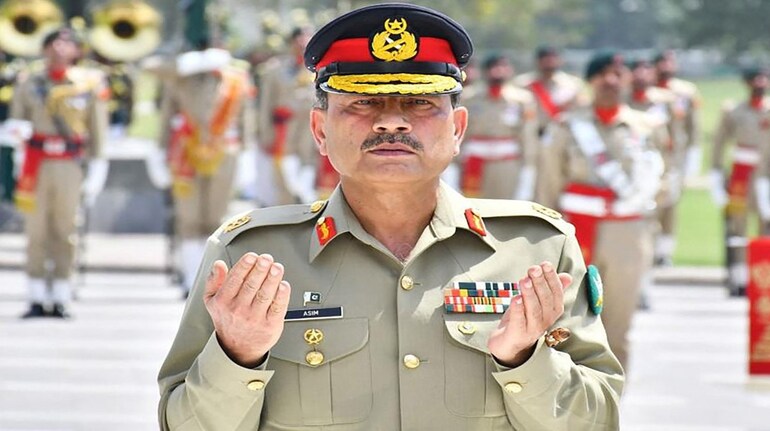
In the high-stakes game of security in the Indian Subcontinent, Pakistan’s 27th Constitutional Amendment effectively consolidates all military decision-making in the hands of the current Chief of Army Staff, General Asim Munir and simultaneously weakens the judiciary.
The country’s nuclear button will now be formally under the control of the army– effectively removing what little civilian oversight still remained. This can potentially be used to add credibility to nuclear sabre-rattling.
Nuclear sabre-rattling is a part of Pakistan strategic toolkit
For many decades now, Pakistan has used nuclear signalling to deter India by raising the spectre of nuclear use. It also uses signalling to internationalise conflicts, creating an imperative for foreign diplomatic intervention to de-escalate conflicts and constrain India.
The 1999 Kargil war was fought under the nuclear shadow. When India conducted several precision strikes, Pakistan’s foreign secretary publicly proclaimed that Pakistan would be willing to use “any weapon” to defend itself, in an attempt to deter India from further escalating the conflict.
Similarly, in 2002, after India’s Operation Parakram in 2001-2 that followed attacks on India’s parliament, Pakistan’s President Parvez Musharraf made remarks about how if Pakistan faced an ‘existential threat’ it would be compelled to resort to nuclear escalation.
Detailing the red lines
In an interview with an Italian outlet in 2002, Khalil Kidwai, the head of Pakistan’s Strategic Plans Division (SDP) outlined the red lines that India would have to cross in order for Pakistan to resort to nuclear escalation. He said that if India conquered a significant portion of Pakistani territory, destroyed a large part of Pakistan’s military forces, tried economically strangle Pakistan or created domestic destablisation in Pakistan, Pakistan would resort to using nuclear weapons.
Post-Pulwama examples
In 2019, then Prime Minister Imran Khan convened a meeting of the National Command Authority. This body oversees decisions regarding nuclear actions, amongst other things, after an Indian airstrike at a suspected terrorist facility. When Major General Asif Ghafoor announced the meeting on behalf of the Pakistani armed forces, he added a not-so-innocent comment to reporters, alluding to the nuclear functions of the NCA. “I hope you know what the NCA means and what it constitutes” he remarked.
Similarly, in May this year, three days after India’s Operation Sindoor, Pakistani media reports stated that Prime Minister Sharif called a meeting of Pakistan’s NCA. Strangely, though, soon after, Pakistani Defence Minister Khwaja Asif denied that the meeting of the NCA had been called.
Messaging need not be limited to statements
In August this year, at a diaspora event in Florida, Asim Munir was quoted saying, “We are a nuclear nation. If we think we are going down, we’ll take half the world down with us”. The implications of a Pakistani leader making such a brazen remark on US soil, were widely cited by Indian media, and the international community.
Pakistan’s nuclear signaling is not necessarily restricted to merely statements about nuclear weapons, it can also look like the movement of Nasr batteries during a conflict, or detectable signs of preparation for nuclear testing.
Munir is unlikely to change the existing paradigm
Notwithstanding Munir’s intemperate words, the likelihood of Pakistan resorting to nuclear escalation amid a limited conflict is next to zero.
Additionally, while India has a no-first use doctrine, it maintains that it will retaliate in whatever manner it sees fit if it is attacked first. As Shivshankar Menon argues in his book ‘Choices: Inside the Making of Indian Foreign Policy’, there is nothing in India’s nuclear doctrine that stops it from retaliating proportionately to a nuclear attack. This flexibility in India’s nuclear doctrine further reduces the incentive for Pakistan to resort to nuc’lear escalation.
Sabre-rattling’s risk lies in inadvertent escalation
While the 27th constitutional amendment will reduce any civilian checks that may have existed in Pakistan and can open doors for hasty escalation, any conventional conflicts between the two countries have not come close to the nuclear threshold so far.
The danger of these remarks lies in the fact that nuclear rhetoric still has the potential to lead to inadvertent escalation due to mistrust and miscalculations.
Especially given international concerns about the US’ resumption of nuclear testing and Trump’s allegation that Pakistan has conducted nuclear tests after the self-imposed moratorium.
Given the recent tensions between India and Pakistan, Indian intelligence efforts and monitoring would be a justified reaction, but India has no reason to believe that Pakistani nuclear threats are anything more than rhetoric. If history is any indication, they are attempts to internationalise crises and keep India in check, not an indication of imminent nuclear escalation.
(Adya Madhavan is a Research Analyst at Takshashila Institution working on advanced military technologies and geopolitics.)
Views are personal and do not reflect the stand of this publication.
Discover the latest Business News, Sensex, and Nifty updates. Obtain Personal Finance insights, tax queries, and expert opinions on Moneycontrol or download the Moneycontrol App to stay updated!
Find the best of Al News in one place, specially curated for you every weekend.
Stay on top of the latest tech trends and biggest startup news.