


co-presented by
ASSOCIATE SPONSORS
co-presented by


ASSOCIATE SPONSORS




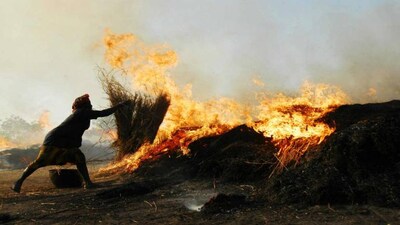
Rather than trying to enforce a ban on stubble burning, Punjab and Haryana governments’ efforts should be to spread awareness and ways to incentivise productive use of the stubble

Not just political parties, even powerful socio-religious organisations such as the Nair Service Society and the Sree Narayana Dharma Paripalana Yogam have muddied waters with their own political games

While packaged goods company earnings and other high-frequency indicators show an improvement in rural consumption, it has to be reconciled with rising rural distress.

The government’s defence of the deal for 36 Rafale jets is not credible, and so is the multi-billion dollar S-400 deal which has no technology offsets

The #MeToo movement in India needs to move beyond high profile areas of work to also focus on sectors in which women (also men and transgenders) are even more vulnerable

Alongside our forensic accounting model, we also use questioning techniques popularised by the CIA to figure out whether the CEOs we are meeting are making things up

The central bank's draft directions seeking to penalise persons engaging in market abuse is conceptually weak, and violates fundamental elements of the rule of law
India’s defence and foreign policy, as seen in how the Rafale deal with France is playing out, remains an issue essentially about the perceived crimes of individual politicians and their rivals

We always ignore culture and values and work towards the balance sheets only to be surprised in the next financial crisis

The only sound foundation for the mutual fund industry is one in which customers bear all losses. This risk needs to be communicated to the investor at the time of investing, and through actions that are “true to label”

Thinking about runs on mutual funds requires a full view of the problems of consumer protection, financial market development and systemic risk

Allegations such as siphoning-off funds through excessive executive pay, misrepresentation of state of affairs, camouflage of debt stress etc. are subjective and require real substance to be proven to be true before the courts of law.

While the ink has yet to dry on the final legislation, it appears that the government in this case appears to have perhaps acted hastily in creating the localisation provisions.

While other emerging markets are largely impacted by global issues, India's domestic issues in an election year is likely to keep investors away
If the October 15 deadline passes without an agreement between the RBI and global payment companies on storage of payment data locally, credit cards and debit cards could be taken offline in a way that might be reminiscent of demonetisation

An outcome-driven plan will curtail irrelevant infrastructure creation, it will get the government machinery to focus on the outcomes and also get the private sector aligned to the government's over-arching plan.

Board members must approach their directorships as a privilege and not as a right. Given the nature of its responsibilities, board members must put the interests of the company and its stakeholders ahead of themselves.

Banks not passing on rate cuts points to a lack of intensity in price competition and calls for increasing the number of lenders

While fewer number of women are joining the labour force, the ones already working face innumerable threats

Coal and oil dominates India’s energy mix. Renewable energy is expected to drive the future energy needs. However, during the transition process, natural gas may serve as a bridging fuel

If India has to become a major force in the solar power space, it must first begin to deregulate the power generation and power distribution sectors even further.

A company needs the flexibility to operate and make decisions on its own based on ever-changing market scenarios. Till now, Air India was denied this freedom.

The Academy explains how Nordhaus and Romer both have built on the work of Robert Solow, who won the prize in 1987
The violence against migrants raises uncomfortable questions about the famed ‘Gujarat Model’ of development as growing unemployment is assumed to be one of its major contributing factors
The Swachh Bharat Mission must address the lack of appropriate sanitation and menstrual hygiene management mechanisms that impair the full contribution of women in their socio-economic life.


