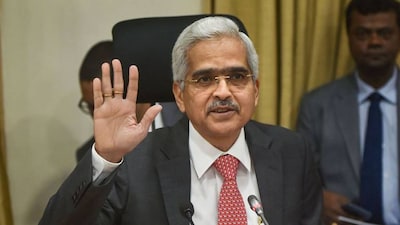
Under RBI’s baseline scenario (without taking into account any capital infusion from the government), system level capital adequacy ratio is projected to come down to 12.9 percent in March 2020 from 14 percent in March 2019. As many as five banks will have a capital adequacy ratio below the regulatory minimum of 9 percent by March 2020.
The biggest problem is a lack of transmission of institutional knowledge and a severe capacity deficit on the Indian side, which is sought to be masked by over-the-top petulance and jargon like ‘strategic autonomy’
With the BJP government back in the saddle, stability is assured. And this hopefully translates into an ability to take firm -- and correct -- decisions.
The government’s Swachh Bharat Abhiyan (SBA), the Clean India campaign launched in 2014, has increased citizens’ access to toilets and reduced open defecation in India.
Sebi has allowed technology companies to issue shares with superior voting rights to founders to encourage them to list in India. That carries risks for minority shareholder rights but Sebi has put some safeguards in place
Risk aversion among financial market participants is here to stay for some time owing to frequent credit rating downgrades and higher risk of developer defaults.
Without government help, Niti Aayog’s targets will not be met
The problems faced by the Indian economy today are very different from what they were when the first Modi government unveiled its maiden budget
Export policy in the age of Donald Trump will have to be very different. Moreover, a large part of exports are now the result of being part of global value chains and parts and semi-finished goods make their way several times across borders. A policy of currency depreciation will not work when imports form a large component of exports.
The flare-up in tensions following Tehran’s downing of an unmanned American drone is a warning sign
India needs to ensure that incentives for MSMEs are not skewed towards their remaining small forever. MSME policy should go beyond access to credit and address ease of doing business in a more effective manner.
The political stars have aligned in favour of ‘one nation, one poll’ and this opportunity must not be missed.
India’s share of global tourist spends stands at a lowly 1.8 percent
Even though there may be no stated ‘allocation for better governance’ in the budget outlay, the intent and spirit of the budget speech for structural reforms will send the right signals to the electorate as well as to the markets.
All the good work done by RERA goes down the drain if justice is delayed and not delivered.
Lower tax rates will act as an incentive for taxpayers to comply with the direct tax regime, file returns and pay tax, and augment revenue collection
Policy uncertainty leads to low business confidence, in turn hurting growth and investment
Forget the recovery, India doesn’t even have a proper definition of black money. It’s quite akin to the international community fighting the menace of terrorism for decades without having a universally acceptable definition for it.
The housing sector expects the government to contemplate on introducing housing bonds in order to provide low interest rate funds to the housing companies.
A strong relationship with the US is the most potent way to ward off the China challenge in the short to medium term. In the long term, this will allow India to develop its comprehensive national power.
The Modi government’s efforts to rid deadwood from the bureaucracy is a good start; but to achieve greater efficiency it can be tightened further.
The current public health expenditure is only 1.3% of GDP. If we are to reach the target of 2.5% in the next six years, then it has to be done progressively, starting immediately.
A high wealth-to-income ratio is not a good thing from a financial stability point of view. Concentration of wealth in the hands of a few is a recipe for increasing social unrest especially when India is facing a crunch in even basic resources like clean drinking water.
The budgetary allocation for education as a percent of GDP, both at the central and state level, declined between 2011-12 and 2014-15
If the royalty rule does take effect, it will mark minority shareholders of foreign-owned companies getting a rare upper hand